



I Want My DOGTV
By James Brine (Subscribe to Dead Bear now)
I get the strangest ads on streaming these days. As a format, streaming service advertising is uncomfortably stuck between the hyper-targeted pitches of social media and the old broad market buys of traditional cable.
Take this viewing experience I had a few weeks ago for example
I’m watching the classic detective series Riptide on Tubi. Just as I finish a glossy montage of pro-SECURITY pro-GROWTH ads for BAE systems and JP Morgan Chase, the widescreen and cinema sound is interrupted by a cropped vertical video of an actor-playing-influencer talking through a peaking mic about the virtues of “full body deodorant.” I barely have time to sniff my armpits before I see a particularly unsettling A.I.-generated ad.
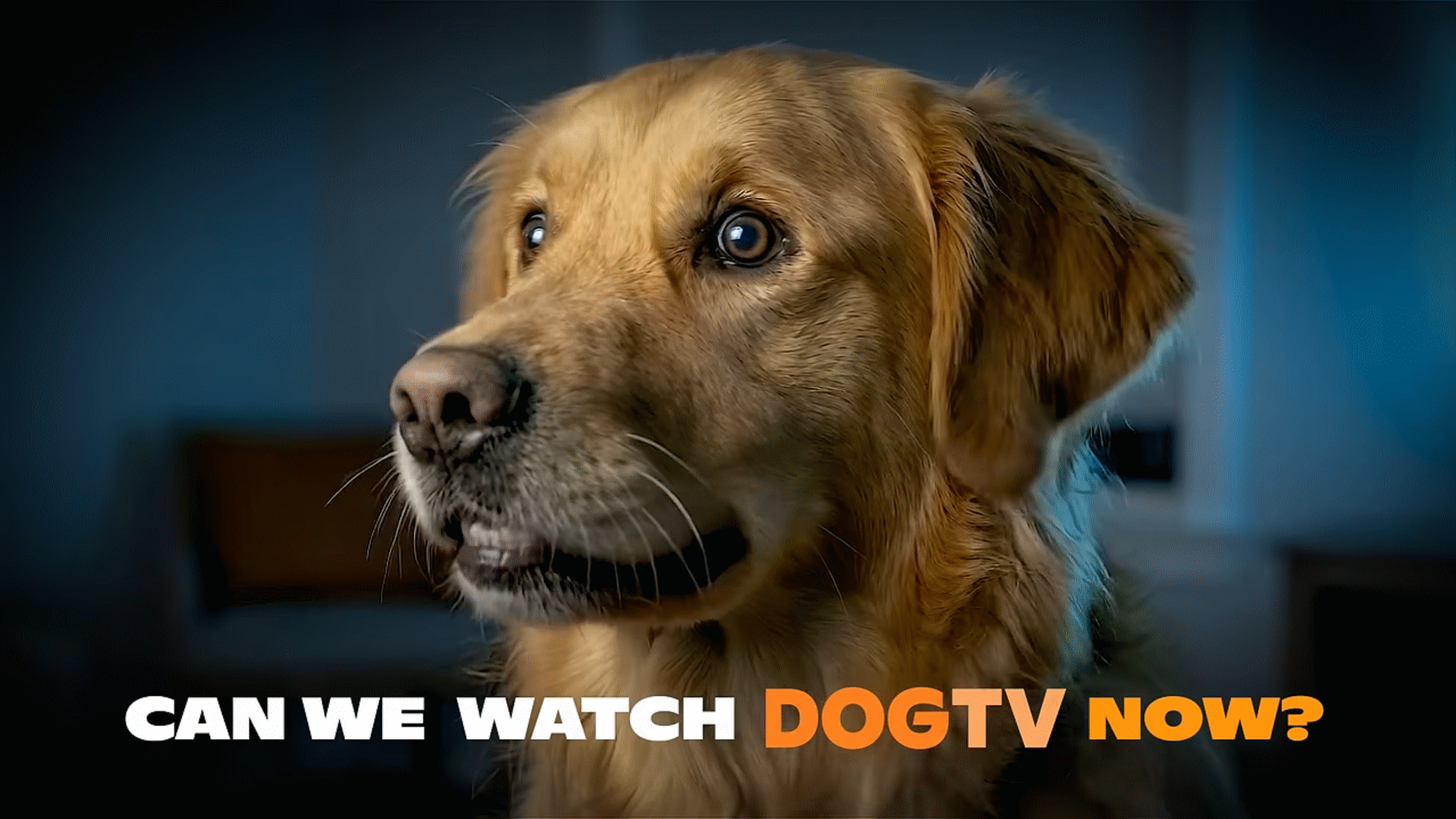
A group of A.I. adults are watching a football game with rapt attention, awaiting the “big touchdown”. Bug-eyed and clay-faced in the harsh blue glow of the TV, they mindlessly consume their snacks and beer, chewing and chugging but never swallowing. Our protagonist, a photogenic golden retriever, is uninterested in the game, looking instead with begging eyes at its owner. The text “Can we watch DOGTV now?” flashes across the bottom of the screen. The big touchdown is scored.

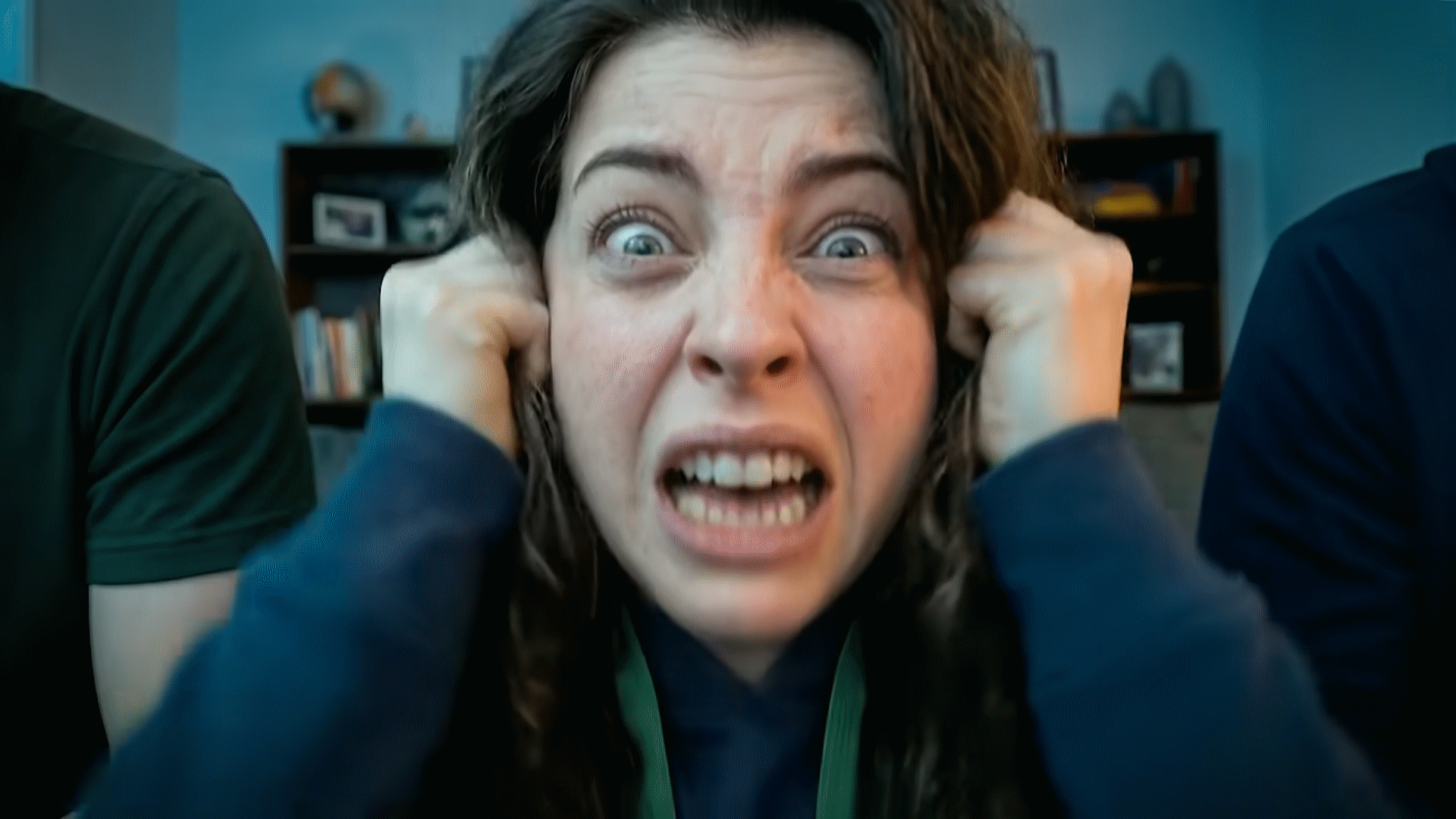
What follows is a surreal series of images. A woman screams, pulling back her hair like a damsel in a Sam Raimi film.
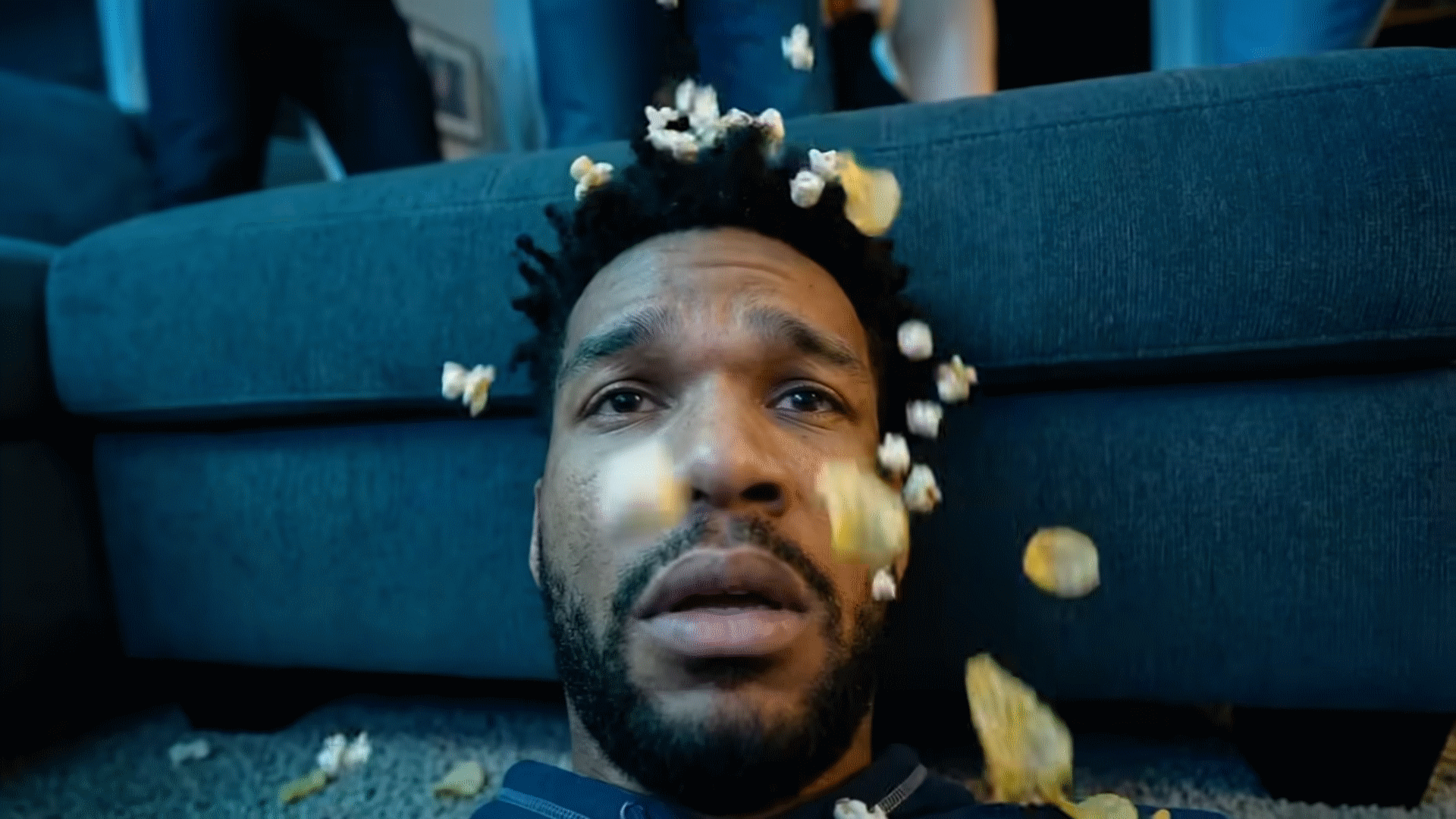
Half-full beer bottles suddenly erupt like Coke-Mentos fountains in celebration and popcorn is scattered across the room like snowflakes.


One friend, presumably a fan of the losing team, lies in stunned silence on the floor while a couple screams in each other’s arms, their faces morphed somewhere between laughter and intense mourning. Another fan dives off the couch.
As this unfolds (in a now completely different room) our canine hero gives a quizzical wine, and stiffly does the dog equivalent of a facepalm. The bacchanalia dies down; the humans look at each other baffled at their animalistic outburst. “Happy dog, happy Life: DOGTV,” says the unseen narrator. The audience is left to fill in the pitch: perhaps we’re not so different after all. Perhaps my dog deserves TV time like I do.
“Oh, its A.I.... OH man, it’s TV for Dogs,” I say to my half-distracted partner. A Google search confirms it. DOGTV is the veterinarian-endorsed TV channel by humans for dogs. The “perfect babysitter for dogs who have to stay home alone.” Owners can put it on to keep their canine companions calm and entertained with content specially calibrated to their senses and sensibilities.
The times being what they are, I’d forgive anyone for simply shrugging their shoulders and accepting the fact that millions of dollars have been moved to make and market TV for dogs. For one thing, it’s by no means a new concept. Since the advent of recording technology, “what would happen if I played this for a dog” has been on people’s minds. DOGTV itself is over ten years old, a product of 2010s “peak cable” spruced up for the era of freemium streaming. But still my mind turns to what and why. With ten dollars in hand, provided in advance by this fine publication,1 I bought a one-month subscription to DOGTV to try and answer those questions.

A quick disclaimer, I am not a dog owner. Beginning in 2009 my family did have a white wiry haired terrier mutt by the name of Arkey. The long march of time and the fangs of a Fullerton coyote finally took the life of our amiable and steadfast pet in 2023. As a result, I cannot speak personally to DOGTV’s effect on dogs. While I’m not entirely opposed to animal testing, I see this technical limitation as a moral opportunity. That’s why I decided to ethically test DOGTV on myself. I would recreate the dog experience by isolating myself at home and watching six hours of DOGTV content, allowing myself no other forms of entertainment or distraction. This would then be followed by two hours of owner-focused content on the “Unleashed by DOGTV” side of the platform. A few days later I blocked out my Saturday, made a cup of coffee and settled on the couch for DOGTV.
The DOGTV Experience
This exercise was more difficult than I’d care to admit. Watching hours of content that is generally tailored to be relaxing, i.e. boring, really illustrated how short my attention span has become these past few years. I was initially confused when, before my playlist of relaxing dog content got rolling, I was treated to an ad espousing the service I had just subscribed to. I already know DOGTV is scientifically designed for dogs, I don’t need Lance Bass or Billy Bob Thornton to tell me that.
When I finally settled on a video playlist, I was greeted by a serene scene of a border collie sitting placid in a meadow. This first proper video was more pleasant than I initially expected. It had been a few weeks since I’d been around a dog. Seeing an animal just do its thing brought up some personal nostalgia. It was a cold and rainy spring day outside, so I was also drawn to the sunny and unnaturally green landscape. Part of DOGTV’s sales pitch is countering the notion that dogs don’t have eyesight capable of taking in TV. Dogs essentially see at a faster framerate than humans and are partially colorblind to red and green, making them see typical TV as a series of dull brownish still images. Back in 2013, DOGTV co-founder Ron Levi assured customers that new advancements in LCD technology with frame rates above human perception had made modern TVs dog friendly. Learning about these dog friendly edits brought on pangs of guilt. How many hours did I spend with Arkey in my family TV room, with me lying on the couch while he perched himself on the crumpled top cushion of a red upholstered chair? Did I bore and confuse him as I spent hours transfixed by what he saw as mud colored still images? Would he have liked some DOGTV every now and then? Looking past the marketing fluff, DOGTV applies what is essentially an Instagram filter to most of their content, creating a high-contrast high-saturation image where green grass and red tongues glow in unnaturally vivid tones. This standard isn’t consistently applied, leaving some videos naturalistic and others surreal violet and cyan color negatives.

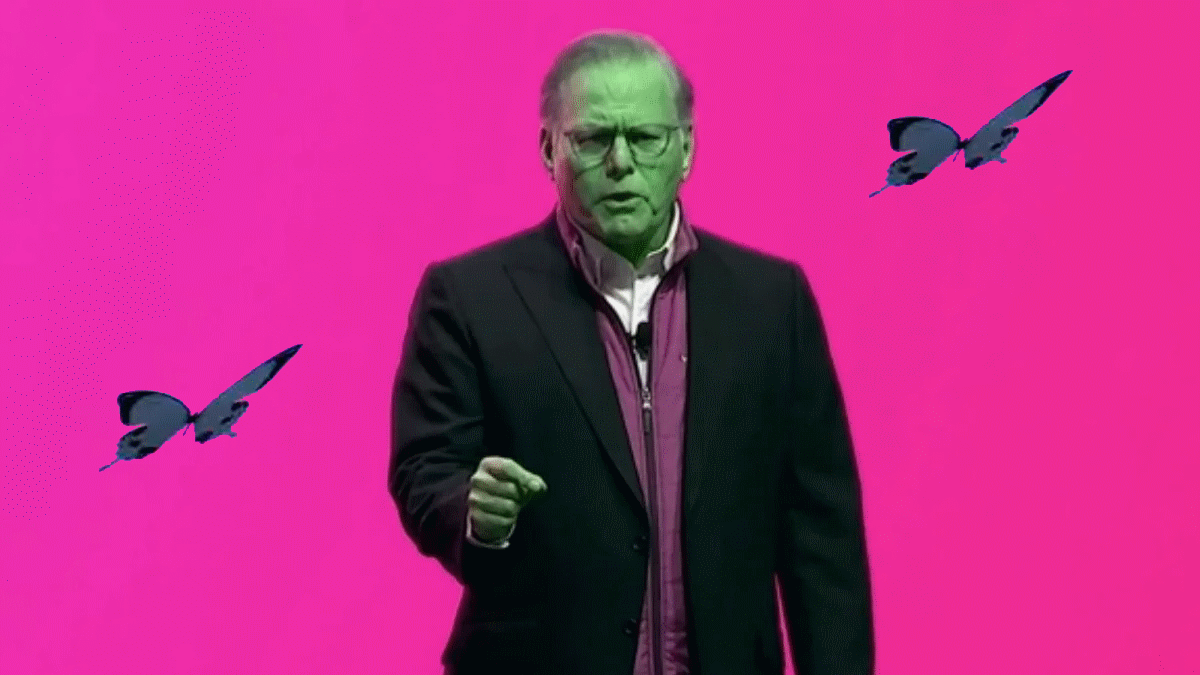
The somewhat harsh visuals aside, I was still enjoying my first video. The sound of birds chirping and wind rusting the grass built a pleasant ambiance in my small apartment. That was until I began to hear added sound effects. It was reasonable enough at first: the canned laugh of a child I’ve heard across a million cheap programs. The inclusion of the sound made some sense, having something to pull the dogs’ attention and make them think there’s people around. But soon the situation traipsed into the absurd, as stereotypical cartoon sound effects began to blurt out seemingly at random. Every minute or so my pleasant time with this dog in the field was ruined by a bicycle horn or some other noisemaker. While this video’s soundtrack turned out to be something of an anomaly (most videos just pipe in birdsong or low-key music) I soon discovered one of DOGTV’s editors’ favorite touches is editing crude animated butterflies. This combined to make an experience akin to watching someone else play Kid Pix. Whatever dignity existed in me experiencing DOGTV was stripped away. I was in for a long day.
The channel’s steady diet of dog stock footage wore thin quickly. After my fifth video, I began to construct mental games to keep myself steady, like trying to play Geoguesser with traffic signs and foliage. I managed to place one series of videos as being in Malta thanks to a manhole cover. Based on my location scouting talents, I now believe most of DOGTVs content is produced in middle income states in eastern and southern Europe. This is certainly to save on cost but could also relate to the channel’s national origins (more on that shortly). As I worked my way down its roster of video content, I found increasingly surreal options: Footage of foreign capitals running forward and then reversed in slow motion. Silent fireworks set to elevator music. Vertically mirrored shots of highway traffic where down was up and up was down. A long shot of two golden retrievers playing near a stone wall as audio of an unseen woman says, “Who’s a good boy?” Was it me? After about three hours, one solitary thought kept repeating in my head: “This is what they put on before you’re euthanized.” I tried to retreat into the small section “DOGTV for Cats.” It was composed of cheap animations of mice or and bugs scattered in with footage of birds. It was the sort of content cat owners put on iPads to contrive viral videos of the animals batting at the targets, NOT A HIGH-END TV! WHO THOUGHT THIS WAS A GOOD IDEA!!?! THERE’S NO WAY THIS WORKS! DOGTV FOR CATS!!!!? As I clenched my fists in rage, fully prepared to tear down my screen with the raw power of a Tibetan Mastiff, I knew I couldn’t continue.
Before we continue I want to answer two basic questions. First, DOGTV was founded as an Israeli company, and is now currently headquartered in Arizona where it is helmed by executives from Jasmine TV, a subsidiary of the joint Israeli-Chinese Jasmine Group. Since its founding it has been funded as a start up by a prominent Denver-Tel Aviv based investment firm and David Zaslav’s Discovery Inc, now Warner Discovery. Clearly some prominent people, mostly Israelis, thought this was a good idea. Second, to I hope no one’s surprise, there’s virtually zero scientific evidence that DOGTV has any substantial effect on dogs. Wading through the decade of verbatim press releases for DOGTV I found one brave dissenting article by Slate’s Ryan Vogt from 2013, the channel’s first year of national distribution. In it he systematically interrogates the scientific claims that dogs would take an interest in DOGTV over other programs. Absent the invention of a commercially viable smell-o-vision, it turns out the best thing an owner can do is spend quality time with their pets. Barring that, they can dim the lights, put on soft music, and give an enrichment toy or snack.
DOGTV is certainly aware of this fact. Recently posted short form content on their YouTube page tells prospective subscribers that the program is meant to be “in the background” of a dog’s day rather than the center of its attention. I imagine proving efficacy was less of an issue in DOGTV’s early days when the channel existed in the sea of hundreds of other cable TV offerings. However, in the desert of the contemporary streaming economy an individual subscription to DOGTV is a harder sales pitch. To make matters worse, DOGTV is no longer the only game in town. YouTube offers hours-long free playlists boasting similar dog relaxing claims. On my own streaming device, I found two other dog content apps: Dog TV (not to be confused with DOGTV), which required a subscription, and Happy Dog TV, a program that played generic animal footage and massage parlor music while claiming that “tested high frequency and healing music” was benefiting theoretical pets. I enjoyed the raw weirdness of this one for about five minutes before a pop-up paused the video and asked for my birthday and email to create an account.
These alternatives lack the professional sheen of DOGTV, replacing the dog equivalent of Disney Channel with essentially dog Cocomelon. Still, I wonder what’s stopping a discerning pet parent from making their own curated YouTube playlist for their dog, including DOGTV’s own hours of free YouTube content? DOGTV needs a broader sales pitch for owners. Since the 2022 launch of Unleashed by DOGTV, its clear they have sought their answer in providing more owner-centric content.
Unleashed by DOGTV
Compared to the lackadaisical dog content, Unleashed by DOGTV is a different animal, PUN INTENDED. Its main offerings of dog cooking advice, dog care tips, and general discussion about pet ownership place a much higher emphasis on the personality of the presenters. It is reminiscent of HGTV or the peak era of Bon Appetit YouTube content. Instead of Chip and Johanna Gaines or Brad Leone, I get dog therapy practitioners Sean, Christina, and their Golden Retriever Nash in the road trip show Paws for Love, plus the Dog Moms Chrissy and Amber. Introduced by the baffling theme song, “Dog Moms, Dog Moms whatcha gonna do,” they spend four minutes doing “doggy roulette,” answering questions at random about their experiences as lifelong dog owners and professional trainers.
Despite paying for a subscription, all Unleashed content is preceded by one to two ads, typically for dog athletic equipment, the myPurina app, or DOGTV’s partnership with the Human Animal Bond Research Institute (HABRI) and its website The Real Reason for Pets. By all indications HABRI is essentially a public relations group propped up by the pet products and pet insurance industry. Beyond providing DOGTV with more official sounding credibility, the ad promoting this collaboration illustrates the modern sales pitch for DOGTV. Accompanied by fusty classical music, a professorial British announcer lists the many health benefits of pet ownership only to be interrupted by a, let’s say millennial toned, woman: “Love that for us, but we know the real reason [for pet ownership]… you might not get a pet because of the science but because they love you, in the simplest purest way.” DOGTV knows their core product is essentially a scam, so they preemptively keep science limited to discussions of specific products, nutrition, equipment, and fitness programs. It makes the act of responsible pet ownership about making the right consumer choices based on exclusive information and superstition about the immutable love of pets. It’s all very Make America Healthy Again. MDHA?

This emphasis on vibes over science really comes across most clearly during the Mindful Moments and REAL Talks series. Mindful Moments, hosted by “wellness practitioner for animals” Amanda Ree, essentially teaches viewers how to do guided meditation while petting a dog. You can learn valuable information, like the fact that dogs practice mindfulness naturally and that dogs with long fingernails benefit from shoulder massages. While a bit corny, I found these videos somewhat normal, especially when compared to the deeply surreal REAL Talks. Clearly aping the format of TED Talks they feature a lone speaker addressing a plant audience in halting tech-CEO type tones about the various spices that can treat pet ailments and how to derive life lessons from cats. Even more than DOGTV’s other content, these videos feel like a practical joke on the viewer. Looking up a small logo in the corner of the videos for Blogpaws.com explains things further. Turns out the Blogpaws platform is essentially a pet blogger marketing service. I suspect all the REAL Talkers are simply pet bloggers. I’d be more unsettled by this revelation but considering the sort of people they often get for actual TED Talks, this is pretty much par for the course.
Having trawled through the bulk of the Unleashed content suite, I’m left with the unsettling feeling that there’s little daylight between the dog and human sides of the platform. Both are low effort media designed to fill the space and generally make the viewer comfortable but just stimulated enough not to turn it off. Simply put, slop (or better yet chow?).
But no, I must check myself. A glance at my phone screentime says my average right now is five hours a day, and that’s for a good week. How many of those hours were spent just filling the void, refreshing feeds, waiting for the re-edit of old clips with the right mix of cartoon butterflies and sound effects to keep me from chewing on the furniture? Has modern existence reduced me to a dog? Or would a dog-like state of mindfulness be an improvement? Unlike what the A.I.-generated ad indicated, dogs are apparently too invested in the real world to care about DOGTV–so why can’t I get away from PEOPLETV? I was drowning, I needed to find the cause, not just of DOGTV, but of the whole world of media and culture that produced it. I am a student of history after all. Perhaps there I could find my answers.
A Quick Timeline of Events
Going into my historical deep dive I had three goals in mind. First, to make an excavation of the corporate history behind DOGTV. Second, to track the political history between the major states backing DOGTV’s existence (namely Israel, the US, and China). And third, to monitor the changes in the relationship between dogs, humans, entertainment, and even war. To organize these threads I produced a Kojima style timeline of events. At the wise recommendation of my editor, this initial tangled mess of concepts has been woven into a (hopefully) more coherent conspiracy cork board thread concerning dogs, TV, DOGTV, and recent geopolitics.
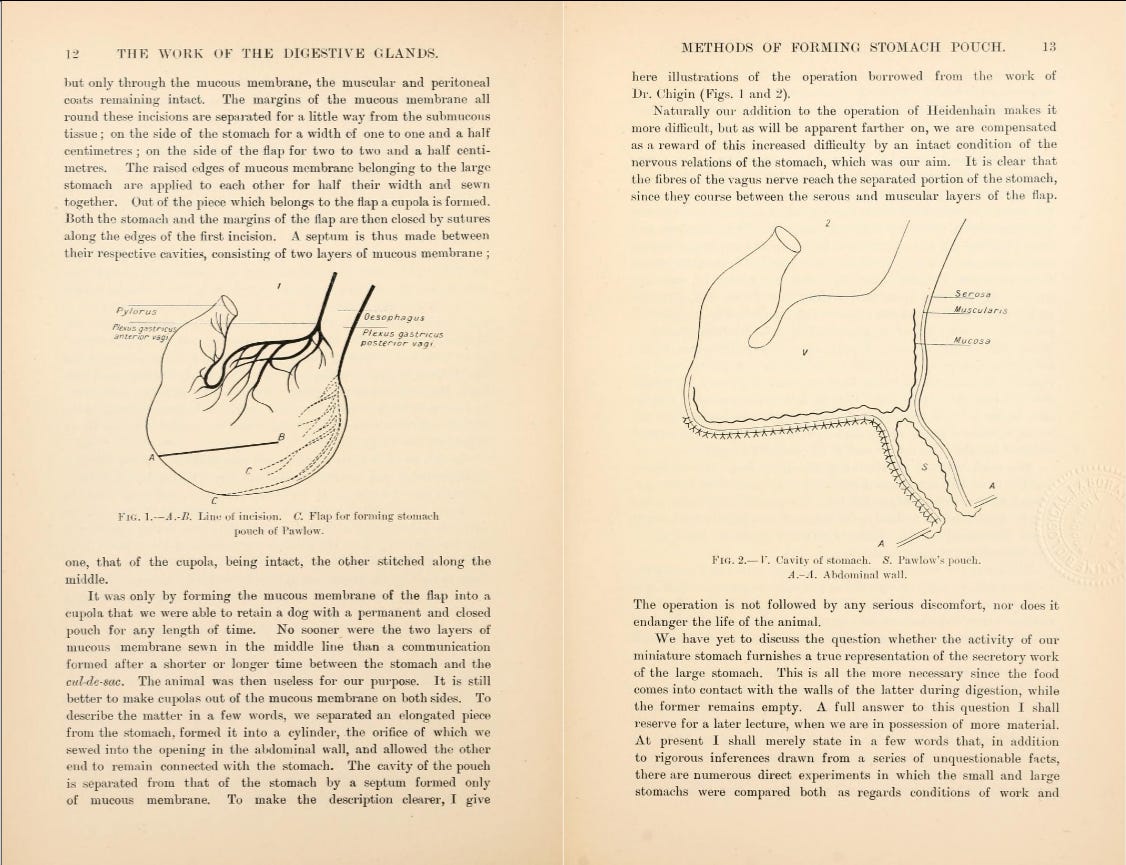
1897: Russian Scientist Ivan Pavlov publishes “The Work of the Digestive Glands” the pioneering study of classical conditioning in dogs. These findings produce the early influential psychological field of Behaviorism.
1925: Chinese Warlord Zhang Zongchang, known by some as the “Dog Meat General” for his gambling habits, is appointed military governor of Shandong. Commanding a large force supplemented by White Russian exile soldiers he gains a reputation for brutality. One-time White Russian Army doctor and celebrated Soviet author, Mikhail Bulgakov writes his satire Heart of a Dog. Featuring a dog made human representing the “new Soviet man,” it is censored and kept from official publication until 1987.
1938: Viennese canine scientist Rudolphina Mendel flees Nazi extermination with her husband and two hundred of their boxers to British Mandate Palestine. Mendel had built her career training dogs for the Austrian and German police and military. The trainer continues her practice with feral “Cannan dogs” supplying trained dogs to the militant Zionist cause. By the early ‘50s Mendel establishes Israel’s first guide-dog institute.
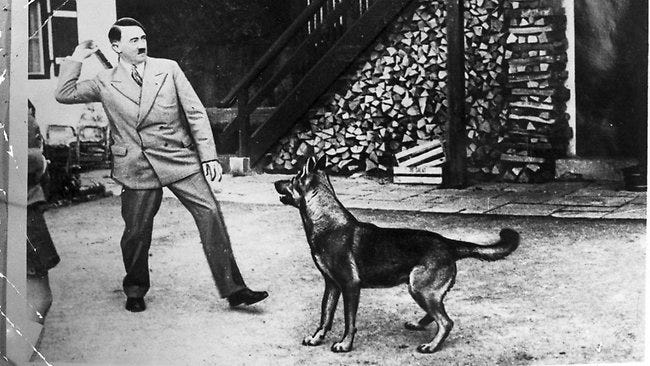
1945: Proponent of animal rights and genocidal fascist Adolf Hitler, hiding in his command bunker under Berlin, tests a cyanide suicide capsule on his celebrated German Shepard Blondi. Hitler kills himself and his wife the next day.
1962: American psychologist Boris M. Levinson publishes “The Dog as ‘Co-therapist.’” The text argues for the efficacy of dogs as a psychotherapeutic aid for children.
1963: Photos of Civil rights protestors getting attacked by police dogs in Birmingham Alabama scandalize the American public. Police brutality by way of K-9 units remains highly racialized to this day.
1968: The educational children’s TV program Mr. Rogers’ Neighborhood is broadcast across the United States for the first time. It becomes a model of enriching entertainment for increasingly television-bound American children.

1973: Chilean General Augusto Pinochet Ugarte launches a military coup against the democratically elected Socialist government of President Salvador Allende. The violent takeover is backed by the Chilean right wing, the American CIA, and recently dispossessed foreign corporations, including U.S. mining firms, Ford, International Telephone and Telegraph, and pet food producer Ralston Purina.
1974: Israeli special forces Canine unit-7142 Oketz is established. It is formed primarily to counter the threat of kidnappers but quickly diversifies to multiple roles including search and rescue, bomb sniffing, and combat. In a departure from its prior focus on domestic civil rights and combating anti-semitism, Anti Defamation League (ADL) leaders publish The New Anti-Semitism. Notably, it equates criticism of Zionism and Israel with antisemitism, targeting American dissenters on the left and right wing.
1981: Warner-Amex Satellite Entertainment launches MTV.
1987: Israel and China, having newly aligned in foreign policy during both the Soviet-Afghan War and Angolan Civil War, deepen their diplomatic bond with the establishment of COPECO. Based in Hong Kong, the Israeli government-owned commercial corporation establishes the state’s first formal economic ties with the PRC.
1988: Cable Educational Network CEO John Hendricks founds “the Discovery Channel.” Over a series of mergers it becomes the leading cable add-on for documentaries and factual content, including the exclusive airing of Soviet-produced television programs. The IDF conducts a failed assault on the Popular Front for the Liberation of Palestine General Command’s headquarters in Operation Blue and Brown. The Oketz unit deploys bomb laden attack dogs to little effect.
1989: ABC airs the 1988 Soviet film adaptation of Heart of a Dog as a two part miniseries. The Berlin Wall is dismantled.

1993: A San Francisco Police investigation reveals the ADL maintained a decades-long illegal intelligence operation, managed by eccentric private investigator Roy Bullock. The operation monitored and obtained compromising materials across countless groups, particularly anti-Apartheid activists and Arab Americans, and shared confidential information with South Africa and Israel.
1994: Through ASHRA, the Israel Foreign Trade Risks Insurance Corporation, China and Israel create a framework agreement for financial protocols to insure international credit transactions. This same year Israel is accused by the United States of sharing military technology with China, most notably plans for its advanced Lavi fighter jet. Israel also sells China its popular Harpy UAV.
1997: College students Andrew Feinstein and Justin Borus create the comic strip Girls and Sports. Centered around the romantic escapades of two barhopping friends, despite its apparent low quality, the comic is nationally syndicated until 2011. Advertising executive Dan Fitzsimmons launches The Puppy Channel. Conceived for humans as a form of refuge from the increasingly unsettling content on cable, the channel was a 24/7 broadcast of videos of puppies set to calming music.

2000: Jasmine Group Founded. The joint Israeli-Chinese firm focuses primarily on the implementation of Israeli medical, agricultural, educational, technologies and investments in China. A subsidiary, Jasmine TV, is established shortly after as a primarily Israeli TV production and distribution group.
2001: A failed October mission to kill Afghan Taliban leader Mullah Omar becomes the first attempted U.S. drone strike. A strike is successful against Al-Queda targets one month later. Unable to grow nationally, when American TV probably needed it most, The Puppy Channel goes off the air.
2002: Israeli think-tank the Jewish People Policy Institute (JPPI) is founded, seeking “to ensure the thriving of the Jewish People and the Jewish civilization by engaging in professional strategic thinking and planning on issues of primary concern to world Jewry.” It treads a Liberal Zionist political line producing works targeted at Jews outside of Israel.
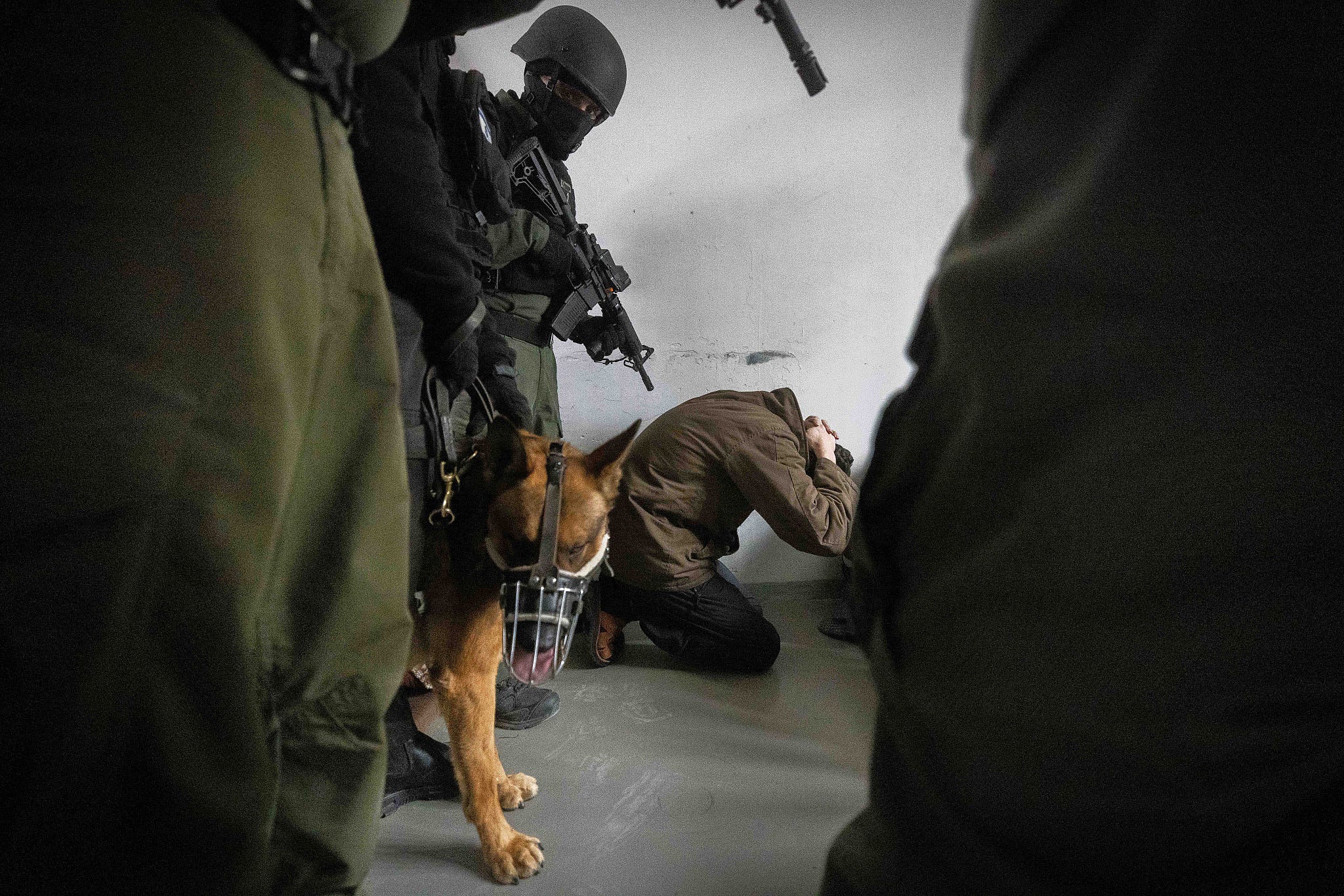
2003: Former principal at Bear Stearns and Girls and Sports co-creator Justin Borus founds Ibex Investors LLC in Denver Colorado. Meanwhile, the practices of torture and abuse by U.S. forces at the Abu Ghraib prison in Iraq are revealed to the public. Among the tactics of “enhanced interrogation” is the use of attack dogs against restrained detainees.

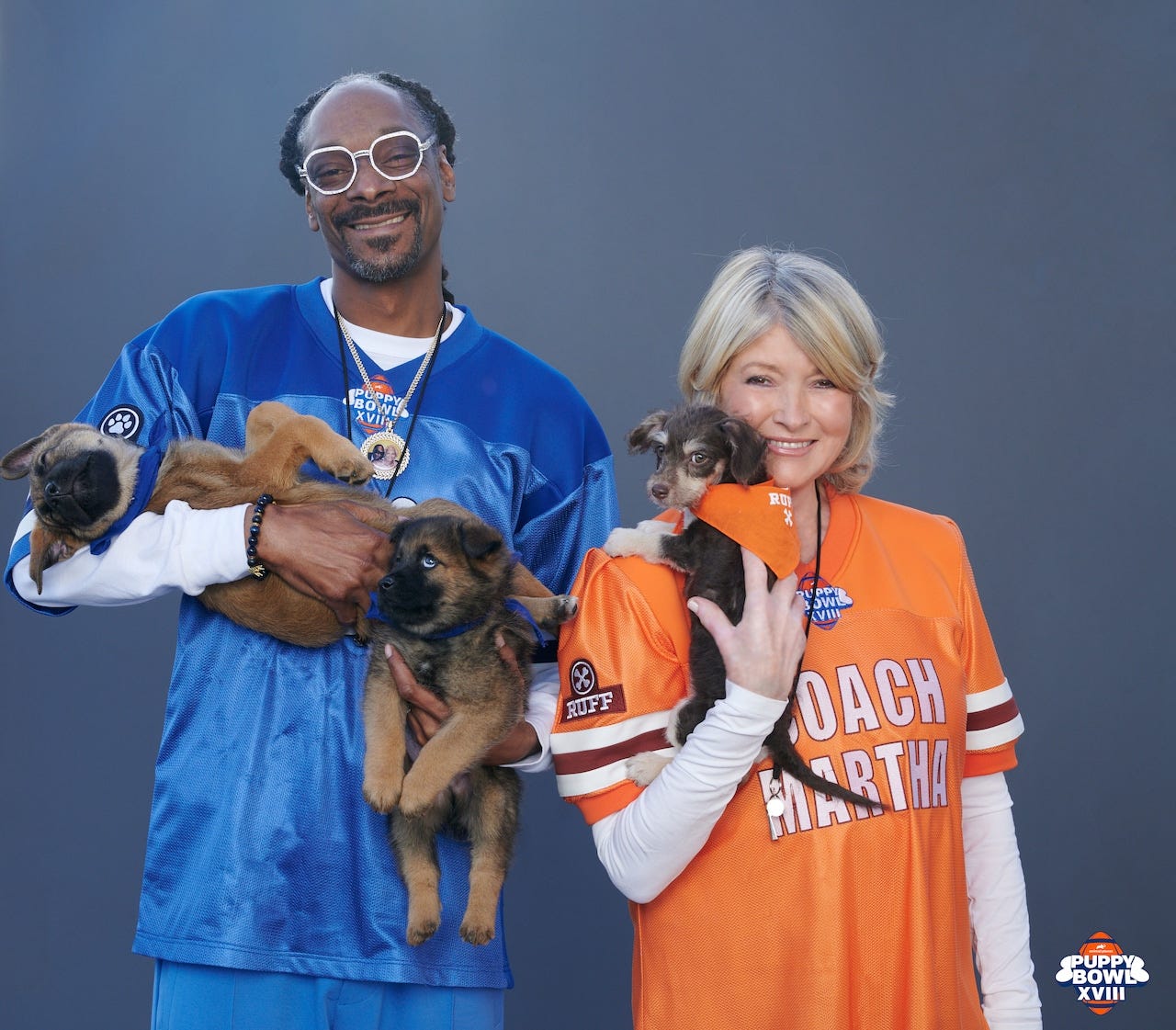
2005: Discovery subsidiary channel Animal Planet hosts the first annual Puppy Bowl, airing concurrent with NFL Super Bowl 39. Iraqi insurgents detonate a bomb-laden dog near a military convoy in Dakuk.
2006: Media Executive David Zaslav becomes CEO of Discovery Inc. He pivots the company’s focus to that of a “content company,” massively expanding the channel’s footprint by acquiring a substantial portion of the reality TV cable market during his tenure.
2008: The Israel China Chamber of Commerce is established. Jasmine Group is a key participant and sponsor.
2009: Three Jasmine TV executives, Ron Levi, Yossi Uzrad, and Gilad Neumann help found DOGTV alongside interim CEO Guy Martinovszky. Allegedly inspired by Ron Levi’s practice of leaving jazz albums on for his pet cat, the channel is initially a premium cable option for the Israeli market. The BlogPaws pet blogger marketing service is established. The Israeli tech sector boosting book Start-up Nation: The Story of Israel’s Economic Miracle is published.
2011: Human Animal Bond Research Institute (HABRI) is established in Washington D.C. A public relations group focused on the positive health benefits of pet ownership, it is funded by the American Pet Products Association, Zoetis, and Petco. HABRI studies are routinely cited by DOGTV.
2012: DOGTV makes landfall in a San Diego CA test market. Following his reading of Startup Nation and a business delegation trip to Israel, Justin Borus’s Ibex Investors makes its first round of startup investments in Israel. Going forward the fund will open an office in Tel Aviv and specialize as a foreign investment firm for Israeli startups and public companies.
2013: El Segundo CA based DIRECTV picks up DOGTV for national distribution. DOGTV is mentioned by a total of five prominent talk show comedians, the Jimmys (Fallon and Kimmel), Ellen DeGeneres, Jay Leno, and David Letterman. DOGTV names (then-recently deceased) cartoon dog Brian Griffin of the popular program Family Guy as the “World’s Most Powerful Dog” of 2013. Justin Borus and other board members of The Mountain States ADL host a centennial dinner.
2014: Discovery Inc. acquires a stake in DOGTV for an undisclosed sum, seeking to integrate its content with Animal Planet. Justin Borus’s Ibex Investors makes a first round investment in DOGTV.
2017: The DOGTV hour on Animal Planet is announced.
2022: Discovery Inc. and Warner Brothers announce a merger into Warner Discovery. DOGTV announces pet marketing strategist Beke Lubeach as their new CEO, replacing Gilead Neuman who retires to attend Harvard University for a Master of Public Administration. He later takes a role at the JPPI’s “social accelerator.” British Prime Minister Boris Johnson is questioned for his personal intervention to expedite the transport of pets belonging to the animal charity group Nowzad during the NATO evacuation of Afghanistan. Critics claim Boris, and by extension the U.K. government, prioritized the rescue of dogs over at-risk Afghan civilians.

2024: Ibex Investors announce $106 million dollars for a new round of VC funding in Israeli startups. This follows a $100 million dollar investment in 2020. According to founder Justin Borus, “Most of the world’s greatest innovations come as a direct result of war and conflict and we believe this time will be no different.” An article in the Guardian reveals ADL CEO Jonathan Greenblatt directed the surveillance of civil rights activists in 2020 critical of longstanding Israeli training exchange programs for American Police. Euro-Med Human Rights Monitor claims the Israeli Army uses police dogs to brutally attack Palestinian civilians in Gaza. Often equipped with live video cameras, IDF dogs mauled at least two civilians, a disabled man and an elderly woman. Palestinian detainees also allege Israeli jailers use attack dogs trained to rape and maul as a component in their torture program.

2025: The U.S. pet industry is valued at $158 Billion. DOGTV launches a streaming service, including the new owner focused Unleashed by DOGTV.
2026: Chinese multinational tech conglomerate Tencent launches PetTV. Offering content for cats and dogs, the channel uses third party content from DOGTV. Florida Congressman and National Security Advisor Randy Fine states in a Twitter post, “If they force us to choose, the choice between dogs and Muslims is not a difficult one.” Following public criticism he introduces the “Protecting Puppies from Sharia Act.” New York Times journalist Nicholas D Kristof publishes an opinion piece covering reports of systemic rape of Palestinian prisoners, including by dogs, in Israeli detention. Israel threatens a defamation suit against the NYT.
What Was That All About?
It should be no surprise that the existence of an expensive bad product can be tied in some respect to the U.S., Israel, and (to a lesser degree) China. It’s certainly easy for me to show when I’m the one making the timeline. Justin Borus and Ibex Investors’ involvement in particular, reveals the strange world of Israeli tech industry boosterism. Borus’s effusive promotion of the field, and the general A.I./B2B-SAS composition of his preferred startups, reminds me of Reagan Republican schemes to sell gold-backed Krugerrands and Soldier of Fortune articles promoting mercenary service in Rhodesia.
If any of Ibex’s companies see large-scale success it will either be by integrating themselves into the Israeli defence industry or exiting the country. In the first case, there’s plenty of opportunity for self-driving cars to become autonomous gun platforms, sales tracking to pivot to assassination targeting, and rare earth mineral development schemes to serve strategic resource autarky. That makes DOGTV, as one of the few entertainment investments by Ibex, all the stranger. Given the sloppy quality of its product, one can only assume their continued inclusion in the startup club is the promise of AI produced DOGTV. Their recent ads have certainly indicated an interest. Whether I’d call them an Israeli startup is another question. Once they had the requisite capital they chose the second corporate option and moved their headquarters to Arizona and explicitly focused on making a channel “Aimed at America.”
Beyond depicting the strange globalized corporate world that gave us DOGTV, this chronology was also an effort to explore how dogs became a tool to define and circumscribe modern morality, and by extension, humanity. It is a common academic argument that the European Enlightenment’s more pluralistic egalitarian principles emerged from Europeans’ increased interaction with Indigenous peoples in the Americas. This was less so in the direct translation of governing principles or ideas of rights, and more in providing European intellectuals a malleable point of contrast to their feudal system. Another interesting layer to this argument is the influence of the transatlantic slave trade. As the emergent world economic system grew to rely on millions of people reduced to the legal status of chattel, ostensibly free people like the American founding fathers used the rhetoric of throwing off the shackles of “enslavement” to characterize their arguments in service of less lofty goals like tax evasion and settlement of treaty restricted territory (Now what does that sound like?)
Dogs and other pets are not enslaved, although we probably should treat them better. Despite this, I believe the social position of dogs relative to people and how a person or group of people treat dogs carries a similar philosophical weight on our modern ideals of civilization and humanity. This dynamic certainly shines through the bigotries attached to often inaccurate western stereotypes regarding dogmeat consumption or a general dislike and maltreatment of dogs by the peoples of East Asia, Africa, and the Muslim world. This is to say nothing of how the dog itself is a common tool in the policing and terrorizing of dehumanized populations, as my timeline illustrates.
For political reactionaries the treatment of animals and the treatment of children have similar histories and contradictions. Policy debates around the humane treatment of children and of animals, outside of a religious context, really began when both were being forced into the maw of the Industrial Revolution. Positive perceptions of both groups center around ideas of inherent innocence and good. Both place a high value on the protection of said innocence, but only to the degree that it sets a specific exacting standard for the rights and duties of the caretaker. Culture wars around the content of children’s media diets, in a sense KIDTV, overlook the more tangible issue that a substantial portion of the political population dehumanize children by viewing them more as property than as vulnerable developing people. Look to the countless conservative parents and pundits that decry the corruption of our youth while overlooking real cases of abuse.
While they certainly require fewer rights than children, our relationship with pets touches on similar problems. People desire the love of certain animals to the degree that whole species face extinction in the wild, and shelters fill with now unwanted “pandemic puppies.” With these sorts of issues in mind, to say nothing of how we treat animals in agriculture, I question if our property relationship to other animals is moral to begin with. But that’s a problem no one essay writer can solve. The issue today is that by equating this morally complicated relationship between humans and animals to interhuman relationships, by saying that your dog needs TV like you do, we de-value humans as a whole.

De-humanization is in vogue. Tech billionaires claim introspection was invented by modern philosophers (someone’s been doing dog mindfulness), and champion the elimination of traditional artistic creation with computer automated incestuous nostalgia. While the top 1% celebrates their inhumanity openly, they ascribe subhuman characteristics to those on the bottom. This is made worse by the fact that the tools of oppression have only improved. K-9 units, dog bombs, and other, more vital, if no less inaccurate or cruel technologies, are being replaced by an A.I.-targeted, drone-enabled, social-media-propagandized system of murder.
When I think about DOGTV’s presentation of the love between the pet and owner as the “simplest, purest” form of love, I see it as an inherent devaluation of love and humanity at a time when that matters more than ever. I believe my dog Arkey and I shared a sort of simple love, and that connection had meaning. However, I suspect his reasons for sitting with me all those years in the TV room was less about a familial love for me or fascination with what I was watching than it did his view of the window. True to his terrier instincts, Arkey had chosen the one seat in the house where he could spot, and subsequently chase after, squirrels in the front and back yards. I choose to believe human love in all its complexity and shortcomings is more important than the simple but alienated love offered by dogs.
The relationship between a pet and an owner is an inherently limited one, both by simple realities of cognition and by the animal’s status as property. DOGTV is born from the same loveless system of dehumanization as most other products today, a flawed component in a machine that’s increasingly inclined to use our bond with dogs to define and enforce new inhumanities. It was never for the dogs. Like most non-essential pet products, it exists for the owners, those that feel insecure in their relationship to their pets, hoping that mutually consuming enough content will fundamentally deepen and secure their connection. To make a very long story short, money can certainly help in finding love, but it still cannot buy it, even from a dog.

Subscribe to James Brine’s Dead Bear Substack now.
IN OTHER DOG NEWS
Just admit you’re addicted to dog tranquilizers like everyone else

Sometimes I think you’re inventing drugs in order to pad your list of your addictions. You need to stop insisting on the existence of things that aren’t real. The pathologically high value you place on my concern makes me feel like a grandmother, and not just your grandmother, but everyone’s grandmother.
The line item for this in the Discordia expense ledger just reads $10 for “Our Man in Purina.” Or “The Tailor of Paw-nama” maybe?—Eds.

"The relationship between a pet and an owner is an inherently limited one, both by simple realities of cognition and by the animal’s status as property. DOGTV is born from the same loveless system of dehumanization as most other products today, a flawed component in a machine that’s increasingly inclined to use our bond with dogs to define and enforce new inhumanities. It was never for the dogs. Like most non-essential pet products, it exists for the owners, those that feel insecure in their relationship to their pets, hoping that mutually consuming enough content will fundamentally deepen and secure their connection. To make a very long story short, money can certainly help in finding love, but it still cannot buy it, even from a dog."
damn man
Hilarious and disturbing. And encyclopedic. Thanks.