

MAGA Minaj, Muhammad Ali, and the costs of Black canonization
On the endless, useless and ahistorical saint/sinner binary applied to Black icons


On DR today we have a guest piece from Hilde von Bingen of the scabrously funny politics and culture blog Hilde’s Visions. She’s always worth a read even in this crowded media moment. We trust you will enjoy.—The Management
When Nicki Minaj outed herself as the Black Queen of MAGA, my first thought was of Muhammad Ali. My second was of Barack Obama.
Let’s start on December 21, 2025, when Minaj pressed the button. On a day when many were descending into a flurry of festive celebration preparations, Minaj left her child and her sex offender husband at home to pledge her allegiance to Donald Trump at Turning Point USA’s AmericaFest. The festival’s founder and original headliner, Charlie Kirk, had unfortunately been assassinated several months prior. But the show had to go on—and, if anything, it paved the way for Minaj to have a star moment she desperately craved. When one life ends, another begins. Thus, at AmericaFest, Minaj officially announced her MAGA-fication: the cooning heard round the world. She popped those blue contacts in, took the hand of Jackie Kennedy-cosplayer Erika Kirk, and shouted that Trump was handsome, JD Vance was an assassin (which she had to immediately apologize for, given Erika’s husband’s recent assassination), and declared herself Trump’s “number one fan.” Don’t worry about the fact that as recently as 2016, Minaj—an immigrant herself—had rapped the words “Island girl, Donald Trump want me go home”; and in 2021, had advocated against Trump on behalf of immigrant “children being taken away from their parents.” That was a different time. And as she said to Erika Kirk, “It’s okay to change your mind.”
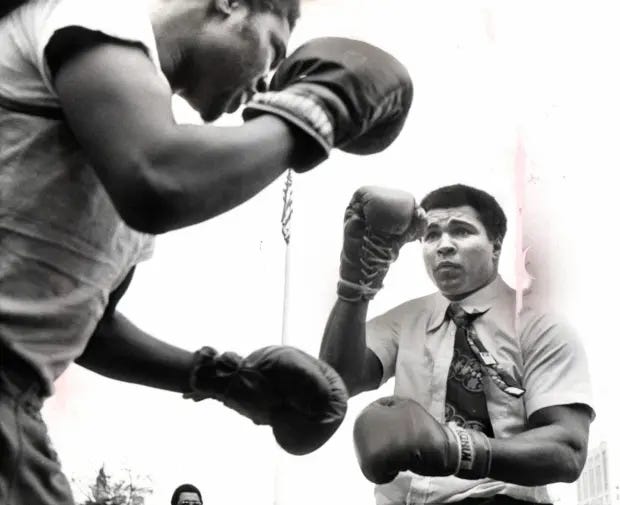
My father was fifteen years old when Muhammad Ali changed the course of his life. It was 1977. One autumn day during this year, Ali visited a gym near Altgeld Gardens, Chicago, my father’s housing project. Originally built for Black World War II veterans between 1944 and 1945, Altgeld Gardens was one of the first housing developments in the United States. But, as was commonly the case in the mid-twentieth century, the government repurposed the Gardens into a refugee camp for Black Southerners fleeing the skidmarked sheets of the Ku Klux Klan. Having segregated Black people from the rest of the city, the Gardens were then promptly allowed to descend into neglect. By my father’s birth, they were covered in lead paint, filled with asbestos, surrounded by landfills and factories, and entrenched in poverty. Altgeld Garden is so encircled by shit that it has earned the moniker “the Toxic Doughnut.”
The Toxic Doughnut was an education desert, forcing my father to earn a scholarship to a distant private school. The Toxic Doughnut also had no jobs, so my father spent his evenings travelling to and working at a shop in the city, where he earned money to pay his family’s bills. He slept on the train home and returned to school in the morning. In his few days off, he boxed. And at this, he excelled. He quickly rose through the local ranks, coaches flocking to him in hopes of hitching a ride. My father was not set on boxing his way out—but it was certainly an option.
One day, as on any other, my father went to the gym to prepare for an upcoming bout. But soon after he began sparring, a commotion erupted from the entrance. My father and his friends paused, squinting towards the source of the noise. And from the front of the gym, Ali emerged. My father had barely processed that he was in close proximity to The Greatest when Ali introduced himself and hopped into the ring.
“So, how you doing in school?” Ali asked my father and his friends.
My father played it cool. “I’m doing okay.”
Ali promptly told them to quit boxing.
“Imma be honest with you guys,” Ali said. “This is a real hard way to earn a living.” The gym went silent. My father’s coaches, lining the ring, began to openly seethe. But he continued. “I would strongly suggest you guys stay in school and give it up.” It was too unsustainable, he explained—and success was short-term, if achieved at all.
Then, despite his fame and stature, Ali sparred with my father and his friends.
My father loved boxing. But who was he to ignore the advice from The Greatest? And as the interaction percolated in his mind, he began to reconsider things he had previously brushed aside. “Many boxers were violent,” he told me, “and the coaches were illiterate. I’d kind of noticed this stuff before. But Ali’s advice brought it home.”
My father decided to quit that night.
Three years later, he earned a full-ride scholarship to a university six hours away. Ronald Reagan would also become president that year and decimate my father’s town with his War on Drugs.
And four years after that, Ali would support Reagan’s campaign for reelection.
You wouldn't know how Ali's decision affected my father and his home. But I can't forget. And when Minaj cooned for President Donald J. Trump, I saw nothing different.
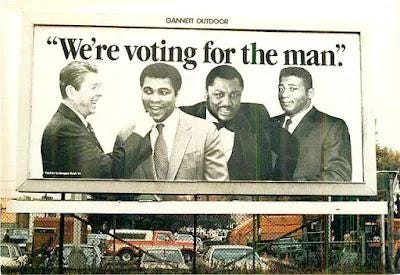
Ali didn’t have great reasons for endorsing Reagan. He didn’t even have reasons, plural. There was only one. “He’s keeping God in schools,” Ali said. “And that’s enough.” Minaj’s professed support for Trump is rooted in a similar sentiment. Though Minaj is Christian—unlike the Muslim Ali—she has stated that she was drawn to Trump on the basis of religion. And on behalf of him, she will continue to speak up for Christians “wherever they are in this world.”
I am not equating Minaj and Ali. But they did both coon out. And while Ali will never be remembered for this, Minaj will.
Our memory of Ali is disconnected from contemporary accounts of his behavior. Though Ali was adored by the Black community, it was clear well before the Reagan era that his political behavior would never follow a straight line. Ali spent the early 1960s becoming renowned for his civil rights activism, nurtured in part by his relationship with Malcolm X, a fellow member of the Nation of Islam (NOI). However, their friendship imploded when Malcolm X discovered that Elijah Muhammad, the NOI’s leader, had engaged in sexual misconduct. Elijah effectively excommunicated X from the NOI, whilst Ali aligned himself with Elijah. By the time X was assassinated, the two had not spoken in months. Though Ali came to regret this and disavow the NOI, he remained Muslim for the rest of his life, and accordingly held both Black radical and socially conservative views. Boxing took a heavy toll on his body and mind, and as the 1980s approached, his mental deterioration also likely began to influence his politics. At the time of his Reagan endorsement, comrades expressed public disappointment. In private, concerns abounded that Ali had been taken advantage of in his reduced state.
Barbs’1 conversations have been similarly empathetic towards Minaj. As with Ali, Minaj did not drop the MAGA bomb unannounced. The Barbs have been in the bomb shelters for some time. Minaj has behaved increasingly erratically over the past decade: affiliating herself with sex pests; going on Queen Radio tirades; comparing herself to Harriet Tubman; bullying any female rapper that dares to approach a mic; and doubting the efficacy of the COVID vaccine on account of the swelling of her cousin’s friend’s balls. Thus, when Minaj soft-launched her Republicanism via a United Nations speech about Trump’s love for “Nigerian Christians” (i.e. Nigerian oil), the Barbs were not entirely astonished. But they also knew that Minaj grew up in an unstable home with an abusive father, is now coincidentally married to a sex offender, and is suspected of having a serious drug problem and mental health issues. They also knew that her significant influence on music and culture would soon be erased by her decision to support the Cheeto-in-Chief. When Ali posed with Reagan jokingly punching him in the face, perhaps Ali’s friends and family felt similarly.
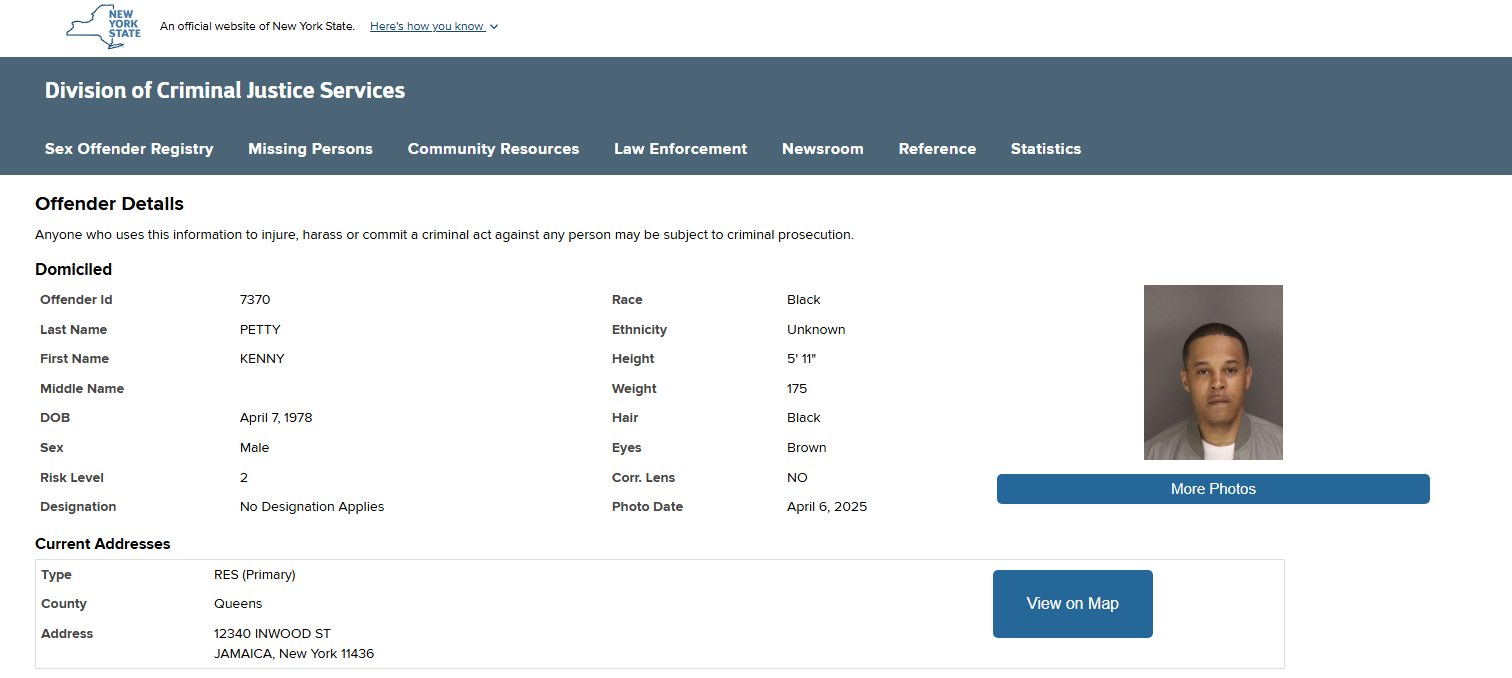
To be clear, Ali is a civil rights icon who suffered from Parkinson’s. Minaj is a mentally ill rapper married to convicted sex offender Kenneth Petty—who she lovingly refers to as a “soulmate” and “wrongfully accused.” Everywhere that the Pettys move, Mister Petty must walk from block to block with a clipboard, knock on each door, and ask each neighbor, “I’m Nicki Minaj’s husband. Will you sign this so I can live near y’all?” And as they halfway-recognize the name “Nicki Minaj,” they sign it, and then they go into their house, Google him, and see that he attempted to rape a sixteen year old girl at knifepoint. And none of this is occurring within 2,000 feet of a school. Minaj has a vested interest in befriending politicians. She wants Mister Petty off the registry. She is no Ali: though she associates with the formerly incarcerated, she would never risk imprisonment for her views. She is a broken person seeking a green card and a presidential pardon. Despite his, at times, contradictory views, Ali displayed a degree of moral consistency throughout his life that Minaj has never slightly mirrored.
But whilst she is not a civil rights icon, Minaj is not “just” a rapper either. Minaj had a monumental impact on rap, the music industry in general, and the perception of Black women in the public sphere. Because she is now so well-known, the public often forgets that she navigated an industry inhospitable to her and overcame nearly insurmountable odds to become a household name. Though her Queen Radio rants are full of falsehoods, she is right about one thing: she ran so that Cardi B, Latto, and Ice Spice could drag themselves along. And thus, many Black girls have seen themselves—and found comfort in—her success. I have distinct memories of listening to her debut album Pink Friday on my iPod nano after fights with my mother and bawling my eyes out. When I got suspended in high school for “cyberbullying” (i.e. posting an Instagram roast of some Cookie Monster pajama-wearing white girl who was obsessed with my Black boyfriend and kept threatening to “beat my ass”), Minaj pulsed from my headphones as I sat in in-school suspension. I listened to Minaj through many abusive relationships, and as I memorized her lyrics, I gathered the strength to end them. Many other Black girls can say the same. There are hundreds of us. Thousands. Millions. This is not to say that only Black girls —or all Black girls—have this relationship with Minaj. But for many of us, it was her voice that mentored and accompanied us through the transition from child to adult. Thus, though her MAGA turn is not entirely unsurprising, it is devastating. Unlike my father’s experience with Ali, Minaj never spoke to me personally. But she might as well have.
I return to 1977, my father and Ali. Reagan would formally launch his campaign for president within two years. In 1980, he won, and for the next four years, went on to put “God in schools,” Black people in jail, and Americans in a handful of Latin American and Middle Eastern countries. My father’s community descended further into poverty as a result. But the Toxic Doughnut’s troubles did not end there. Because when Reagan went on to campaign for his second term and Ali travelled the country stumping for him, Obama descended upon Altgeld Gardens.
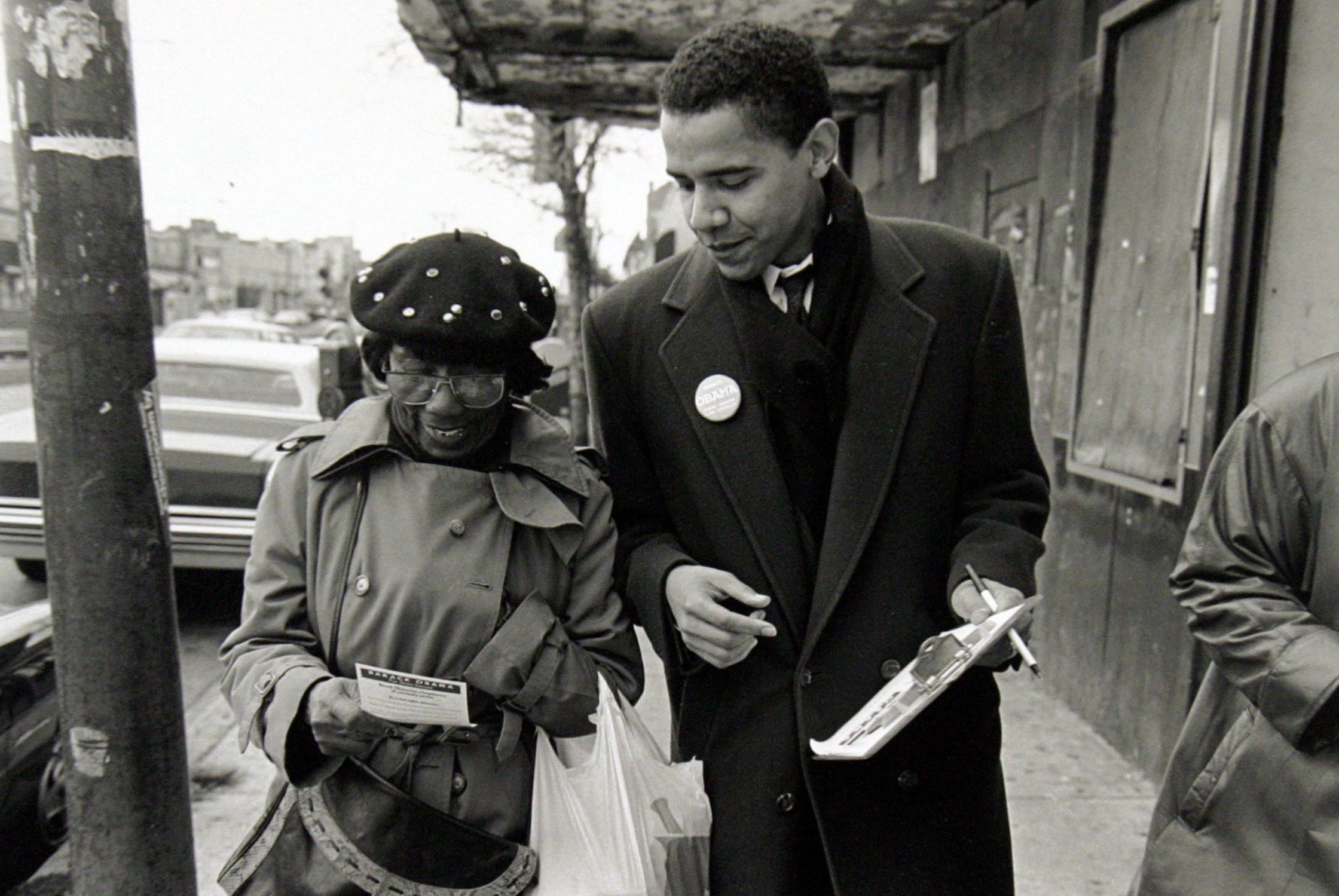
People often joke that Obama just read The Communist Manifesto to get some black beret pussy. However, Obama’s community-loving radical schtick went beyond the doors of Columbia University. After obtaining his bachelor’s degree, Obama prepared the extracurriculars section of his Harvard Law application by heading straight to the Gardens, one of the most disadvantaged housing projects in the Chicagoland area. At the time, Altgeld Gardens was incubating the environmental justice movement, led by community organizer Hazel Johnson. Obama wanted a piece of the pie, and he joined Johnson in her organizing. He has since called this period “the best education I ever had.” I’m sure it was. Several thousand undergraduate students receive degrees from Columbia University per year, but there’s only one Toxic Doughnut to make your name in, and you better snatch it up when you get the chance. Obama took a book from the middle-class activist playbook: embed yourself in “the community” and use the grassroots momentum to push yourself into the halls of power. So that’s what he did. After several years of South Side organizing, he was accepted into Harvard University Law School, began working in corporate law, eventually ran for the Illinois Senate and then became president.
Though he now has no relationship with Altgeld Gardens, Obama has paid lip service to the South Side ever since. He even recently returned to Jackson Park, a nearby neighborhood, to build his Obama Presidential Center. Unfortunately, the Center’s construction has been heavily contested by local community members due to its potentially destructive impact on local wildlife and housing prices. Despite the fact that the Center has still yet to open, some nearby residents are already facing displacement. Several miles south, Altgeld Gardens still sits between a dump and a toxic river. Cancer occurs at significantly higher rates than the rest of the city. I would not trade places with any of my family members who live there. Maybe the Obama Center will reach out for a collab sometime soon. I’m not holding my breath.
It’s funny: Obama and Ali just about crossed paths. In another timeline, perhaps this would be celebrated. But in ours, it does not fit neatly within their legacies and has thus been minimized in their lore. And Altgeld Gardens, as per usual, is left on the scrap heap of history.
The public has a funny way of thinking about Black figures. Obama and Ali are unimpeachable. Meanwhile, Minaj’s transformation of the music industry has already been forgotten in favor of painting her as an irredeemable bird. In our world, Black figures are only allowed to be angels or demons.
Our inability to see nuance in Black political figures is a result of the racism entrenched in our politics. It is also partially due to the assumption that, as the downtrodden race, all Black people are for the people. Our Black icons either clear that high bar, or are sent to hell. In reality, it is entirely possible to shield oneself from racism with money whilst being very greedy. But Black people cannot exist within grey areas in the public’s immigration. The ones we love become saints. The ones we hate, we forget.
This canonization of Black political figures is not only racist, but fundamentally unhelpful: it erases the things about them we do not like, or—depending on the scope of their crime—erases their legacies entirely. When we force Black people to be icons, stories of their complexities that could be instructional disappear. We cannot learn from what we have decided no longer exists. Furthermore, when our icons disappoint us, we are actively demotivated: energy that should be going towards the world just outside our doors is sucked into internet debates over whether Beyonce’s attempt at an Afrobeats album negates her use of slave labor in Sri Lanka. Before one knows it, one is exhausted. And within community organizing spaces, folding chairs collect dust. Though we view Minaj—or, dare I say, Kanye West—as coons and Ali and Obama as kings, they all exist within the same lineage: fallible individuals whom we lazily idolize and therefore refuse to learn from in the ways we should.
Imagine if we saw our Black icons for who they were. How would this reorient our understanding of the world? Ali’s support for Reagan was likely influenced by brain trauma from boxing: a sport that paid him handsomely to abuse his body. Who else does this? Football players, maybe? But sure, a Super Bowl halftime show is revolutionary. And despite his radical views, Ali devoted a significant amount of his time to socially conservative religious politics. Co-extant radical and conservative attitudes are still common amongst Black people, despite what Harvard-educated pollsters may have you believe.
So let us turn to Minaj: a woman who fled poverty as an immigrant child, was raised in a violent home, and then spent years being abused by various partners and her professional industry. She now allegedly surrounds herself with pill-popping rapists. Is this really an uncommon response to her experiences? Minaj has also spent the last few decades existing as a migrant in an increasingly xenophobic country. No wonder she wants citizenship. Do you think other people would not kiss Trump’s ass for the same opportunity? And Obama? Our first Black President bombed Pakistan with artificial intelligence-guided drones before “AI” was a household term. But my friends in Palestine really like him, because he’s the only president who told Benjamin Netanyahu to go fuck himself. Nothing is simple. When we delude ourselves to the contrary, we lose.
It saddens me that the same people saying “Fuck Nicki Minaj” take inspiration from clowns like Kendrick Lamar. Do you think Kendrick Lamar went through any fewer loopholes than Minaj to not pay his taxes this year? It is easy to clown her. It is harder to hold her failures and accomplishments at once, and alongside those of her peers. But we must accept that nobody is perfect, and that everyone will disappoint us. Even Zohran Mamdani, a fellow African king. He may not have disappointed you yet. However, he will. Everyone will. That is life. But it is not the end of the world.
I have a Muhammad Ali poster somewhere in storage. When I move out of the shoebox I call my apartment, I’ll probably hang it up. Because of Ali, my father charted a path that led him to my mother, to his eventual line of work, and to me. If Ali had not told him to quit boxing, I would not be here. My father might not be either. But also, without Reagan—Ali’s 1984 candidate of choice—several of my family members would perhaps still be alive. Ali supported Reagan amidst a reelection campaign: he had seen Reagan’s first term, and its destruction of Black communities across the country, and he didn’t care.
I will put up the poster despite these things. I want to be regularly reminded to have courage, and to remember what he did for my father. But I don’t need to shape my world around an idea of Ali. I do not need to make him someone he was not.
And when I listen to Nicki Minaj, I’ll do the same.
Head to Hilde’s Visions and subscribe now.
WHAT TO READ NEXT
Zadie Smith's 'On Beauty' and the death (or not?) of African American literature

Occasional contributor Luke McGowan-Arnold on the necessity of grappling with reality, and how contemporary African American novels evade engaging with the politics of Black life today.
For our oldster audience, hardcore Nicki fans call themselves Barbs.—Ed.
 | A guest post by
|
So sad to see how the mighty fall and fall and fall
Thank you. Great essay