


When a new Discordia Review Press publication is released, we’re usually as surprised as anyone. So it was when we were informed that we would be publishing The Hobo, the latest chapbook from Phil Hall, at our upcoming triple-launch party at Montreal’s La Sotterenea on November 2. Hall is the rare poet that the editors of this press can’t think of a single negative thing to say about, and we’re frankly in love with the manuscript (selections of which were previewed as part of our Fellow Travellers series back in August), so the fact that we have apparently designed and printed 100ish copies of the book at some point over the past month comes as an extremely pleasant shock.
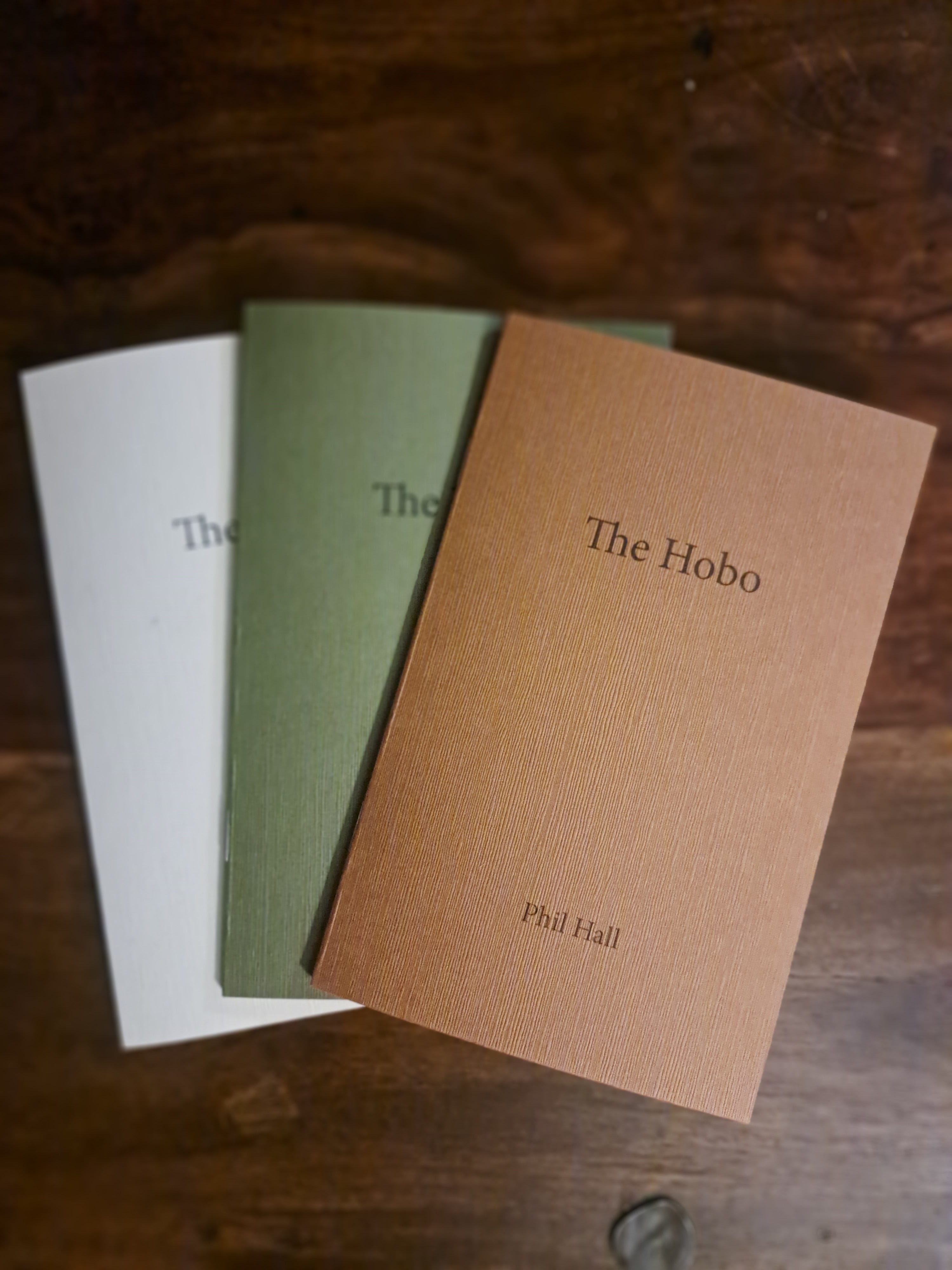
In the interest of introducing Hall to those in our audience who are unfamiliar with him, and to answer a few of our own questions, we’ve invited back Prof. J. Mattingly Furstenau, lately of the Tangier Folk Music Institute, to tell us a little bit about our latest Discordite.
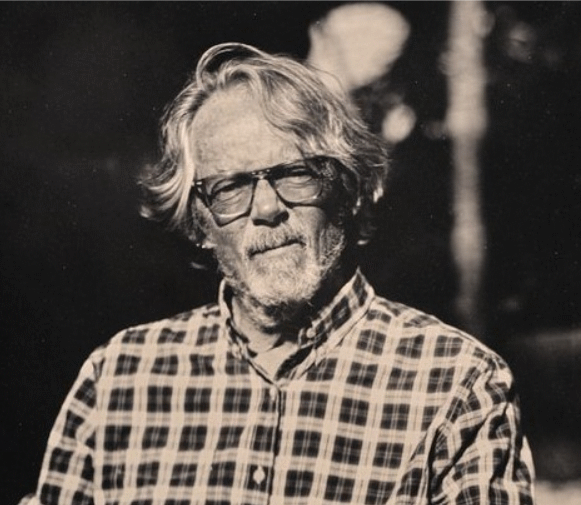
“The remains of Phil Hall were recently unearthed during a routine balancing and rotation of the occupants of Perth, Ontario’s Old Methodist Burying Ground. Still alive and, by all accounts, fairly chipper all things considered, Hall claimed it was not the first time he had been accidentally interred, and was not likely to be the last, and besides that it had given him plenty of time to work on his latest manuscript, The Hobo, scheduled to be published by Discordia Review Press in November 2025. [Ed. Note: Oh get on with it, we already plugged the book.]
Born Philbert Hallmanfleischer to a conceptual agronomist father and a mother who has been tentatively identified as a noun, Hall’s early years are a source of considerable debate among both scholars of Canadian poetry. As a youth, he was diagnosed with a dangerous allergy to compromise and, after convalescing from his first books, took on a series of increasingly severe masters, the most severe of whom was himself. Under such tutelage, he devoted himself to the radical excision of all that was false in his own voice, which resulted in at least a decade where he communicated exclusively by blowing into the chamber of a small bird’s skull he carried in his coat pocket that he played like an ocarina. Eventually, speech returned to him or was returned to him, here the record is unclear, and he eventually took a degree in Cloaca Dialect Studies as well as Irving Layton’s nose. Over the course of more than twenty trade collections (a few of which were set upon by hoodlums and forced to accept notable prizes), Hall became one of Canada’s most respected writers (or, in his words, “custodians of silent panic”).
Reports of his footprints, instantly identifiable by their so-called “staggering line,” have appeared across the Americas, from Windsor to Bobcaygeon, the Black Mountain to Resolute, as have the near-lingual clusters of vowels (woth reiw vul wthe tehy .fl etc.) he is known to leave like spoor upon the snow. Even now, he walks and he tinkers, he walks and he tinkers, and with well-fibred regularity chapbooks emerge. The Hobo is the latest, waiting to make its pallet on your floor and pay for its lodging in song. You won’t regret letting it in.” — J.M.F.
Hall is the author of Vallejo’s Marrow (Beautiful Outlaw, 2024), The Small Nouns Crying Faith (BookThug, 2013), Killdeer (BookThug, 2011), An Oak Hunch (Brick, 2005) and dozens more books and chapbooks besides. A selected, Guthrie Clothing: The Poetry of Phil Hall, was published by Wilfrid Laurier University Press in 2015. Hall has taught writing at universities across the country, and is the founder of Flat Singles Press. The Hobo is his first Discordia Review chapbook.
The Hobo / Undamaged / To Die Sober

" I suspect that all these years have been
mere packing
for a few moments early on
& a time or two later
when my panic stopped & I saw through" — Phil Hall