

This is why I’ll never have a book called 'The Florentine Nun'
A series of epistles from the debonair William Vallières


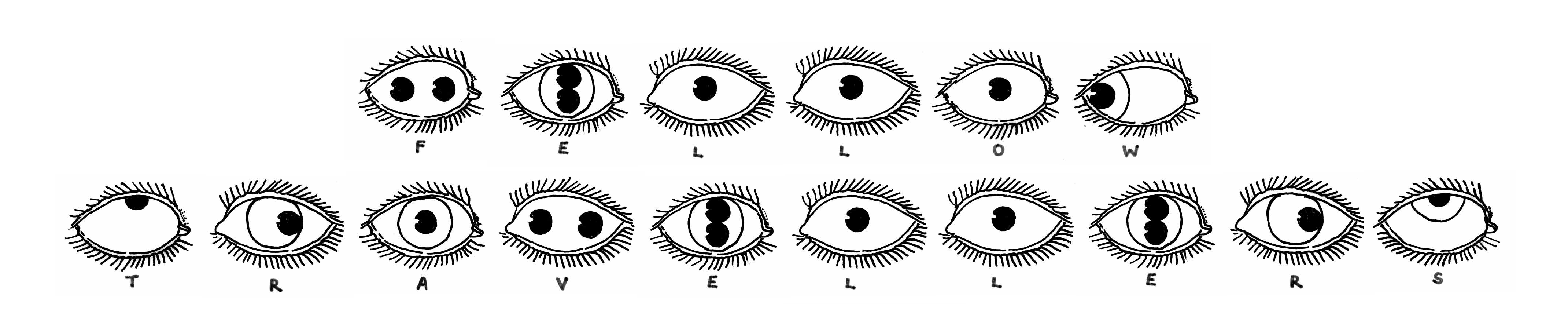
Discordia does not, it turns out, hate everything. Every other week, we share a piece of work from an artist who has earned our respect and affection. Today our old compatriot William Vallières (author of Discordia zine K no. 10, Februar, in 2024) shares excerpts from a series of epistles with the working title “The Lucia Poems.”
from The Lucia Poems
1

Distance compels me to write what I couldn’t say in the moonlight, Lucia; mainly, that your very best handwritten letter’s closing sentiment was right: I failed to paint a single bird for the dormant rain in the sky.
	I shatter at the slightest impermanence. Just yesterday, I could call you up, and with your coach-leather bag you’d turn the corner and be standing there beside me, in an infinity of moments.
	Perhaps I think too much like a phenomenologist.
	Today, the rain disturbed picnics and other reasonable events, sending the sherbert vendors to tasteful canopies.
	The days pass like tides pulled by the moon over the beach; in cinematic contemplation, contemplation, contemplation.
	Lucia, my grip.


2

You have no idea what I delete in a day. That’s why I’ll never have a book called The Florentine Nun.
	When was the last time you audited your failings, apposing questions to every listed event? I’m just asking for a friend. I’ve come to accept that things are unresolvable, like an oft-visited grave.
	It’s the unanswered questions that weigh, Lucia. The unasked are as blissful as the slightest rain of April.
	Soon it will be spring and everything will be next. The birds will choose their branches.
	Given time, excuses for not doing this and not doing that harden into fate.


3

I enter the bath like I enter scenery: with concomitant chamber-music.
	I remember you entering the river when it was morning and cold, your prized white scrunchy pulled by the current, freed to the sweep of future occasions. How you reached for it in vain.
	One day I turned and nobody was there, as if I had been tapped on the shoulder by a celestial preschooler. All the ideas of the world became wind, and people started losing their hats, sometimes even their heads, which rolled down the street like empty Coke cans, talking.
	When they came to recruit Odysseus, he played at madness, sowing his fields with salt.
	When you come for me, Lucia, look for me in the tub; I will be penning my most frothèd excuse.
	Always, your harried Diogenes.


4

A world bent into my image would no longer be the world, Lucia, I can always hear you say: the jackhammer is part of the day, buddy.
	But I maintain: birdsong and Byzantine chanting form the baseline of reality; the rest is just attempts at the seriousness and the beauty.
	I set my specificities on the counter by the roses, and now they have flown like a flock out of Norway. I await the tender generalities of abstraction. The curtains sway, the window cogitates, nothing stays, not even memories.
	It is the details—the finches in the cherry tree, the unfinished cheesecake—that break my heart, Lucia. The squirrel panicking for an acorn.
	If only to exist.


5

There’s a picture of a landscape on my wall, grazing sheep supervised by a nonplussed shepherd playing a reed flute at the end of the day, a picture I don’t dare touch even the nail of, for fear that the whole world might be suspended from it.
	 I thought lots, Lucia, like Boethius in his cell, trying to put the world back together. So much so that I built a life outside of this one, a world of gerunds, of bright immanent happening verbs. I was a fool in thirteen time zones, over several distinct epochs.
	Why must we build a cage around every truth, Lucia? To protect it like a shy bird on a curious streak? The heaven of truths is full; the picture, the word, they are graves. I am a corpse relating echoes to eternity.
	I was alive in your arms, once, when you called me Boogie.
	I held the burden in my hands and walked out into the sun.


6

;skdm;kdnv;unew;dvnèeijfdv^083u4^083à=r8923ç90eugç0eindvèoinweûdghç2u35ç090oajknhud7cdjnùh34rb^woeir09i94u5iondfviunune0jç938r0wocsjpiduhcxj
;nk.wesidguivlbcnkdsjècopkwecdvsegesefesfe44808evjv;verfdcvbvirjnfikeo30efp3kgèbaifdsnv;unreèpoqdjhsg;uehdg;usjvnçweinfaèrowiuhad^89gyu3û5à3ujt^891h4èoei
        gnèewijgç0eiwmfsèavkdfn—apologies, I was cleaning my keyboard.
	There was something important I wanted to say. I could have sworn it was extremely important. Then the dust settled in, at first between the letters, then between words, then sentences.
	I lived my life under the assumption that perhaps I could outwit authority and live a delightful existence in a world of beauty. Was I wrong, Lucia? Was I a fool to dream of clear water when razor clams signed the shallows?
	Some things finally happen—Marc Bolan whispers “fusilli” in my ear, and the marmotte across the street crosses it to clover. Once in a while, I get a stupid, unjuicy lemon.
	Words come back to me in fits, to unfrenzy.

WILLAM VALLIÈRES' work has appeared in *The Walrus*, *The Fiddlehead*, *Grain*, *EVENT*, *Plenitude*, and *Best Canadian Poetry 2019*. Translations have appeared in *Contemporary Verse 2* and *The New Quarterly*. His first book of poetry, *Versus* (Vehicule Press), was published in 2019.Interested in being a Fellow Traveller? Email your poetry, prose, visual art, etc. to discordia.sucks@gmail.com. We pay (not much), and pieces are collected a few times a year in a small print edition.
Fellow Travellers “Eyes” banner adapted from Opal Louis Nations’ “An Eyeball Alphabet” (1980).
IN OTHER NEWS
Masturbating for My Life
·

Three poems from Mickie Kennedy, who self-pleasures in the face of certain death.