



Discordia goes to the movies! Read on for our takes on Magellan (Lav Diaz, 2025), Mais où va-t-on, coyote? [But Where Are We Going, Coyote?] (Jonah Malak, 2025), and Un poeta [A Poet] (Simón Mesa Soto, 2025), and also Eris being mean to Tarantino.—Eds.
I forgot cinema was a visual medium. No, seriously. See, earlier this week I “finally” watched Once Upon a Time in Hollywood and I hated it. Yet another reminder of why I don’t watch contemporary Hollywood cinema. But there’s a sort of defeatism I think I’ve bought into, that this is just what modern movies “have to be,” that the best we can hope for is glossy A24 crap that looks like a fucking commercial.

Then I watched Magellan and now I think we should round up every Hollywood filmmaker and send them on a death march across the bottom of the ocean(s) to the Philippines so that those who can somehow hold their breath long enough to make it can have Lav Diaz TEACH THEM HOW TO MAKE A FUCKING MOVIE, because it is quite evident that THEY HAVE FORGOTTEN HOW. And as I said, it made me forget that cinema was a visual medium, but now Lav Diaz has helped me remember and I will not forget and I will hold every Hollywood leech responsible.
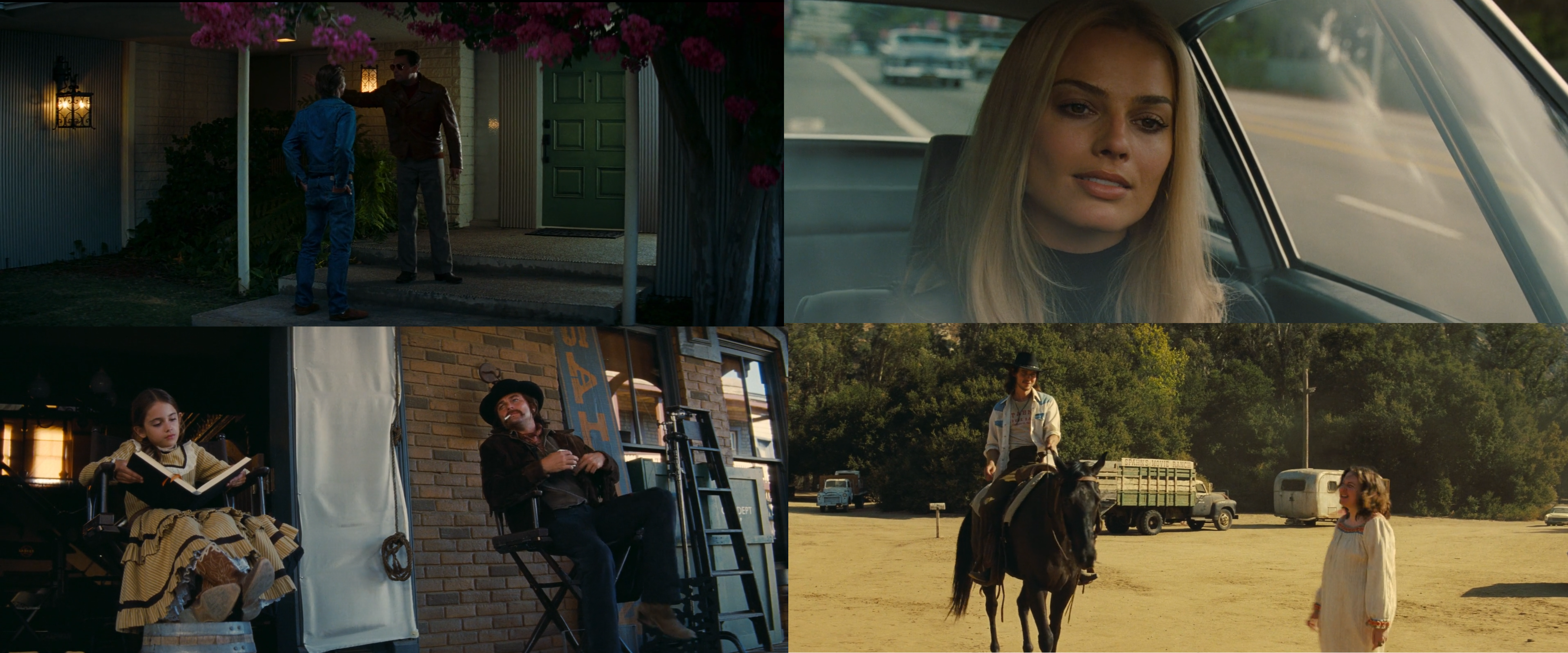
To film the aforementioned Once Upon a Time in Hollywood, Tarantino used a Panavision Panaflex Millennium XL2 (~$50,000), an Arriflex 435 (~$10-50,000), and an Aaton A-Minima (~$20-30,000), not counting the lenses (Panavision C-, E-, T-Series, and Ultra Speed) which cost at least several more tens of thousands of dollars each, while the physical film cost about $70 a minute ($4,798,000). Lav Diaz spent about the same amount as the collective price of the cameras alone in that equation, only in Filipino pesos (by which I mean about $2,000 USD) on a consumer-grade Panasonic Lumix GH7. For the record, Once Upon a Time in Hollywood is a movie that looks like this:1
…and Magellan is a movie that looks like this:
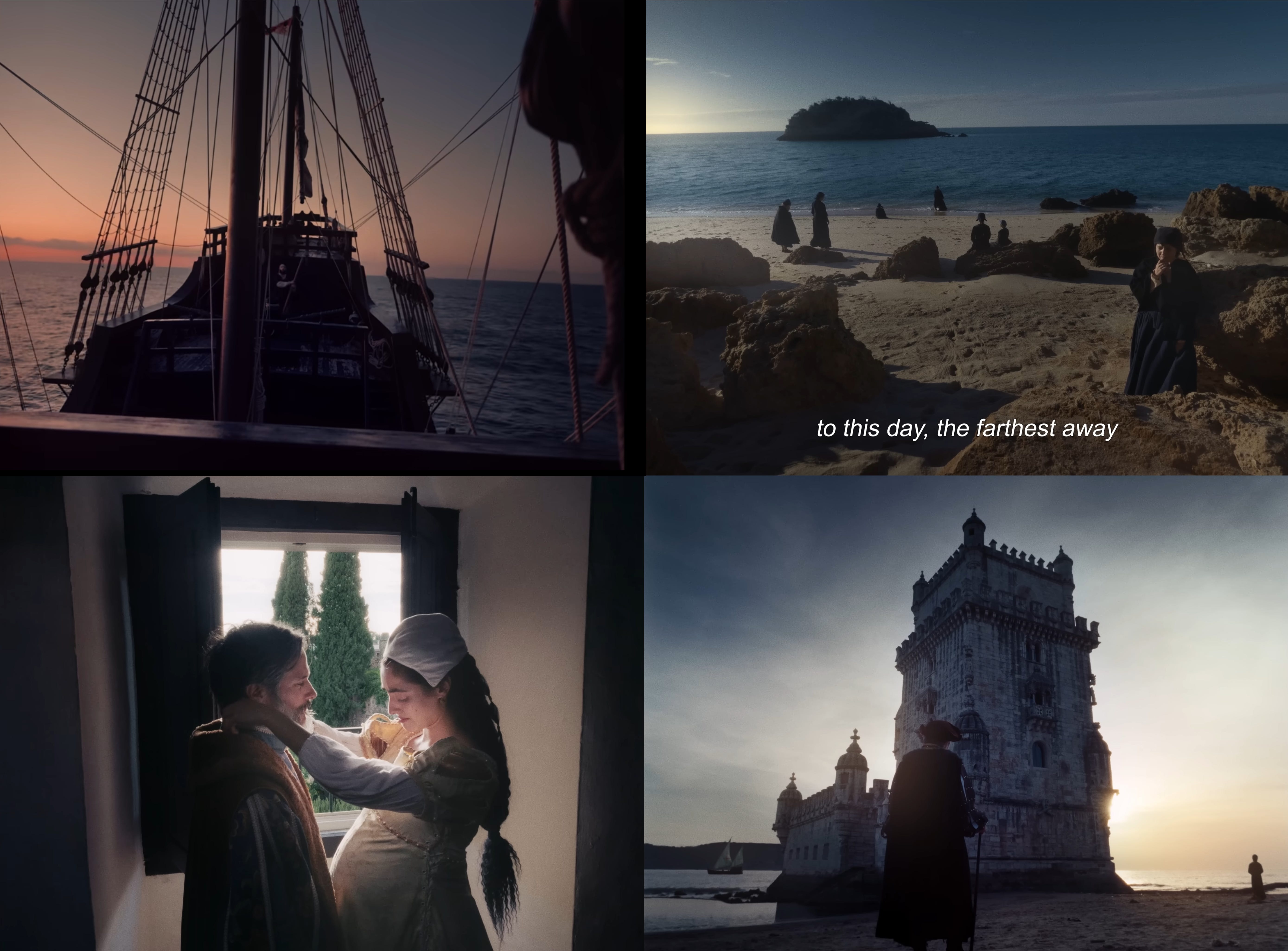
If I had spent the amount of money it cost to make the former movie2 and that’s what it looked like relative to a movie filmed with equipment that cost 1% of what I spent, I would literally put a gun in my mouth and kill myself. And, really, that is what every last person in Hollywood should do after seeing Magellan. After realizing that not a single one of them has ever made anything as beautiful as Lav Diaz has and never will, they should line up around the block outside the nearest gun store, buy all the guns, and then gun-shoot themselves in the head with their guns, gun-style.
It’s very possible that the same STI passed through the conduit of some Puerto Rican child at Epstein’s sex buffet that gave everyone in Hollywood Zionism also made them forget how to tell stories with pictures. Do you remember what Tarantino movies used to look like? Forget, for a moment, how much thinking about Pulp Fiction makes you roll your eyes on account of all the frat boys with the poster in their rooms, like actually take a second to look at how incredible these shots are, how much story and character is contained within them:3
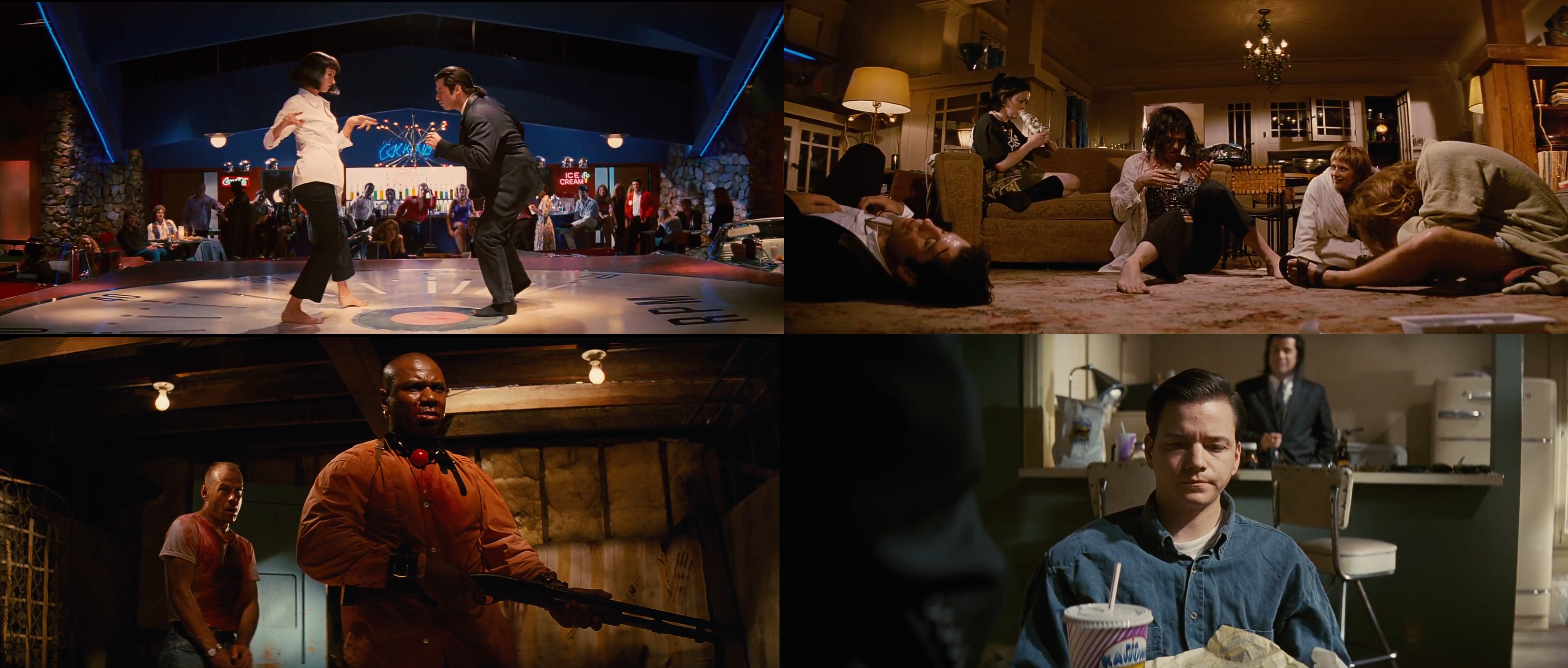
Although at least some of the sheen comes off of a movie like Pulp Fiction once you’ve seen the superior French films which inspired it (not unlike David Foster Wallace once one has read the postmodernists who preceded him), it is nevertheless an incredible film that looks great. There are many, many reasons for the decline we see generally in the visuals in Hollywood film (some of which apply to Tarantino’s later efforts though some don’t)—the rise of flat lighting and lack of shadows, lack of compositional thought, overuse of colour-correction, poorly-executed CGI, bland shot/reverse shot, TV/commercial aesthetic spillover—which in turn have their roots in a number of material developments such as the rise of Netflix, shorter film turnaround, larger film glut, streaming compression, TV/commercial production spillover, etc. But there’s another visual element holding Hollywood film back that is finally getting a bit more attention: aspect ratio.
Fuck widescreen formats. 4:3 forever.
Every shot in Magellan is a static long shot in which all the action unfolds like a living painting—literally “every frame a painting”—each so unimaginably rich in visual storytelling that it boggles the mind. One of the great aids to this is that the film is shot in 4:3, allowing the entire frame to easily fit in view, and freeing the filmmaker up to use any part of the frame at any time. *Cinemascope4 and other wide formats also greatly limits compositional flexibility simply because of how visual balance works, often forcing films to focus on wide horizontals and lateral movements (go back to the Once Upon a Time in Hollywood shots I picked at random and note how every single one of them is forced to play with the same simple left-right compositions. In fact, even those incredible Pulp Fiction stills would, I think, benefit from having been in 4:3). Vertical subjects are cramped, and you are constantly fighting unused side space. In 4:3, those downsides vanish, and I really can’t see why you’d go for wider resolutions over it in most cases. There is an erroneous belief that widescreen increases “immersion” (is that really what movies are only about? Immersion?), but even there I felt far more immersed in Magellan than I have in any of the Hollywood movies I’ve seen in recent years. The film was so vibrant and alive that I felt at times as though I was present in the action without the intermediary of a screen—there was a scene where a woman was picking fruit where I was overwhelmed by this sensation that I could reach my hand out and pluck one of those fruit from the tree.
But 16:9 is glossy and it looks good on your widescreen TV. Most people balk at the idea of having those dreaded vertical black boxes on either side of their beautiful screen, most of all the TV manufacturers themselves, so you’d better make something that looks good on their in-store screen demo reel. Just say no!
The film.
Magellan is easily one of the best new films I’ve seen in years (take this with a grain of salt, of course, as I am not “a film guy” and this is principally a literature blog). The film tells the story of the explorer Ferdinand Magellan as his greed plunges him further and further into madness and paranoia on his journey to subdue the “Indios.” Having already forsaken Christianity in abandoning his own chaplain to die for his refusal to betray his holy responsibilities, Magellan withdraws into a form of pagan idol worship that he then tries to use to supplant the Indios’ own pagan idol worship (and in the process creating Santo Niño de Cebú, an immensely important icon in Filipino culture to this day). His repressive tactics further and further alienate and incense the indigenous population until they rise up against him and (spoiler for world history) finally kill him, in the process ironically forming what will one day become one of the central foundational myths of Filipino nationalism.
Magellan’s Ahab-esque descent into manic and murderous obsession with his colonial aim to remake the Philippines in his image or else purge it entirely reminded me of Alex Cox’s Walker (itself a contender for my all-time favourite film). Also the movie had a lot of full-frontal nudity. I guess you could say that after this Filipino masterpiece I sure had my FILL O’ PENIS!!!!!! HA HA HA HA HA. Magellan is a profoundly affecting tragedy about the endless destructive power of man’s hubris and the immense human cost of colonial greed.
—Eris
And you know what else I saw recently?
Worth mentioning that I also saw a film recently called Mais où va-t-on, coyote? It is a Quebec-produced cinéma-direct-esque documentary about a volunteer organization that scours the American southwest for the bodies of migrants who did not make it across. It was an urgent and harrowing film that had me in tears throughout as I watched the immensely selfless volunteers try tirelessly to locate the dead in the oppressive heat but also to retain their sanity amidst the cruelty of it all, punctuated by the alien whir of border patrol beacons in the desert.
Good film. If I may be so gauche, “important” film.
—Eris
Hey me too, I got one!
Sire tagging in here to talk about another much lauded recent film that I found, well, laudable. (Very mild spoilers to come if you’re the sort who likes to go in totally blind, as I did.)
While the trailer makes the tone of the film fairly clear, I went into this on my friend Miles’s recommendation with only his summary of “ washed-up poet takes young girl under his tutelage” to guide me. From that description I was expecting either Dead Poets Society treacle or arthouse pedo-play. Instead, A Poet is viciously funny from practically the first shot, a superb example of “elevated cringe” comedy.5
As Miles warned, the film is indeed about a ragged poet named Oscar Restrepo (Ubeimar Rios) taking a teenage girl from the wrong side of the tracks named Yurlady (Rebeca Andrade) under his wing and, sort of, finding his way as a result. But there’s little sentimentality to be found here. Oscar’s protégé has a nascent gift for verse, but no particular yearning to be “an artist.” She becomes even less interested the more she is exposed to the loathsome careerists at the struggling poetry nonprofit Oscar haunts, who cynically offer her a scholarship in hopes of taking advantage of the PR boost from helping a poor dark-skinned girl acquire “culture.” Yurlady for her part is no naïf. She’s streetwise enough to bilk this man who is desperately using her as a vessel to manifest Meaning in his life, and, like virtually every woman in the film, is vastly more mature than he is, though when things start going bleakly sideways she unsurprisingly takes the brunt of the damage.
Even as A Man™, I’m generally wary of movies that dramatize the redemption arc of derelict dudes, but at every turn the movie confounds the easy expectation, often with an injection of demented slapstick that reaffirms our hero’s spectacular loserdom. Much of the film’s success rests on Rios’s unique physiognomy. Oscar is styled in huge baggy clothes to suggest a stunted growth that matches his internal arrested development, his rounded back and perpetual squint making him seem prematurely elderly even as his constant tantrums and huffy trot mark him as an emotional adolescent—he suffers a sort of metaphorical progeria. Rios, evidently like the rest of the cast a first-time film actor, could’ve been a master silent comedian so well does he communicate who and what Oscar is by manner alone. Watching him do something as simple as drink a bottle of beer, his entire jaw hanging wide open as if trying to bypass his gullet and pour its contents directly into his stomach, is morbidly fascinating.
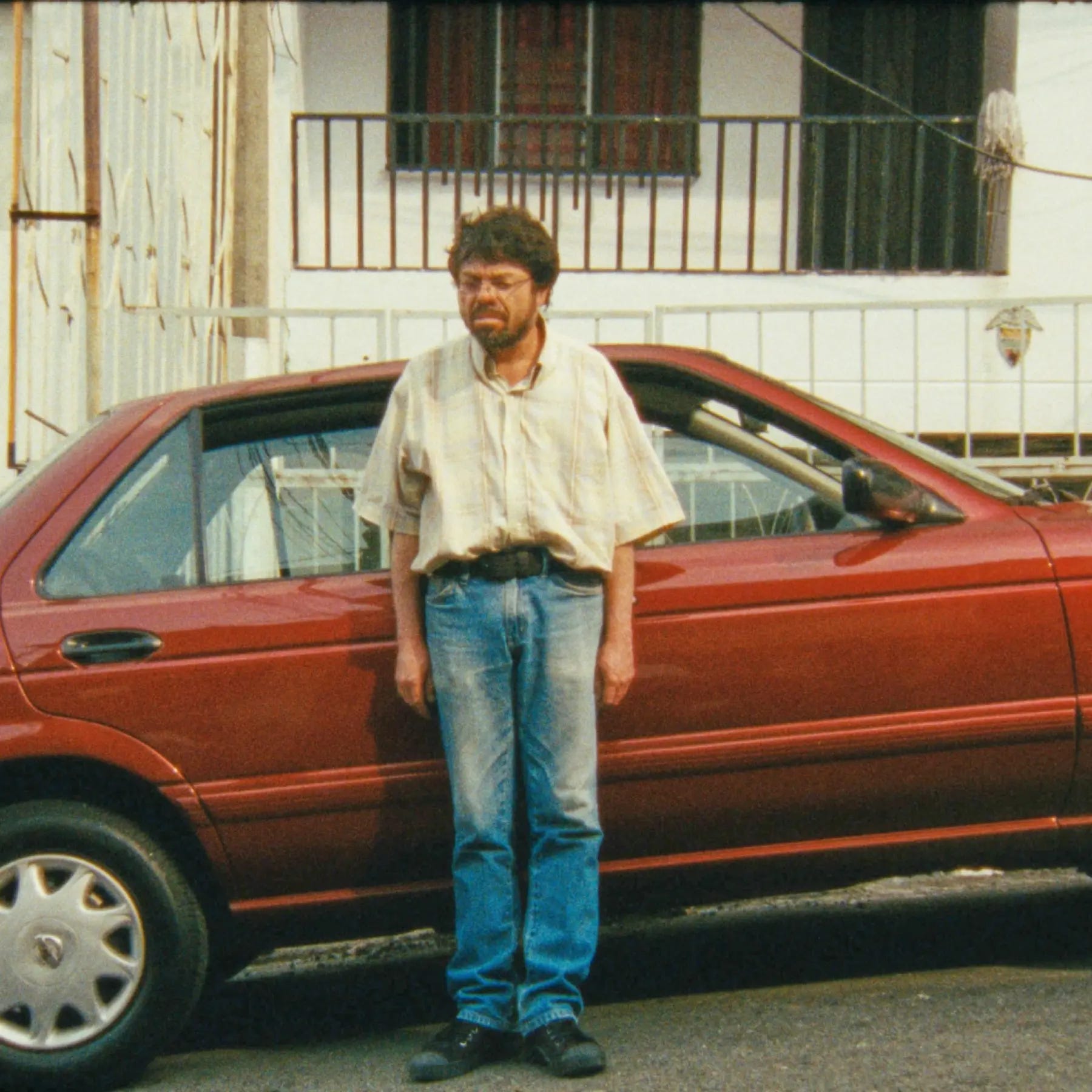
In life, wherever people try to resolve by brute force the contradictions between the lies they tell themselves and the ignoble reality of their true desires, absurdities arise. Writer-director Simón Mesa Soto has a real knack for depicting the existential flailing (and resulting collateral damage) that results when a person’s most cherished illusions crumble. Even when the plot mechanics begin demanding (by way of the attitudes of the female characters, whose expressions when they look at our man Oscar are the film’s Greek chorus) that we give the guy a bit of a break, it still rings true because of the simple reality that women so frequently do coddle and forgive men at their own expense. They don’t come across here as victims, just people a little sadder and wiser for the experience of this lousy guy. Like them, I didn’t end up hating Oscar, but neither did I feel pressured to pity him, which is the genius of Soto’s film—every time it seems to be threatening to go there, the character does something so perfectly annoying I laughed out loud like, “auughhghg fuck you man!” Oscar really does not deserve your pity on any grounds other than that he is a human being—which is to say that he does. That’s way more interesting terrain to explore.
I’ve largely avoided discussion of the details of A Poet’s commentary on the literary world here, in part because many of the film’s most satisfying jabs deserve to keep the added impact of surprise. But I will say that the film both honours the art form and demolishes its institutions in a way that is very much Discordia approved. Any lover of poetry6 will feel pangs of pathos at how accurately it depicts the genre’s debased place in the modern world—and also a certain wincing but genuine solidarity with that desire in Oscar for transcendence through words that constitutes his soul.
—Sire
MORE FILM COVERAGE
Stuck in Satan's subwoofer

Film studies guys love horror movies because so much of the discipline’s foundational criticism considers movies as though the camera were a pipette drooling chemicals upon a helpless, unblinking eye. It has been understood as a media of manipulation, and horror is the most nakedly animal-testing-coded genre.
For each of these shots in this comparison I clicked for four random spots in their trailers and moved to the nearest frame where there was no motion, or at least minimal motion, so the shots could be compared fairly.
It’s likely they rented rather than bought or maybe the studio even already owned it idk, but the point here is really that that’s how much the equipment costs relative to Diaz’s and it still looks like fucking shit.
Once again I am choosing shots at random, this time from the whole film.
This originally said 16:9 until a follower messaged me to tell me most of the movies I’m talking about are in Cinemascope. I’m not a movie guy (I’m coming at composition from a visual art background) so I didn’t know that, however that just means it’s even wider and so my point applies even more. My regards to the Redditors, who I’m being told are very incensed over this.
I used this term in my original Letterboxd review of the film assuming it was one of those critical neologisms that was so obvious I’d either a. picked it up unknowingly or b. had come up with it independently in an unimpressively common way. Googling it now it appears to have been used exactly once (by Deadline critic Damon Wise) and in August 2025 at that. I was fuckin’ six months off of coining a useful new phrase?! Now I’m (still) just some guy? Fuck!
Which based on our metrics is about a tenth of you, the demonic audience we’ve cultivated. As we often say around the office, “The only people we hate more than people who don’t read Discordia are people who do!”
-
Here's a perplexed Philipino perspective on "Magellan":
-
Perspectives of Magellan from a Student and Teacher of History - Universitas https://share.google/uLefnCRUjtvRuzlqv
thx for the magellan rec!