



Film studies guys love horror movies because so much of the discipline’s foundational criticism considers movies as though the camera were a pipette drooling chemicals upon a helpless, unblinking eye. It has been understood as a media of manipulation, and horror is the most nakedly animal-testing-coded genre of movie: whatever their intellectual trappings, horror films have a basic goal of upsetting their audience. Much of this is owed to the fact that film (the “eighth art”) and film criticism were born almost simultaneously in the early 1900s, at a time when aesthetic criticism was already fully formalized, and the foundational texts of film’s criticism were frequently concerned with its industrial nature: any multi-million-dollar process inherently implies a product. Early film criticism was obsessed with the nature of how meaning is manufactured, whether the critical method rested on a close analysis of filmic techniques or efforts towards a semiotics of film-as-language. Many of these efforts were partially stymied by the variable that film artists are frequently inscrutable, but even if the meaning of a film can be as subjectively elusive as that of any other piece of art, we can at least understand horror films as a machine purpose-built to terrify the tiny animal hidden within the civilized human breast. That framing presents the horror director as a manipulator, a terrorist given license to use the power of technology to force an audience to yield themselves up to feeling. And that clarity of artistic intent allows the theorist to indulge their inner B.F. Skinner and imagine the horror director as a conductor of the heart, deploying specific stimuli to brutal, predictable result.
There is a quality to film, like architecture, that subordinates otherwise independent forms to its own ends: the role of the composer, for instance, is reduced to shading or heightening the onscreen action. As a result, there is traditionally a brute force practicality to horror scores in particular that is distinct from music intended to be experienced as music alone. Even the masters understood this—think here of the shrieking violins of Bernard Herrmann’s score for Psycho, or the lurking two-note ostinato of John Williams’ Jaws theme. This is music with a job to do, and historically it has used blunt implements to accomplish it. But, as with any addict, horror audiences need progressively more extreme stimuli over time to continue feeling anything, and composers have provided accordingly.1
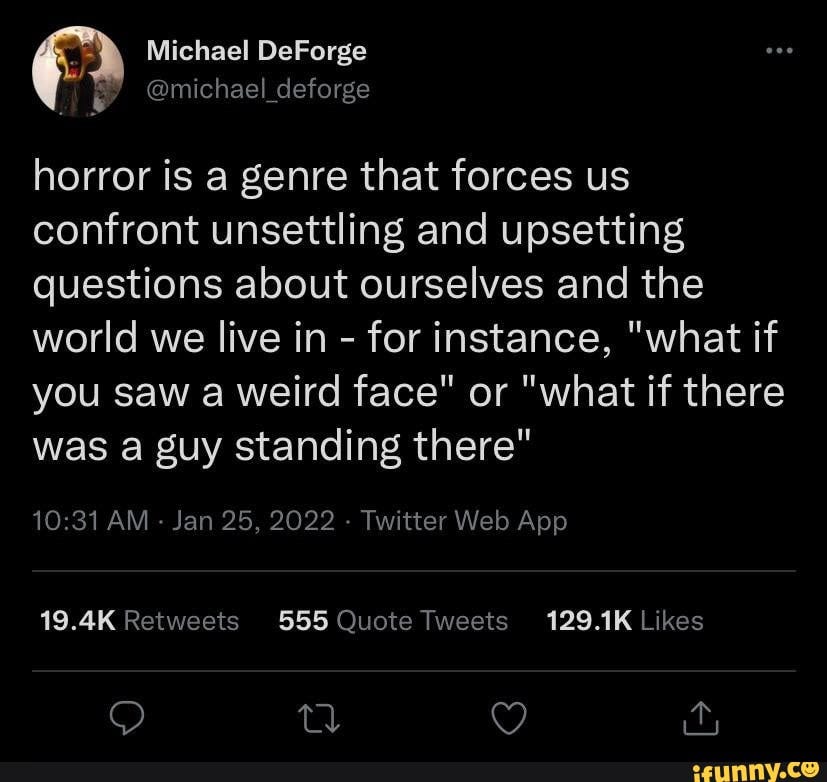
If dogshit J-horror adaptations and found footage horror were the most distinctive styles of the ‘00s, and the efficient ghosts-demons-and-dads-doing-their-best rollercoasters of the Blumhouse content mill basically defined the genre in the ‘10s,2 then the ‘20s to date have been the era of so-called “elevated horror.” The style emerged in the mid-‘00s with arty European films like Let the Right One In and Antichrist before becoming nearly synonymous with American independent studio A24. Despite a few undeniably superb films, in many respects elevated horror has been the same kind of buzzkill that the ‘80s swerve toward grim and gritty aesthetics was for superhero comics. (Did every horror film need to become a brooding, ponderously-paced rumination on family trauma or systemic racism? Were a lot of people who weren’t already maintaining fan Wikis for, like, Jeepers Creepers, really asking for this much lore?) Today, even idiotic sub-Blumhouse fare like 2022’s Smile, which is basically an adaptation of Michael DeForge’s “what if you saw a weird face” tweet, ape the stylish cinematography, hardcore (yet clinical) violence, and dark pop psychology of their higher-brow peers.
Spoiler: The monster in this movie “feeds on trauma.”
Sonically, the most distinctive quality of 21st century horror music might be its fathomless bass, a sort of guttural roar in the low-end designed to take full advantage of the ultra-definition speaker setups of the contemporary home theatre. (Which is to say: a room oppressed by a 75” screen and pricey oblong black speaker bar arranged by a man who smokes enough weed to pass for autistic.) See if any of these tropes sound familiar to you:
Extremely low frequency synthesized bass with a subliminal roar
Slow, deliberate, violent industrial percussion with a ton of reverb
Creepy whirring noises that simultaneously evoke machinery and insects
Staticky, panned whooshing sounds that suggest rapid movement captured on degraded video tape
Piercing digital whines, reminiscent of alarms or shrill Psycho-style violins
Snippets of higher pitched noises that sound like muffled or glitched recordings of human cries
If there’s a single piece of music that brings all these notions together, it’s “Consumed” from Excavation, Bobby Krlic’s 2013 LP as the Haxan Cloak—a record that, in retrospect, looks increasingly like Krlic’s audition to be a horror film composer given his subsequent work with Ari Aster, and how much the genre’s music in general now takes after his.
Unlike traditional symphonic scores or even the kind of throbbing but ultimately melodic progressive electronic stuff used in ‘80s horror scores, contemporary Upsetting Music largely eschews melody in favour of manipulating sound-as-noise to provoke a visceral sense of unease as directly as possible. Electronic music made its initial inroads into horror in the late ‘70s largely because it was cheap to produce, but the runaway success of independent/low-budget films with keyboard-heavy scores like John Carpenter’s Halloween made the aesthetic popular. Since then, genre film has continued to evolve alongside the darker strains of electronic music, from schlocky early ‘90s flicks that incorporate techno and horrorcore rap, to the way industrial became de rigueur for a certain variety of desaturated, nihilistic, almost fetishy brand of cheap ‘00s torture flick.
Independent of this history though, I think there’s something specific about recent horror and thriller filmmakers’ embrace of somewhat experimental dark ambient/drone music like Krlic’s that links to Western contemporary anxieties and how these audiences experience fear in their daily lives. I remember many years ago (I’m 51)3 reading an article in a film theory class about how the rise of automation in the early 20th century kicked off a minor craze in the newspapers of the day for grisly stories about bodies being maimed by trams and the like. The author argued that these sorts of accidents were a new form or vector of terror specific to the industrial age, and that there was a corresponding spike in depictions of these tragedies in contemporaneous films, which tended to pull their subject matter and aesthetics from the well of public worries. Genre music has evolved along parallel lines. Traditional orchestral horror scores derive from ominous motifs found in classical music and opera, which reflect older notions of how evil and despair should be depicted—a Christian understanding of evil, with attendant tropes. A world mediated by religion and versed in devotional music (masses, hymnals, Gregorian chant) would naturally imagine Satanic music as its inversion (dark, baroque renditions of the religious cannon) or its opposite (“primitive” tribal music).
By the middle of the century, a secularized notion that evil might derive from the personal psychoses of individuals, or (as the tram reading suggested) the amoral indifference of technology and institutions, became widespread, and was duly reflected in the cinema.4 Today, for most of us in the West anyway, our bodies are more insulated than ever before from daily exposure to the sorts of violence depicted in horror films, and our fears have become more secularized and more abstracted still. Our most immediate experiences of dread and bodily harm have tended to come from what we witness on our screens, the fear of seeing something troubling. At the same time, filmmakers have realized that the sonically unsettling aspects of ominous symphonic music (extreme high and low frequencies; disharmony; jerky rhythms) could be divorced from the orchestral context, leaving artists with a set of specific tools for physically startling audiences in tandem with the action onscreen. When reduced to this level, we are not even so much talking about music as we are noises, whether they are produced using digital or analog instruments.
There are many complimentary examples of this on the visual side of the ledger: even as the found footage subgenre has largely subsided as a dominant mode (in favour, of course, of the webcam movie), many traditional films still attempt a sort of counterintuitive sense of realism with techniques like lens flare, shaky cam, having droplets of liquid cling to the lens etc. that imply the presence of a physical camera that diegetically should not be there, that in fact flies directly in the face of the notion that we have been watching events transpire via an invisible, intangible eye. Despite their absurdity, these borrowings from documentary aesthetics seldom break the audience’s immersion because we are already conditioned to accept the unreality of narrative cinema: after all, if you started asking why the characters can’t hear the sinister music when they start walking down the basement stairs, or how the loud orchestra that should be just out of frame could fit in this modest bungalow, your friends would probably start fitting you for a sleeping helmet. The overt artifice makes certain aspects of cinematography nondiegetic in the same way a score is: that is to say, the psychic space of the film is conforming to the expectations of an audience whose lives are mediated by screens. Instead of identifying with the characters, we identify with ourselves watching them—a safe simulation of the fear and curiosity of opening any social media app during an era of streaming genocides.
Bobby Krlic’s music, to return to our convenient exemplar, tends to prioritize psychological and physiological effect above all, pushing these notions (in his Haxan Cloak work especially) about as far as they can be taken outside of extremist genres like harsh noise and powerviolence. When he makes his synths literally growl, our bodies respond to the perceived threat, even though we know what we’re hearing isn’t produced by a living animal. Some of what he’s exploiting, again, is stuff that goes back to our base threat-detecting instincts, but the overtly technological aspect is also the sound of horrible things both real and simulated we’ve seen through media. Staticky screams and the scrape of metal on concrete summon the spectre of snuff films, hostage videos, extreme BDSM porn, war footage, and all of the movies, video games, and music videos that have adapted their imagery to get a rise out of people. It also sounds, to a broad subset of “average” moviegoers, like the type of music people who want to rape and murder your family listen to for kicks.5
So it’s interesting that, despite his Haxan Cloak music being very much of the zeitgeist of today’s horror scores, he’s mostly swum away from it in his own film work. Ari Aster wrote the script to Midsommar while listening to Excavation, and gave Krlic his first job as a solo composer on the film.6 Its baleful opening number, “Prophecy/Gassed” (which appropriately scores one of the film’s grisliest scenes) is pure Haxan Cloak, down to the industrial-esque percussion and interpolated sounds of sobbing. But he only gestures in this direction for the remainder of the film. Instead, his trademark darkness lurks in the roots of the score’s off-kilter chamber folk, appropriately for the rare horror film that takes place mostly in broad daylight, and which replaces the genre’s usual ratcheting tension with a lysergic sense of uneasy offness. As he has increasingly settled into his career as a composer for hire, we find the usual inconsistencies that occur in any oeuvre bent around enhancing the ideas of others. For Beau is Afraid, Aster’s 2023 Freudian tragicomedy, Krlic turns in a creepy, ear-needling orchestral score not far off what Colin Stetson did for Aster’s Hereditary. In the same year he was also handed the conductor’s wand on Blue Beetle, a Z-list DC property I had no idea had even been adapted, and turned in some very loud 2K Games-ass main menu music.
One of the challenges with forecasting the future of any genre defined by extremity is seeing what taboos there are left to productively break before they’re broken. It’s somewhat difficult to imagine a mainstream film of any kind being scored by a genuine harsh noise artist, but then again, Netflix just paid Stetson to do this for the soundtrack of the last otherwise unnecessary Texas Chainsaw Massacre reboot. If nothing else, interesting musicians across the experimental, electronic, jazz, and chamber scenes have opened up new revenue streams, expanded their audiences, and in some cases made music better than the films they’re meant to be scoring. I ultimately find the bleak digital realism and efficient cruelties of contemporary horror and its music less to my liking than various frightwigs past, but this is hardly unique to the genre. Much of what was once considered goofy nerd culture now insists on its own profound seriousness, which blunts a bit of the endearing outsider quality shared by many horror classics—with all due respect to Krlic and company, a lot of the time I’d rather just party because it’s partytime. But anyway, whatever your preference is, make sure you crack a beverage and throw on a few favourites before the pumpkins start rotting eh? It pays to be reminded we’re all just skulls really, and no one can tell whether they’re laughing or screaming beneath the skin unless they listen very closely.
The music of human bones

“I followed the hint of a friend who had told me about a charnel house in the countryside, which could easily be entered in order to find the desired raw materials for my instruments. So I went there and took what I needed: about nine skulls and a huge number of different kinds of bones, from small fingers and toe bones up to arm and thighbones..."
Keep an eye out for my next piece, “Why was there so much pee in 2010s horror? (One guess.)”
It shows how slippery these retrospective divisions are that Blumhouse first made their bank with 2009’s found footage smash Paranormal Activity, and later went on to produce 2017’s key elevated horror Get Out. Still it is their endless franchising machine of formally consistent titles like The Conjuring, Insidious, The Purge, Sinister, and even a series about a fucking Ouija board that remains the studio’s bread and butter. There’s nothing wrong with a house style, though as is usually the case returns have been sharply diminishing over the past few years.
Sire is joking about this, but I’m sure he fooled most of you anyways. —Eris
What, you afraid they’ll think I’m too old for you?
It’s a mark of how far ahead of the curve 1979’s Alien really was that the visual and sonic signatures of its wordless, industrial hell of a teaser trailer are still being ripped off beat-for-beat today.
You obviously can do a lot more with this kind of music than simple fearmongering—we can look at Excavation as part of a long lineage stretching from ‘60s experimental electronic music like White Noise through Nurse with Wound, Aphex Twin, and Nine Inch Nails, among many others. “The Mirror Reflecting (Part 2)” eventually reveals a sequence of austere, crystalline guitar-like sounds that post-metallers Agalloch might’ve produced; “Dieu” opens with some subterranean breakbeats and chopped up samples that nearly threaten to look in the direction of a dancefloor before a creepy violin quells the thought; the rain-drenched “The Drop” flashes a bit of a Baths-style emo/downtempo vibe when it isn’t trudging past the sounds of dark satanic mills. Just as some people will hear Excavation as sadistic junkie music, others will no doubt find it an exceedingly warm and plush casket to disappear within, the overwhelming weight of its sounds divorced of violent associations, just signals strobing across the darkened hemispheres.
He worked under Atticus Ross’s wing on a few films before striking out on his own—interestingly, this piece for obscure documentary Almost Holy sounds more Haxan Cloaky than nearly anything he would do subsequently.
The title of this is just *chefs kiss*
In a nutshell, the makers of horror movies are noisy terrorists who now resort to distilling the essence of dissonance as part of a putative art form.