

How arts grants ate the arts audience
Here's what happens to lit when a city (and a country) writes for nobody

By Emma Dollery
I have a pal who is one of the most avid readers I’ve ever met—his appetite is large and expansive. He doesn’t stick his nose up at genre fiction, nor does he shy away from the heavier lifting of literary classics. He took a minimum-wage weekend job, on top of his nine-to-five, at a bookstore an hour away on the subway from his house—trudging there even through the thick of winter—for no reason other than that he loves? to be with? the books? He’ll talk literary smack for hours, lay down strong opinions on this or that, and if you’re ever at the writerly events in Montreal you probably know him. He just loves the written word: the little sicko even claims to enjoy copy-editing.
When I first met the guy, I asked him, almost automatically, if he was a writer. Why else would someone be so obsessively bookish if he didn’t harbor ambitions to write one of his own? To my surprise, the answer was a pretty resounding no. As it turns out, he really hates writing.
There is something beautifully humble in the idea of loving a thing without needing to make yourself central to it, of being passionately devoted to an artform that you don’t necessarily want to take part in creating. And I mean love in the holistic sense, which undoubtedly contains a healthy streak of toughness, of criticism.
I can’t help but wonder: is this a dying practice? Purely anecdotally, I think yes. Throw a stone in Montreal and you’ll hit four sculptors, three bedroom DJs, two little poets, and a partridge in a pear tree. But people like my friend are rarer…or at least I haven’t met many of them.
This is telling, I think, of a larger cultural phenomenon that I’ll attempt to decipher below. Namely, that we seem to treat the desire to make art as inherently more valuable than the desire to receive it. Mix that with the “everyone’s a winner” attitude of a democratized art scene and you get too many artists, not enough engaged audiences, and a compounding pile of work that nobody asked for and nobody can get through.1
Unsung heroes
I hate to say it, but all roads seem to lead back to “This town ain’t big enough for 34 lit mags.”

The article asked what I consider to be a very good question—one about the Montreal literary scene, to be sure, but also one that extends far beyond it. If there is so much anglo literary content in this city, and I’m not reading it, and apparently my friend isn’t either, and judging by his essay neither is Sire (at least not, by any means, all of it), then who the hell is?
As Sire deftly noted, literary magazines often seem to exist more for writers than for readers: “it has always been the strangled purple hard-on of writers for seeing their own names in print that keeps the printers printing.” Suddenly I was all a-flurry about this. Seriously—who are we writing for? Can we really be doing all of this just to see our own bylines flickering briefly on a webpage (in print, if you’re lucky!)?
Darby Myr’s response to the 34 lit mags article actually touched on the subject of the audience more directly, albeit briefly. She disagreed with the idea that too many literary mags are the problem, and instead shifted the onus onto the readers of Montreal’s anglo literary scene. We should be reading more, and demanding excellence from our mags, she wrote.2
I don’t want to get into the weeds of an old discussion, but I bring it up mostly to thank Darby for putting me on to a Fran Lebowitz interview that has been rattling around in my head ever since. In it, Lebowitz notes that while much has been said about how the AIDS epidemic decimated a generation of artists, less attention has been paid to the fact that it also wiped out a generation of extraordinarily discerning audience members—the connoisseurs, obsessives, and deeply engaged viewers who formed an essential part of the cultural ecosystem. “An audience with a high level of connoisseurship,” she says, “is as important to the culture as artists.”
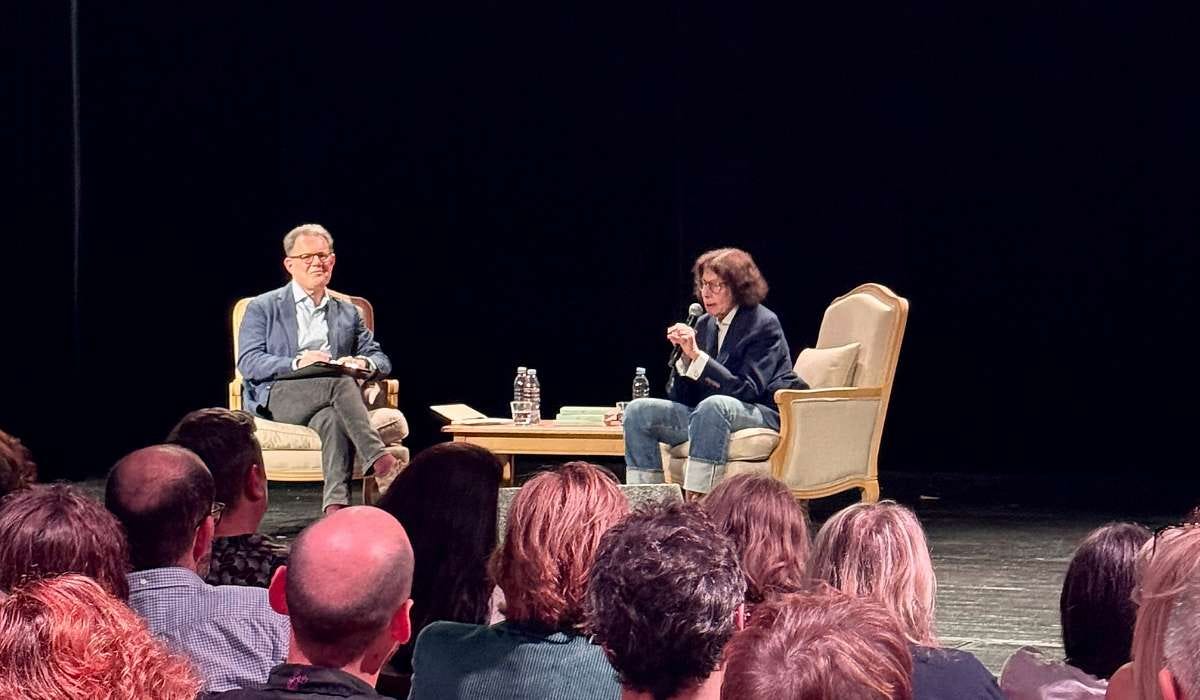
In other words, the relationship between artist and audience is a feedback loop. Artists need audiences— healthy, discerning, careful, cutting, active audiences are the unsung heroes of the artworld.3
Romancing the looky-loos
In my reckoning, being a discerning audience member is a critical and active task not that dissimilar from figuring out what it means to be a good artist—in other words it’s a very philosophical question that involves a lot of thinking about the meaning of things/life/art and the rules that you set out in order to get at said meaning.4
Art critic David Hickey, in his essay “Romancing the Looky-loos,” identifies two different types of audience members: participants and spectators, or what he refers to as “looky-loos.” The latter he degrades as “nonparticipants, people who did not live the life—people with no real passion for what was going on.” Basically, looky-loos are people who watch/read/consume because their object of consumption has been verified as important, often via some kind of institutional nodding.
The essay opens on an interview with Waylon Jennings, who explains that he began his musical career by playing for people in his community:
“They seek you out in little clubs because they understand what you’re doing, so you feel like you’re doing it for them [...] My real people, they get jealous because their girlfriend thinks I’m cute and try to kick my butt. They get envious because singing pays better than roofing and try to kick my butt. But, basically, they understand that I do this job for them.”
He goes on to talk about how, when he started getting really famous, his shows filled up with looky-loos instead. “You’re playing for people who want to be like you, and you can’t trust these people. Because to them, whatever you do, that’s you, and that’s cool [...] You don’t know who you are anymore, because it was the people in those little clubs that gave you that understanding in the first place.”
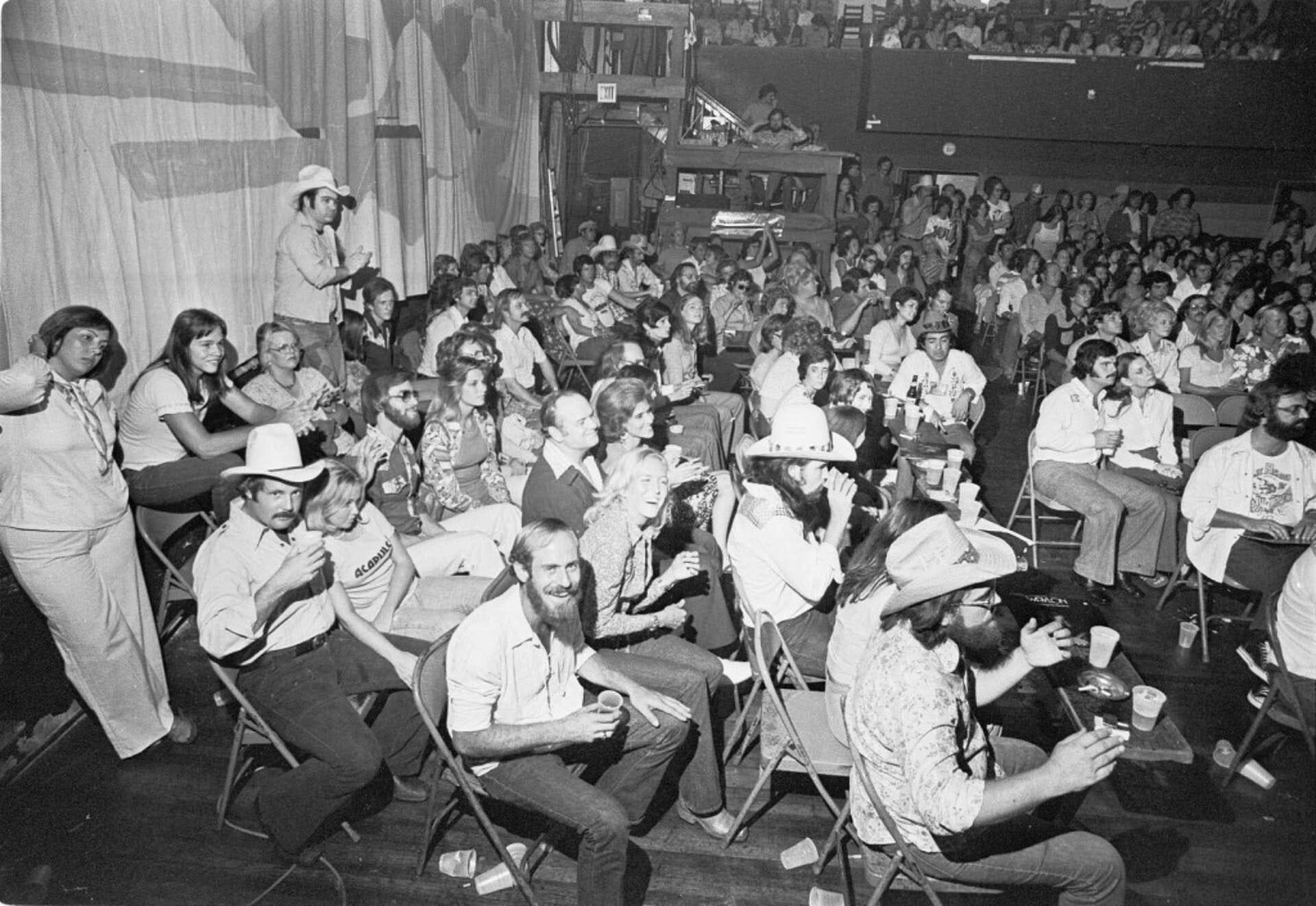
I love this interview because it gets at two things I deeply believe in. The first is a kind of existential question about what art is for—an essential question for any discerning audience member to ask themself.
In my view,5 all forms of art are a kind of metabolization and reflection of human experience. Creating is an act of honesty, of specificity, of connection to the world and to other people. When I read a book/listen to music/watch a movie, I find myself asking: does this feel like a genuine reflection of an experience? Does it capture a mood, a story, or a character in a way that contains real textures of life?6
Sometimes the experience is one of identification: that feeling of, ohhh, that poem is the perfect distillation of the specific flavor of loneliness I’ve felt walking down St. Laurent at three in the morning on a Friday night, the only sober person for miles. Other times it’s listening to Honky Tonk Heroes and getting the distinct sense that Jennings put his honest heart into the music-making, and I can, through listening, catch a glimpse of the emotional textures of being a Texan-born free American man living and loving around the South in the ‘70s. In both instances there is a quality of specificity and honesty, difficult to describe but impossible (when you have the hang of it) to miss, that becomes paradoxically universal. I can identify with the feelings in Jennings’ music even though I don’t know the first thing about being a Texan-born free American man living and loving around the South in the ‘70s.
Which leads to the second thing. Hickey writes that what separates the men from the boys, the participants from the looky-loos, is that the latter seems to place the artist on a kind of pedestal of talent from which he can do no wrong. This is not real love. Jennings on the subject:
“They already hate me a little, just because I’m me and they’re them. That’s why they always go on about how talented you are. Because they hate you. Because if they had this talent, they would be you. The fact that you’ve worked like a dog, lived like a horse thief, and broke your mama’s heart to do whatever you do, that don’t mean diddly-squat. To them, it’s talent. Supposedly, you got it, and, supposedly, they don’t.”
In order for a piece of art to really have that specificity and authenticity I am talking about, it needs an audience who understands the scene and who calls an artist out on his bullshit—one who is invested, deeply, in the health of the artform itself. The audience should be on equal footing with the artist. You could even say that the artist works for the audience.
With that formulation in mind, it figures that, as Lebowitz puts it, “the culture should be made by a natural aristocracy of talent. It doesn’t have to do with what race you are, or what country you’re from, or what religion… it should have to do with “how good are you.” She also says that we have “too much democracy in culture and not enough in society.”
With which I wholly agree: for sure everyone should have the right to water/shelter/medical attention etc. But why should everyone expect to publish a book? And why should everyone want to?
Choosing to be an artist is, or should be, a profoundly difficult path. It’s innately lonely: necessarily, you separate yourself from the warm, safe embrace of being one amongst many, and, by extension, put yourself at the mercy of the very group you’ve just separated from. Part of the job description is willfully choosing to become incredibly vulnerable to a sea of strangers, exposing your guts (your work) to them, and asking them whether they connect, why, why not, and what’s pretty or ugly or stupid about it all. Being a writer/artist who is offended by or afraid of honest feedback (in all its forms, whether that be savagely critical, glowing, or everything in between), is like being a doctor who doesn’t want to see blood. You signed up for this, honey!
In that sense, creating work for the public is less glamorous than it is absolutely fucking terrifying—the kind of hard work that requires effort, bravery, and a very thick skin. The power lies in numbers, the power lies with the audience, and it’s a totally valid, essential place to be.
You can still love an artform, be seriously involved in an artform, be actively shaping an artform, without having your name pasted on it. But this kind of participation comes with its own set of responsibilities and reciprocal honesty. It involves an active pointing of attention, supporting things that you believe in and protesting against things you don’t. Discerning audiences should be talking to each other, forming the metrics of their own taste, voicing strong and sometimes impolite opinions, and demanding from their artists—with readership, attendance, vocalized thoughts—what they have, by being artists, promised to give: an honest investigation of what it means to be alive.
Grant bait, ooh ha ha
I’m originally from Cape Town, South Africa, and I’ve lived in a few other cities around the world. Nowhere but Montreal have I encountered the phenomenon of people almost reflexively asking, at parties, whether you “have a practice.” Back home, while we have no shortage of other pressing problems, too many artists and too much mediocre art is certainly not one of them. I suspect there is a particular soup brewing in Montreal’s anglo literary scene that has led to a structural deprioritization of the audience and an unusual amount of written material.
It’s no secret that Montreal’s cheap rents and bohemian reputation have long acted as a magnet for creative and layabout types. According to Statistics Canada, nearly half of Quebec’s English-speaking population was born outside the province. I would venture to say that a significant proportion of these anglophones are assorted cultural drifters who have washed up here to write a novel, make a film, or figure themselves out.7
Further, with its layered provincial, municipal, and federal funding opportunities—not to mention organizations specifically dedicated to English-language artists—Montreal offers one of the densest public arts funding ecosystems in North America. In other words, it has a remarkable ability to attract people who arrive already primed to produce culture.
But maybe that is part of the problem. Perhaps, in Montreal, arts funding has quietly replaced the audience as the primary recipient—and arbiter—of art.
Practically speaking, this makes sense. If you would like to survive as a writer or small publication in this town, there’s a much higher chance of you getting your daily bread from government grants than from a purchasing public. So the material incentive to appeal to your audience is practically zero. In fact, the CCA offers a funding stream, Explore and Create, that is specifically for artists who are just starting out on a project. I personally know at least two people who have received grants for book projects that they never even ended up publishing. You can literally get money from the government for a book that will stay beneath your bed.
Also, while the CCA includes in their principles a note about an “arms-length” relationship to the government, to thwart the possibility of politics getting in the way of free-thinking, the projects are judged by a miscellaneous group of “peer” assessors, who might be anyone, from an emerging artist in Winnipeg to a millionaire collector in Vancouver—alongside, of course, several ambiguously titled bureaucrats. These are certainly not the dedicated participants that Hickey speaks of.
I’m aware that an obvious counter-part to this grant system is the free-market based style of the American arts scene, which comes with massive caveats like the fact that publications end up having to sell out to private funders for advertising, and Lord knows that can’t be much better than the Canadian government. That said, as Hickey once pointed out in an interview with C-Magazine circa 2013, the lack of easy access to funding does nurture a kind of zeal/competitive nature in artists that are determined to make work no matter what. He says, about a Canadian student of his,
“...all she has to do is blink and they give her money, as they should. Leah’s magic, but I think you all have it too easy. I’m friends with Douglas Coupland. People feed him with little spoons because he’s so valuable to ‘Canadian Culture,’ in which I’ve sensed a certain lack of ferocity.” (Emphasis my own)
According to this comparative study on arts funding around the world by the UK government, Germany and France actually spend more than Canada on their publicly funded art each year, and both are generally regarded as countries with robust artistic and cultural production. Perhaps this is just a folly of perspective (I bear witness to so much more of the cultural production in the place that I live, but it’s only the really good stuff that makes it across the pond), but maybe there is also an argument to be made for more funding? Under such a model, artists might no longer be chained to a scarcity mindset—no longer scraping the barrel, shuffling and begging, for limited supplies—and might feel freer to use other metrics to determine success, like making work that genuinely speaks to the audience, taking real artistic risks, or pursuing projects that would otherwise be difficult to justify.8
Regardless, what I’m saying about Montreal’s relationship to funding still stands: somewhere along the way, the tie between artist and audience, that necessary feedback loop, has been severed. Instead of creating for a discerning audience, artists end up forming their projects into ideas that fit the tastes of the funding body. It’s more likely that an artist or writer who knows how to do the government-speak of grant writing gets their shit funded. I’ve even heard the neat slang “grant-bait” thrown around for work that checks all the application boxes or participates in sanitizing a digestible image of Canadian culture.
BONUS: If it is or does [blank], it juuust might be grant bait!
“Reveals” an already obvious structural inequality
Has an artist statement longer than the actual work (all biographical data, no form or content)
Is all content no form (squarely in the tell-don’t-show category)
Contains one or many of following words/phrases: reimagining, queering, intervention, holding space, embodied, liminal, cultural memory, tenderness/care, hybridity, fraught, interrogates
Contains at least one mention of trans-(insert any suffix, e.g: generational, disciplinary, continental, sectional etc.), or inter-(insert any suffix.)
Concerns someone’s immigrant grandma and her cooking
Meditates on the horrors of climate change
Offers speculative socially conscious uses for AI / other Big Tech
I quote Lebowitz again, talking specifically about the New York ballet after its most discerning audience members were killed off in the ‘80s, but that I think we can apply with confidence here: “Everything has to be more blatant, more on the nose, broader, because obviously they’re [the non-connoisseurs] are not going to pick up little subtleties [...] it’s all dumbed down, dumbed down, dumbed down, all the way down.” In Hickey’s reckoning, we’re all becoming involuntary looky-loos because a lot of the loudest work, the work with money behind it, has not been formed by a discerning audience but by an institutionalized process.
Who wants to be a connoisseur of work that feels unspecific and dumbed down? It’s hard to be a passionately caring audience member when you feel you are being patronized. And so the pedestal is set up, with the artist, as “thinker,” holding court above, and the audience watching dumbly from below, eyes glazed over, force-fed work that feels broad, dull, and disconnected from the experiences of the people receiving it. Under these circumstances, it’s natural that nearly everyone would rather be atop the pedestal, would rather be an artist.
The terror of not being perceived
There are also tech advances and the internet to think about. The fact that every one of us has at our disposal the means to create and disperse whatever art we want to (if we try), paired with the kind of widespread main-character / narcissistic syndrome that social media has seemingly created—of course we’re doomed to think all of our life stories belong in a book. I mean, personally, every day of my life is a freaking movie.
And on that note, I’ll leave you with one local Montreal thought. A few weeks ago a friend of mine sent me this article, an interview with the founders of the Rodaisun poetry journal that has been popping off at the moment. It’s unclear whether this was the fault of the interviewer, or the Rodaisun ladies themselves, but both my friend and I were deeply annoyed that everything in said interview was posited as a sort of radical move. Writing poetry about eating a sandwich, publishing only your own writing, “Moleskineering”—all supposedly very edgy, very avant-garde.
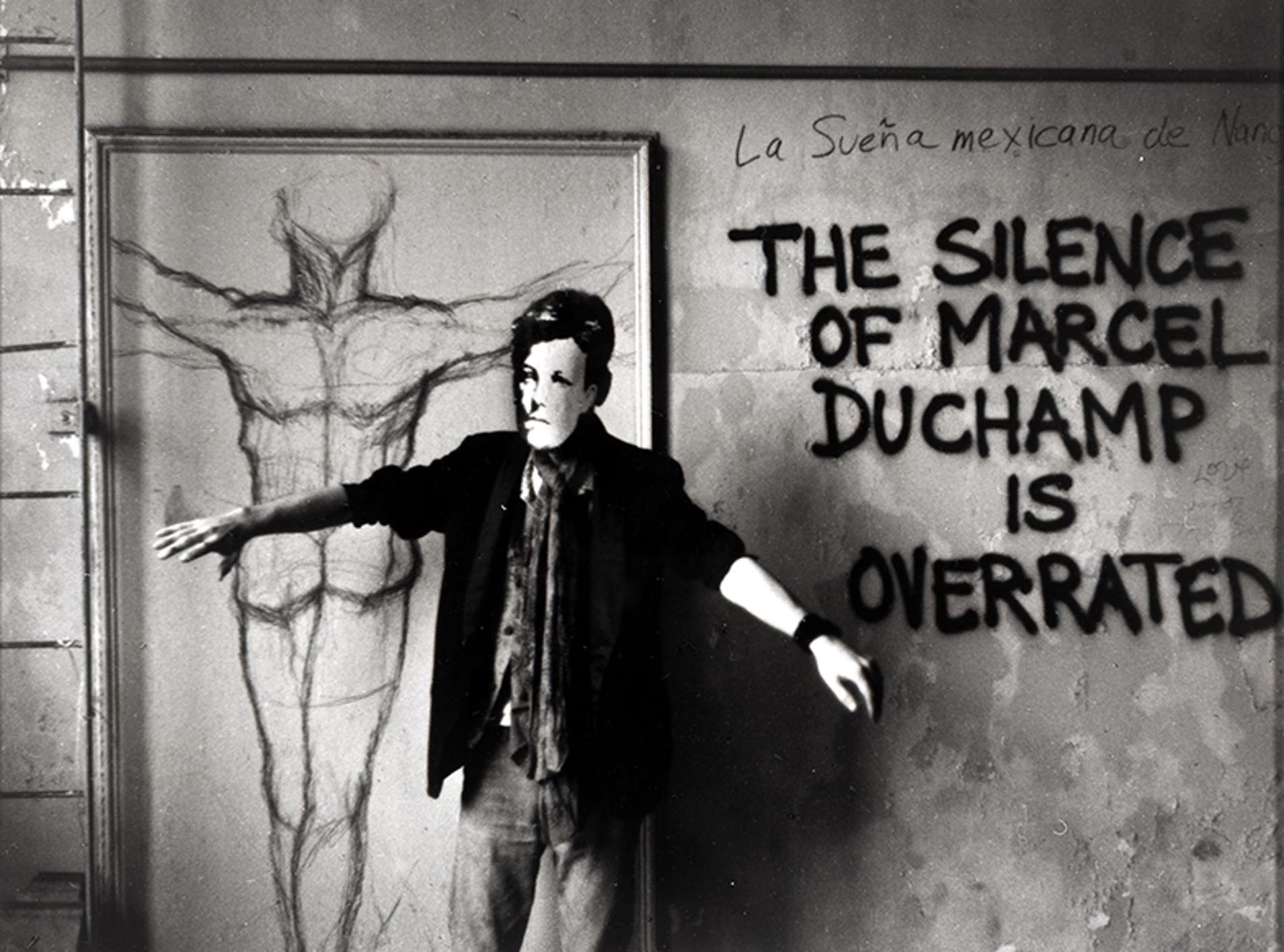
It brought to mind a quote I saw at a David Wajnarowicz (incidentally one of the creative kings that we tragically lost to the AIDS epidemic) retrospective at the Whitney all the way back in 2018. I believe it was pulled from his memoir, Close to Knives, and went something like this: “To make the private into something public is an action that has terrific repercussions.”
At the time I read this, during the wee stages of my twenties, the quote felt extremely moving—yes! Bring your bedrooms into the museum, I thought, viva la revolution. Except now I’m thinking about how Wojnarowicz wrote it way before the onslaught of Twitter, of Instagram. He wrote it as a gay man from the ostracized position of a much more conservative America. The truth is, our relationship to privacy has profoundly shifted in the last 10-20 years. Everybody is posting pics of their bedrooms on their feeds, and Substack is riddled with diary excerpts.
Perhaps we need a new definition of private. Or perhaps it’s keeping private things private, now, that’s a radical thing to do. In the age of the influencer, the celebrity politician, the relentless push to make every thought, feeling, experience into a form of content, we seem to have forgotten that non-performative means of contribution, though invisible to the public eye, are completely essential, fulfilling, and honorable ways of being. Unfortunately, it now takes strength and bravery to withstand the contemporary terror of not being widely perceived.
We live in a world where we don’t need any more content. More is not more! There’s too much! What we need are readers, viewers, listeners, participants. People willing to devote sustained attention and feedback to something outside of themselves. To put a simple bow on all these rambling words: it’s the health of the audience that we ought to be worrying about—a healthy audience is a healthy art world.
Emma Dollery is a chill guy, pool shark, fan of film and literature. Follow her on IG @reasonablechiller.
MORE ON THE MONTREAL MAGAZINE GLUT
OPINION: Actually, I'm begging for it

To create art you need friction and a little bit of pressure. Some of this must come from inside the artist, but even that internal voice must come from somewhere else. If it didn’t, what would be the point of editors, open mic hosts, zine fair organizers and whatever other gatekeeper you can think of?
Yes, maybe I’m using my friend as a kind of human shield to deflect some of the obvious hypocrisy involved in writing an essay that suggests not everyone needs to be a writer—that it is perfectly legitimate to be “just” an audience member. But he got genuinely excited about the premise of this piece and encouraged me to write it. So I’m doing this in lieu of the dedicated audience member. Nived, I guess this one’s for you, babe.
To which I say, agreed! But who has time to read all of it? Especially when we’re all furiously scribbling away and starting our own literary mags!
Obviously critics also fall somewhere within this feedback loop. Maybe as a kind of super-audience/audience 2.0/ audience with a public voice? And here I could digress into the pretty well-trodden path of examining how important honest criticism is, and how it’s becoming rarer in this day and age etc. but I shall restrain myself.
Manifestos are important, y’all!
People will and should have differing opinions on this, but I feel committed and steadfast in my own opinion—I believe it to be correct—and you should feel committed and steadfast about your own. And then you can think about whether it matches with mine, and if it does, hey, maybe we should start a literary mag!
I’m not talking about realism either. Things like fantasy or abstract work can also distill a feeling/texture of life in a less straightforward manner.
While I hesitate to give any airtime to a movie as terrible as Mile End Kicks, it does flag this phenomenon. In one of the scenes, the underdog lover-boy, who’s lived in Montreal for a while, explains to the protagonist, a new transplant from Toronto: “You just can’t work here if you don’t speak French. Or like, survive at all. Luckily Montreal is cheap enough that if you get a grant or enough money from your parents you can stay. So it’s like a waiting game, people want to be artists, move here from Edmonton, drop out of Concordia, move to the Mile End and do drugs at loft parties until they’re forced to get a real job in Toronto. ” The film, by the way, proudly establishes itself as a product of grant funding in the opening credits... just saying.
Sire: An alternative argument in this vein has been made for Universal Basic Income programs—by giving every citizen (or a majority of citizens) the same stipend, you can potentially remove much of the need for providing arts funding to specific individuals (with an attendant reduction in bureaucracy and nepotism). The UBI concept has been the subject of much critique, including from the left, but it’s interesting to think about in the context of the questions Emma’s raising here.
Really looking fwd to the worst offenders of this exact problem who’ll arrive to praise the essay without seeing themselves implicated :) and likewise excited to see austerity budget cut enthusiasts come in to cherry pick from this to argue against any funding support for artists at all.
But sincerely well done threading the needle. I write grants for fellow poors all the time and argue for it as tactical debt relief, almost totally divorced from whether or not they make a thing, and I do my best to do this at a volume where the people who really didn’t need the money to carve time out for themselves to write a book are less likely to win the things.
Hickey is also a nice pull for this. I like his remarks about driving several hours to see art exhibited, that the art better be beautiful enough to sit there gazing at it for longer.
In the spirit of criticism that this piece is engendering:
What is actually the point/thesis here? The title is zingy but what does it actually mean? The author is rolling back & forth between an 'elitist' & 'populist' approach-- but she doesn't ever settle on one or the other. She quotes Lebowitz and the "natural aristocracy of talent" but then argues that artists should be accountable to audiences -- so which is it?
The invocation of David Wojnarowicz feels especially confused-- it's distancing itself from Wojnarowicz politics (just briefly glazing over them) to assert that "keeping private things private is now the radical thing to do", collapsing Wojnarowicz work into a contrast with Instagram/Substack oversharing confuses queer visibility with publicity.
It's advocating a kind of preciousness "why should everyone expect to publish a book?" while at the same time insisting that being an artist is a difficult path and that scarcity=quality (but when has that ever been the case?). I feel like the arts grant became a vehicle for a confused & overdetermined take.