



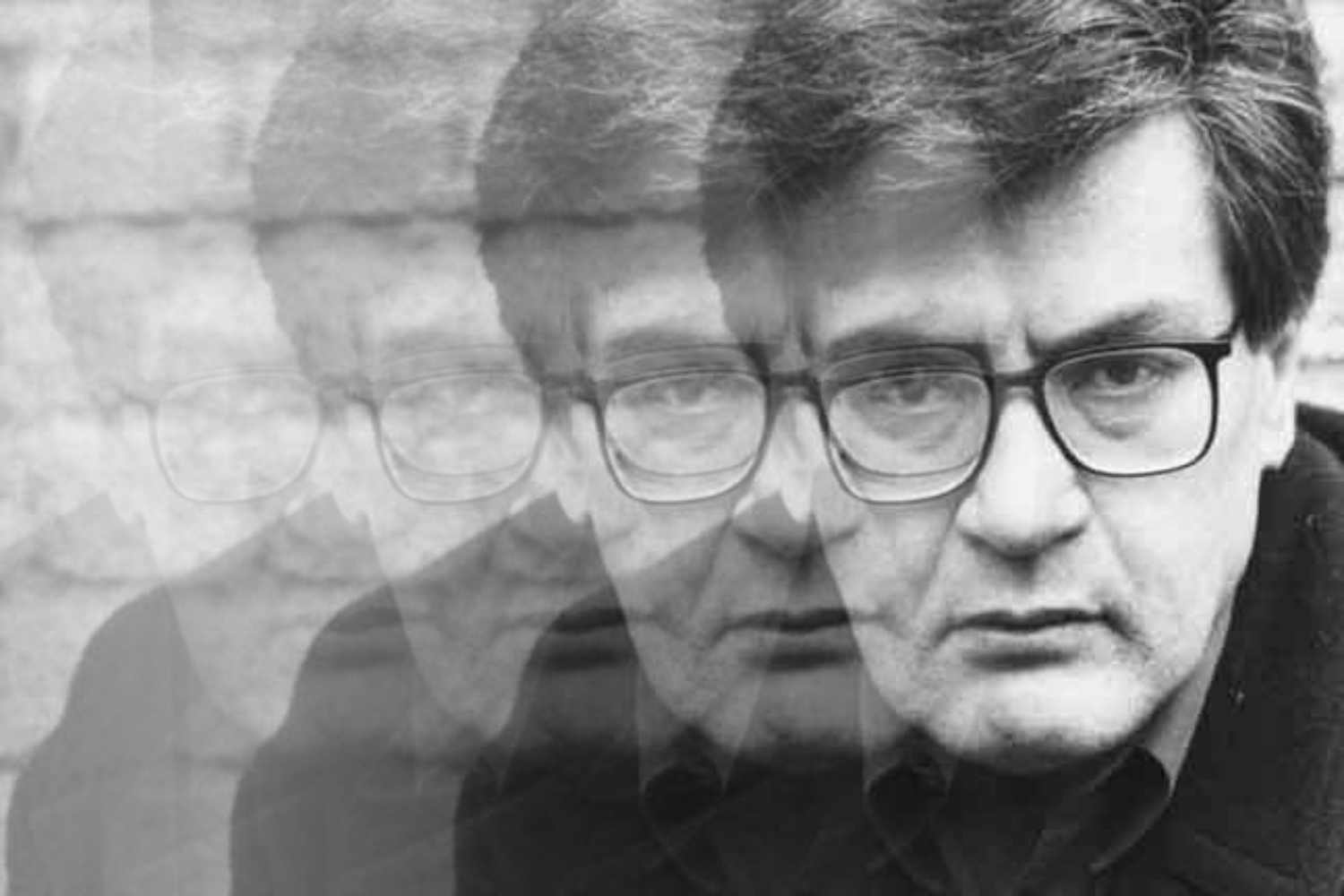
I read Battles in the Desert by José Emilio Pacheco recently and was really struck by its poignant exploration of the themes of unfulfilled love and memory and their interplay. As a child, Carlos is bewitched by the unobtainable Mariana, the mother of his best friend Jim, and Carlos’ own Beatrice after he learns she’s taken her own life. Not even knowing whether he can trust the news he’s received, Carlos is ravaged by grief and frustration:
So ancient, so remote, such an impossible story. But Mariana existed, Jim existed, everything existed that I’ve repeated to myself after such a long time of refusing to confront it. I’ll never know if the suicide was true… They demolished the school, they demolished Mariana’s building, they demolished my house, and they demolished Colonia Roma. That city ended. That country is finished. There is no memory of the Mexico of those years. And nobody cares — who could feel nostalgia for that horror? Everything came to an end the way the songs on the jukebox come to an end. I’ll never know if Mariana is still alive. If she were alive today, she’d be eighty years old.
Even after all physical remains of this former life and desire have turned to dust, Carlos is doomed to linger with the persisting memory: “I did what I had to do, and even now, so many years later, I refuse to deny that I fell in love with Mariana.” The fundamental incompleteness consumes him and he can’t move on.
In his memoir, Palimpsest, Gore Vidal dwells on the memories of his own childhood love, Jimmie Trimble, whose life was cut short during the Second World War. With their romance unresolved, Gore reflects on their clandestine sexual encounters and the “completion” Jimmie, both his lover and best friend, provided him: “what I was not, he was, and the other way around.” Eventually, Gore succumbed to unrelenting disappointment and frustration and by the way he makes it sound never loved again. “I was very much aware of my once perfect luck, and left it at that.”
Baudelaire, praising the work of Constantin Guys, describes him as possessing “the absorbed intenseness of a resurrecting and evocative memory, a memory that says to every object: ‘Lazarus, arise.’” But what memory resurrects in the mind it kills in reality. Baudelaire is not blind to this. With the utilization of memory, he says, “any form of justice is inevitably infringed; any harmony is destroyed, sacrificed; a multitude of trivialities are magnified; a multitude of little things become usurpers of attention.” Too much memory and the capacity to utilize memory is broken—think Borges’ “Funes the Memorious” and his inability to think abstractly due to his perfect recall—but there is the persistent danger in the curation of memory in the form of neurosis. This is how it is with our neurotic obsessions with loves of the past, missed chances, “ones that got away.”
In Fleur Jaeggy’s1 Sweet Days of Discipline, the narrator, Eve, falls absolutely in love with a fellow student at her boarding school. When the girl leaves suddenly and forever, Jaeggy’s narrator enters that familiar literary space of the melancholy of longing for a past love. Sweet Days of Discipline is supposedly semi-autobiographical, but I can’t say for certain which parts happened and which parts didn’t. For example: near to the end of the book, Eve encounters her lost love Frédérique as an adult. She is living in squalor in the city. “I grabbed her arm, I was afraid she might disappear,” says Eve, desperate to cling to his evocation of memory, but the girl she knew, as beautiful as she remains, is little more than a grim shadow. Her material impoverishment becomes a representation of the impoverishment of her memory. “She lives, I thought, as if she were in a grave.” There is nothing to be done to ameliorate this. Sometime later, Frédérique is said to have attempted to immolate her own mother by burning her house down. Why? We never find out and neither does Eve. The mysterious internal life of the real Frédérique is inaccessible to the shadow of her memory.
The human mind is wired for closure, and maybe it’s simply exacerbated by the fictions we write, creating an infinite feedback loop that holds us in constant anticipation of resolutions that don’t and can’t happen, some of us paralyzed by our feeling of its imminence, like the protagonist of Henry James’ Beast in the Jungle, only for life to come and go without fanfare. Some of our greatest stories meld the two and create resolutions out of the lack thereof; the acceptance of a lack of closure becomes the closure, but this is itself ironically still a kind of closure, a resolution we will never experience, because then the book ends, the cover closes with a thud, it is over, it is closed, and we remain.
Pacheco claims that Battles in the Desert was not autobiographical at all, but why so many readers thought otherwise is clear (fuck, I figured it was too!), because the sense of memory Pacheco assembles feels just too real. Pacheco created an imagined world imbued by an imagined memory, a neurosis tamed and contained in a bubble of fiction. Perhaps this is healthier. All the writers of autofiction I have known in my personal life have been extremely unhappy about the past and plagued by neuroses (the “Proust Trap” you could call it). One must accept the consequences of our existential unfulfillment. Barthes, by way of Novalis: “in reality, it is unimportant that I have no likelihood of being really fulfilled (I am quite willing for this to be the case). Only the will to fulfillment shines, indestructible, before me. By this will, I well up: I form within myself the utopia of a subject free from repression: I am this subject already.”
In The Salon of 1846, Baudelaire claims that “memory is the great criterion of art; art is a kind of mnemotechny of the beautiful.” That isn’t to say that memory is ever perfect or complete, no matter how much it is honed through art, and Baudelaire understands this—because “nature provides us with nothing absolute, nothing ever complete.” But it is our pathological obsession with this gap in memory, our being “borne back ceaselessly into the past” as Fitzgerald famously put it, that brings us back to art both as artists and as consumers of same, again and again.
A non-sequitur as an aside: there’s this interview Jaeggy did with The New Yorker where the interviewer is trying so fucking hard to squeeze water out of a stone by DEMANDING Jaeggy validate some vague thought he has about the relationship between her work and “the English language.” She is extremely obstinate in her refusal to validate his observation and the guy simply cannot give it up, it’s really funny, made me laugh:
The book has a curious atmosphere, both disaffected and intense—like Melville’s “Bartleby, the Scrivener,” perhaps. Do you think your writing occupies a place in English-language literature?
I don’t think so at all.
Why not?
I don’t know. Perhaps I’ll write you a letter.
You read very well in English translation.
It’s because the translators are so good.
But you have written exquisite essays on Thomas De Quincey and John Keats. I imagine you’re interested in English literature.
Oh, yes. Exactly. I hadn’t thought of it.
Do you prefer to read in English or in Italian?
More in Italian. I try to read in English.
Are there English mystics who interest you?
I don’t know. I’m so tied to the Germans.
Well, English is a Germanic language