

This town ain't big enough for *34* lit mags
Here's how indie publishing really works and what one city's extreme lit mag craze can tell us about the scene as a whole


I was talking shop with a writer friend the other night when the topic of how many active English-language literary mags we have here in Montreal came up. I figured it must be at least 20, an already bonkers number for a town this size, but as we started naming them off (and soliciting some help from friends) we ended up with a list of 34. 34! Thirty-four.1 Here’s the roll call.
Ahoy. carte blanche. Chouette. Commo. Contempt. Crab Apple Literary. Discordia Review (Fellow Travellers). Encore Poetry Project. Headlight Anthology. The Imagist. Ivy. LBRNTH. Limacine. mai/son zine. Maisonneuve. Maybe. Metatron (Micro-Meta). The Montreal Review of Books. Navel. Pastiche. Pixie. Quist. Rodaisun. Scrivener. Soliloquies. SQUID. Stimulant. The Page. The Pit. The Plant. The Veg. Vallum. Yiara. Yolk.
Now look, literature is very trendy at the moment (as Comrade Eris has recently written about), but that is just… what the hell, man. Every period in that block of text should toll like a mournful church bell.
For our readers outside Montreal, some context may be helpful.2 While the 4.6 million souls residing in the vicinity of Montreal rank it as the 20th most populous metropolitan area in North America (the city proper is 1.9 million, good for 8th overall), only about 700,000 speak English as their first language.3 This population is strongly concentrated in the traditionally anglophone communities of the West Island and in more recent émigré groups from former British colonies, neither of which have a lot of truck with the Plateau/Mile End/Milton Park crowd of migratory university students, aspirant artists, and kibbutzing queers that make up the bulk of the English lit “scene.” While Montreal as a whole is extremely bilingual (nearly 60% are fluent in both tongues), on balance the francophones tend to pay more attention to the domestic French-language ecosystem, which enjoys a considerably larger readership and offers more opportunity to actually make money. The local population these, again, thirty-goddamn-four magazines are theoretically serving is therefore, very generously, about 100,000—which you can then further reduce to the number of people within that who both care about reading and care about reading local writing. That’s an awful small pie to be slicing into so many wedges.
Of course, the sad secret of the literary magazine is that few of them are for readers. They are rather places for writers to aspire to be published in. Many years ago, I worked at one of Canada’s more respectable small lit journals. We had a circulation of a few thousand—most of them acquired thanks to our annual poetry contest, which included a year’s subscription to the magazine with its entrance fee.4 I wish I could claim this was a novel scheme, but it’s pretty much standard operating procedure in the industry. It has always been the strangled purple hard-on of writers for seeing their own names in print that keeps the printers printing. Even so, as I chatted on the couch with my friend, scoffing about the local glut, I couldn’t help wondering:
Where did all of these magazines come from? It wasn’t always like this.
Who are they even publishing? Is it just the same hundred or so people drifting in and out of the community furpile? Are there more magazines than artists?
Is there any difference between these outlets? Couldn’t we like, consolidate a few of these?
So I did what any sane and curious person would do: I made a spreadsheet listing every single contributor to every single active English lit journal in Montreal.
Now look, obviously I didn’t read each of the hundred or so issues included in my analysis (a bunch of them shits are like 75 pages!). But I feel pretty confident saying most of what I saw wasn’t very good. There were some things I very much enjoyed. To name three: a transcript of a thoroughly entertaining shit-talking session between Pip Morrison and Icari Tjitunga in brand new journal Navel; a crackling, eerie poem by Toronto veteran Stan Rogal tucked in the back of Vallum’s Summer 2025 edition (PDF download free here); Paige Cooper’s Naomi Klein-meets-dragon-porn short fic piece in Maisonneuve. But generally it was not a great showing for “The City of 100 Steeples and Also 34 English Literary Magazines.” I have some thoughts about this.
First though, while I expect there will be at least a few True Montreal Sickos who will be very curious about the 700-person-long spreadsheet and (way better) searchable Airtable database that Discordia pal Rebecca Lawrence Lynch helped me create, I’ll save the rest of you some time by putting all of that stuff (hyper-local roasts included) in an appendix at the bottom of this post. (If that’s you, you can jump there now if so inclined and then come back.)
Okay, now that those people have temporarily left us, let’s survey their mess (after a word from our sponsor).
Montreal Publishing: A “No Loads Refused” Orgy (And Is Your Town Any Different?)
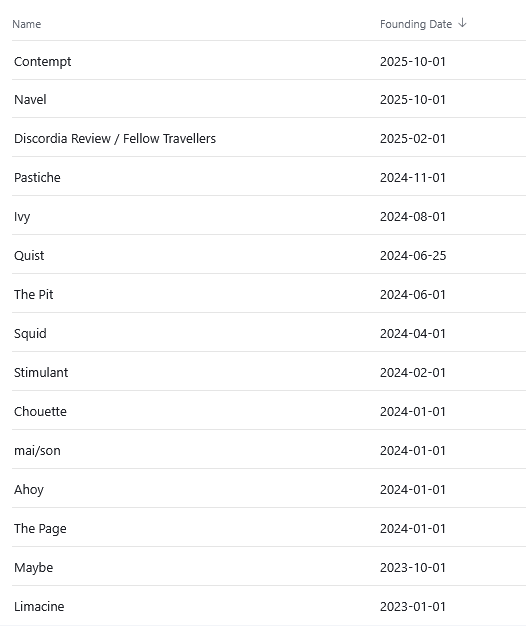
Today’s general crisis in literature has many mothers, but a major culprit is the diminishing focus on the formal, political, and aesthetic qualities of art as a unifying principle for movements and collectives. Of the magazines in the chart above, I would say exactly two have a narrow, defined stylistic mandate: Stimulant, which has a very alt. lit revival sensibility and an instantly identifiable look, and Navel, an outgrowth of the same social/artistic circle. When you read Stimulant you know exactly what they’re going for and, as a result, even when their contributors fall short in their aims there is a direction to the writing. The same cannot be said of basically any of the other new magazines.5 There are, at best, some affinities of identity: LBRNTH (est. 2021) brings the vibe of a glossy gay culture mag like BUTT to local queer poetry; a variety of mags have a feminist mandate. But as there is no such thing as a “gay poem” or a “woman poem,” except in the very broadest sense, how can these provide a genuine structure within which an artist can develop their personal aesthetic principles? And how fertile can these sorts of grounds be when all the other mags are dominated by women and queers anyway? Montreal literally has a guy called The Last Male Poet and his whole schtick is that he sucks and is a joke. That basically makes him one of the more successful conceptual artists in town.
None of these new mags (nor any of the older ones) are dedicated to an ethos of aesthetic minimalism, or of maximalism for that matter; none to concrete poetry or to any type of formalism; we lack Futurists and social realists, kitchen-sinkers, Decadents, Objectivists, Dadaists, Spasmodics, post-anythings, neo-anythings (not even accursed neo-Romantics), not one single self-identified magazine of capital-C Confessional poetry (even if that is broadly what the younger poets tend to produce). The only magazine in town that has to my knowledge published a statement of purpose or a manifesto is the one you’re reading right now, and it is a sign of how debased things are these days that said manifesto could (ungenerously) be boiled down to “don’t get an MFA” and “be mean to people’s whose art you don’t like.”
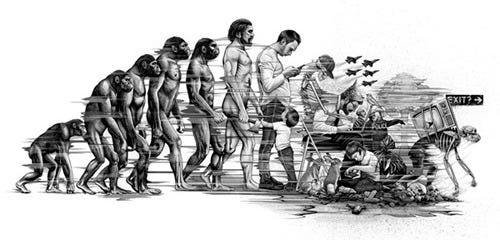
The trickle-down effects of this are obvious. Rejecting people who submit to your magazine feels bad—you may be surprised to learn even our loveable grump Eris hates doing it—and I suspect that a lot of this town’s editors don’t really reject much. This is a function of not having a real heuristic for deciding what to publish—taste, after all, is in part defined by what it excludes. And this in turn means that a writer who is pot-committed enough to getting published to submit to every mag will get published without encountering the productive friction essential to improvement.
What has happened in Montreal, as has been happening in many cultural centres over the past three years, is that after a long lull, publishing became trendy, and a whole whack of university students and recent graduates all decided to start magazines so they could publish their friends. Which, on its own, is a totally fine and endearing thing to do. The incestuous bonds of artistic communities can certainly be generative in a way—as fun as it is to rag on autofiction, to cite an extreme example, some excellent work did emerge from all that obsessing over social minutiae (work which was bound by a fairly strict conceptual mandate!). But to truly build something together artistically, to row down deep enough into the muck of the daily to grapple with that aspect of yourself which is transcendent, requires obsession—delusion even. But in an era where the notion of finding the new has been beaten out of us, you kind of have to be a mule on molly to look. Do these 700 people on my spreadsheet stay up after all these launches talking about poetry? And what are they willing to risk to find their art?
A protracted, not very coherent metaphor about soil conditions ensues
Hey you, non-Montreal reader, this is your problem too. It’s not like we just have shitty “kids”6 here—here, enjoy this report on a recent LA launch for some horrendous-sounding books that gave me a contact eating disorder and coke habit. The present state of affairs owes much to things that are specific to recent local history, but also to the broader cultural moment. The internet has invaded us all as thoroughly as microplastics, and it has crowded out those idiosyncrasies of place that were once the seedbeds of culture. Going insane in our own personal content bubbles actually does replicate some of these qualities (we become more alien to each other by the moment, which is great for producing entrancing, utterly bewildering artifacts), but it has largely been corrosive to, say, the state of monastic horniness that has produced much of our finest verse. There may eventually be a poetics adapted to the pace and distortions of the slop-era internet, but most of the attempts I have encountered Suck, and it may be impossible for the kind of refining process necessary to produce a mature form to occur because the conditions the form is responding to are continually shifting. The outlook is little better for prose.
The explosion of magazines can be seen as a yearning then for place. Before this latest wave of new lit mags (and reading series’, and open mics etc. etc.) Montreal’s scene was barren (a mere 18 lit mags!). Like everywhere else, the established magazine industry in Montreal was flambéed by the internet in general and then the pandemic in specific. And right before said pandemic, Concordia University’s creative writing department, one of the country’s most notable talent farms, was rocked by sexual assault and misconduct allegations. There’s no way of counting how many disillusioned people dropped out in the wake of the scandal, but there were also immediate material effects. The city’s most popular anglophone journal, Matrix Magazine,7 quietly disappeared alongside disgraced professor Jon Paul Fiorentino, who had been its editor-in-chief. Numerous figures throughout the local and Canadian small press community were toppled as the hunt for abusers (and, in some cases, garden variety assholes) spread. In the end, the scandal and the pandemic removed a layer of the “old growth” tree cover that had helped protect what remained of the soil’s local terroir from the constant deluge of Placeless Online Content.
These institutions provided a consistency to the scene that is especially important in anglophone Montreal, which has thin soil to begin with. Every year tons of people who came here for school graduate, figure out they can’t make a real living without decent French, and then move to a bigger city or go home, taking pieces of cultural memory with them. Montreal had a particularly thriving micro-publishing scene in the 2010s, of which almost nothing remains today save for its central pillar Metatron Press, which continues to carry on despite publisher Ashley Opheim’s slow-dawning realization 13 years in that there actually might not be any money in this thing. Most of the writers who made up that particular moment have skipped town, and what monuments they left behind (now 404 errors, mainly) have washed away in the flood.
Looking at my spreadsheet here, I’m struck once again by how few of the notable names from that era, many of whom continue to publish with varying degrees of success, have appeared in any of the magazines I looked at. Paige Cooper, Tara McGowan-Ross, Fawn Parker, Jessica Bebenek, Viola Chen (each with only a single publication to boot)… aaand that might be it actually. Hell, if you filter out Maisonneuve, carte blanche, yolk, Vallum, and Fellow Travellers, I’m not sure there are 20 people on there who even have (non-self-published) books to their names. This tells me that there is no real communication between the generations—that not only does our current clutch of writers and publishers want for potential idols and teachers within their own milieu (and outside the academy), they also want for figures to rebel against. It’s a loss for that greying millennial generation too—being a cherished “local writer” sounds like a backhanded compliment, but there is honour in being part of nourishing the earth you sprung from (even as a corpse!).
Conclusion: Notes Towards a “Some Loads Refused” Publishing Orgy
Look, literature’s various “scenes” are ultimately a very minor part of many writers’ lives, and some never engage with them at all. But even if this publishing surge is a fad, more people directly engaging with literature right now means our chances are better at diverting the real talents amongst them away from more useful or profitable artforms. We need that! But we’ve seen enough of the, “if you build It they will come” mentality at work to know that mentality’s limits when “It” is just a hole words crawl into to die. So I do have a few suggestions to those in the DIY publishing world before we wrap up here and move on to the Appendices.
Write a manifesto, not a “vision statement” or an About page: What kind of literature do you believe in? What should it do? What arbitrary aesthetic hills are you willing to die on? Write those down, then take all of the parts that pertain exclusively to identity and put those aside (don’t worry, they aren’t going anywhere). What remains? If the answer is “nothing,” you have work to do. Your politics and your subject position will inevitably inform what you publish, as they should, but they are not a substitute for an Aesthetics. You don’t need to publish the document you produce, but having it will help you define who you are right now.
Read people you like who aren’t former classmates and ask them to send you shit: Some people will say no, but so what. It isn’t personal. Artists tend to be flattered by thoughtful solicitations, and adding even a few more accomplished writers to your pool elevates your project (and your expectations).
Say “no” to shit: No one put a gun to your head and said you needed to publish a 75-page magazine. Try making something that’s 20 pages that you think truly sings first.
Consider making chapbooks (or at least weirder compilations) instead: You know what English Montreal (like most cities) doesn’t have? 33 fucking chapbook presses. Are there even five? Chapbooks are an essential step for writers between magazine and book publishing, and the shortage of presses makes it gratingly difficult for even accomplished writers to place a short collection these days. You’ll become a better editor working on chapbooks, and a better designer too. And if you truly take to it, you can do it all your life, at a pace that suits you.
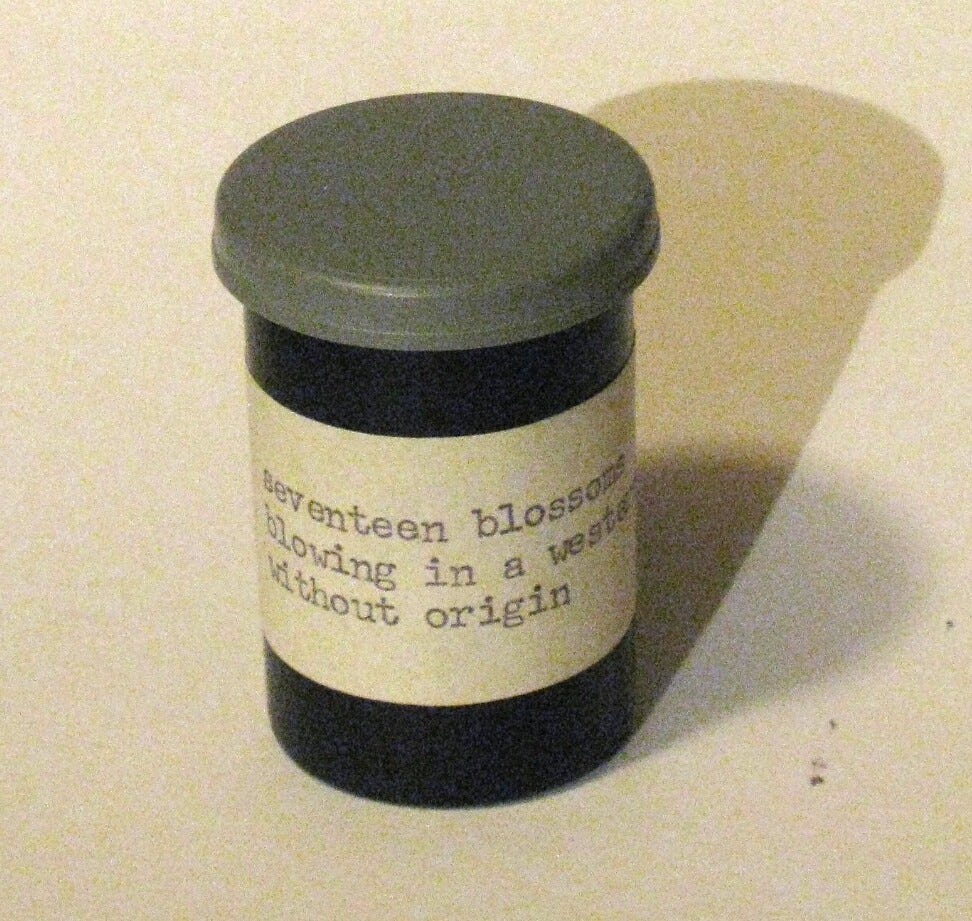
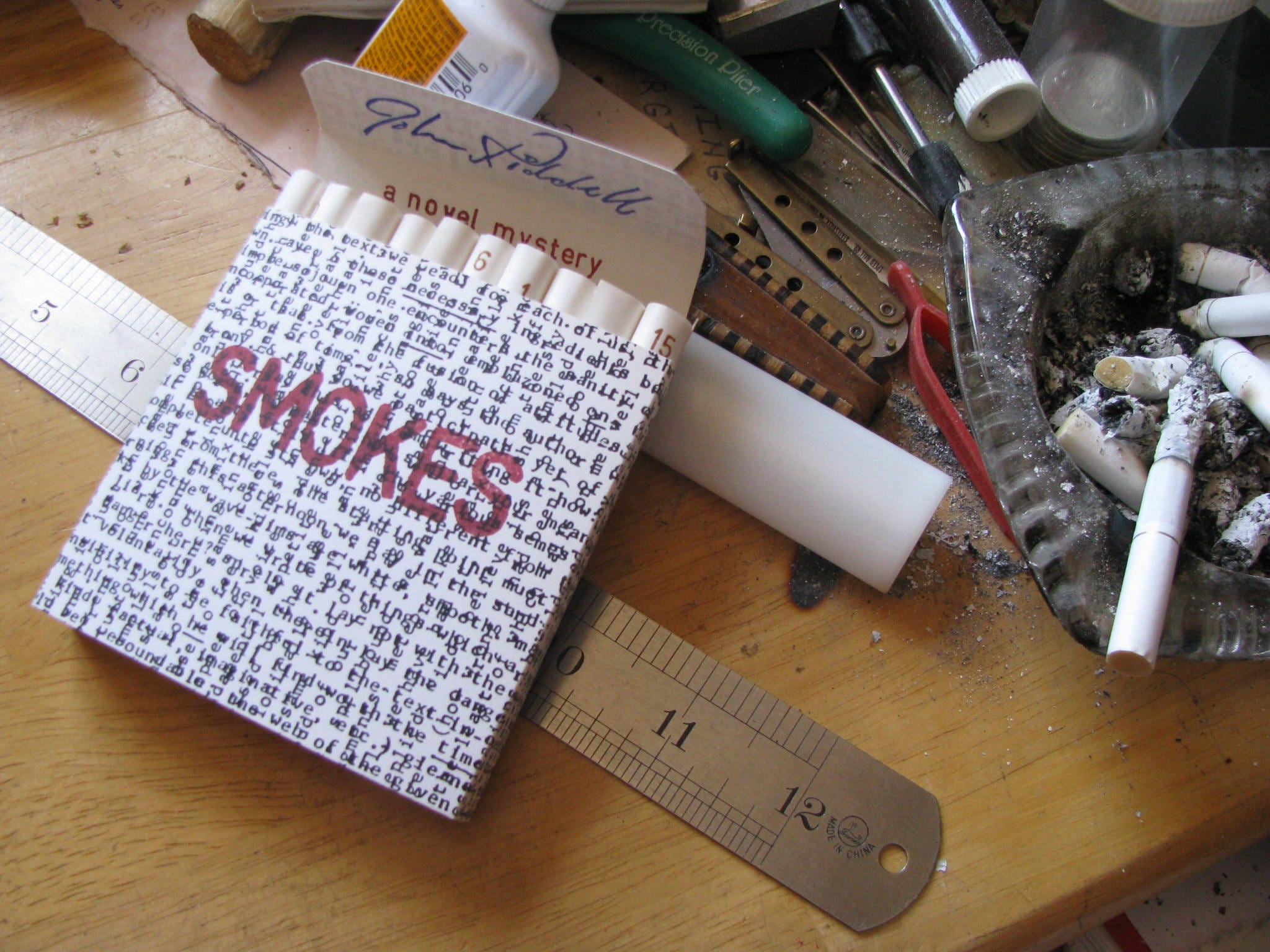
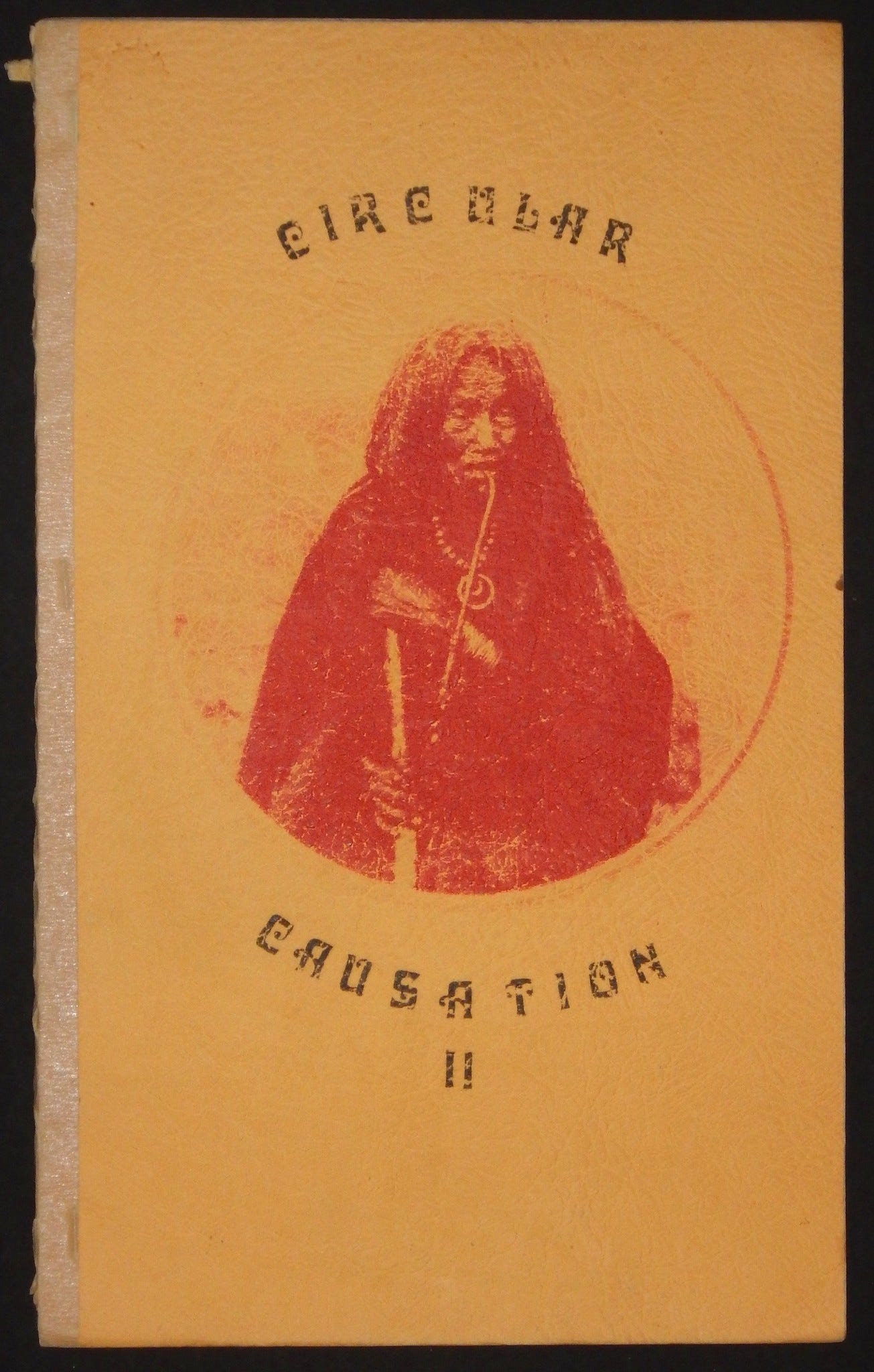
There has never been a better time to look to the achievements of the Canadian micro-press scene of the ‘60s to ‘90s for inspiration. jwcurry, a crucial artist and publisher of the period who remains active today, has documented thousands of items from his own collection that could serve as inspiration for just how far out of the box you can get with this stuff: printing on found materials, doing analog typesetting and stamp-cutting, formats that seem to thwart the reader, books intended to be burned after reading and on and on and on. Start with curry’s own projects as an editor, or the astonishing bpNichol catalogue, or the list of publications where Peggy Leffler’s work appeared.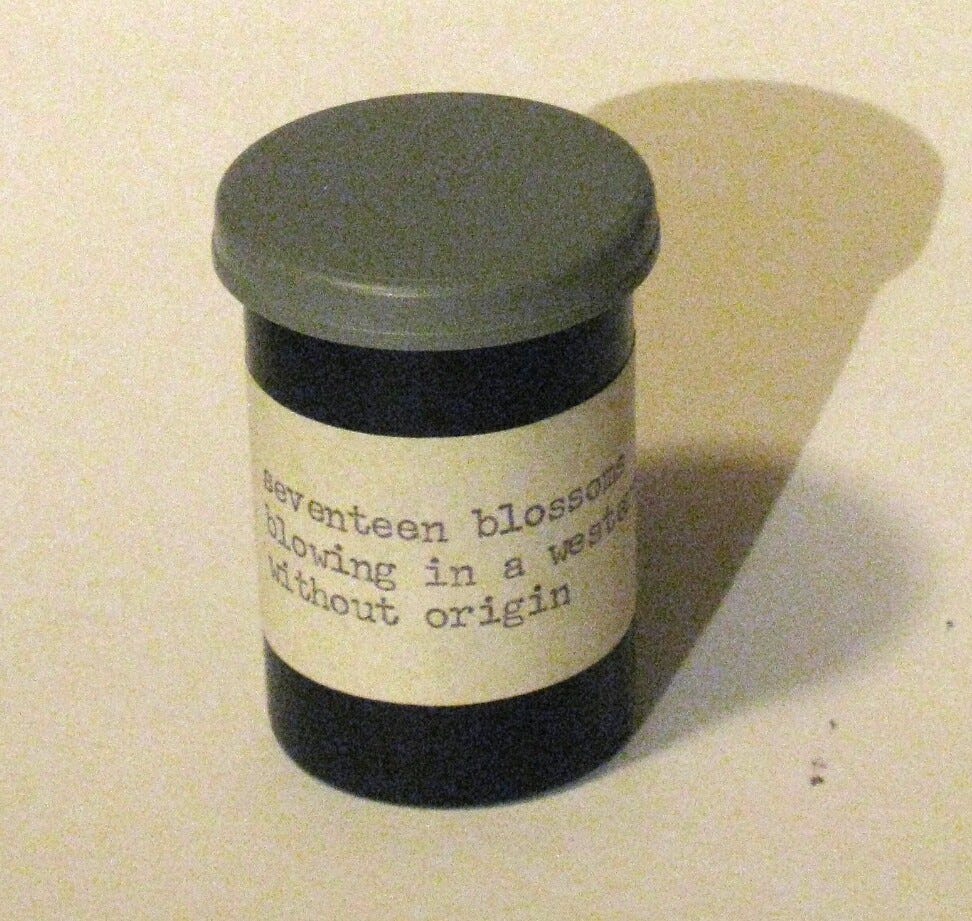
“INDUSTRIAL SABOTAGE 4o, edited by jwcurry. [Toronto], Curvd H&z, [8] may 1987. 185 copies numbered in black typescript at colophon, issued as Curvd H&z 35o.” This is actually a magazine: the film can is filled with tiny typewritten haiku by various contributors. Photo and quoted caption by jwcurry. 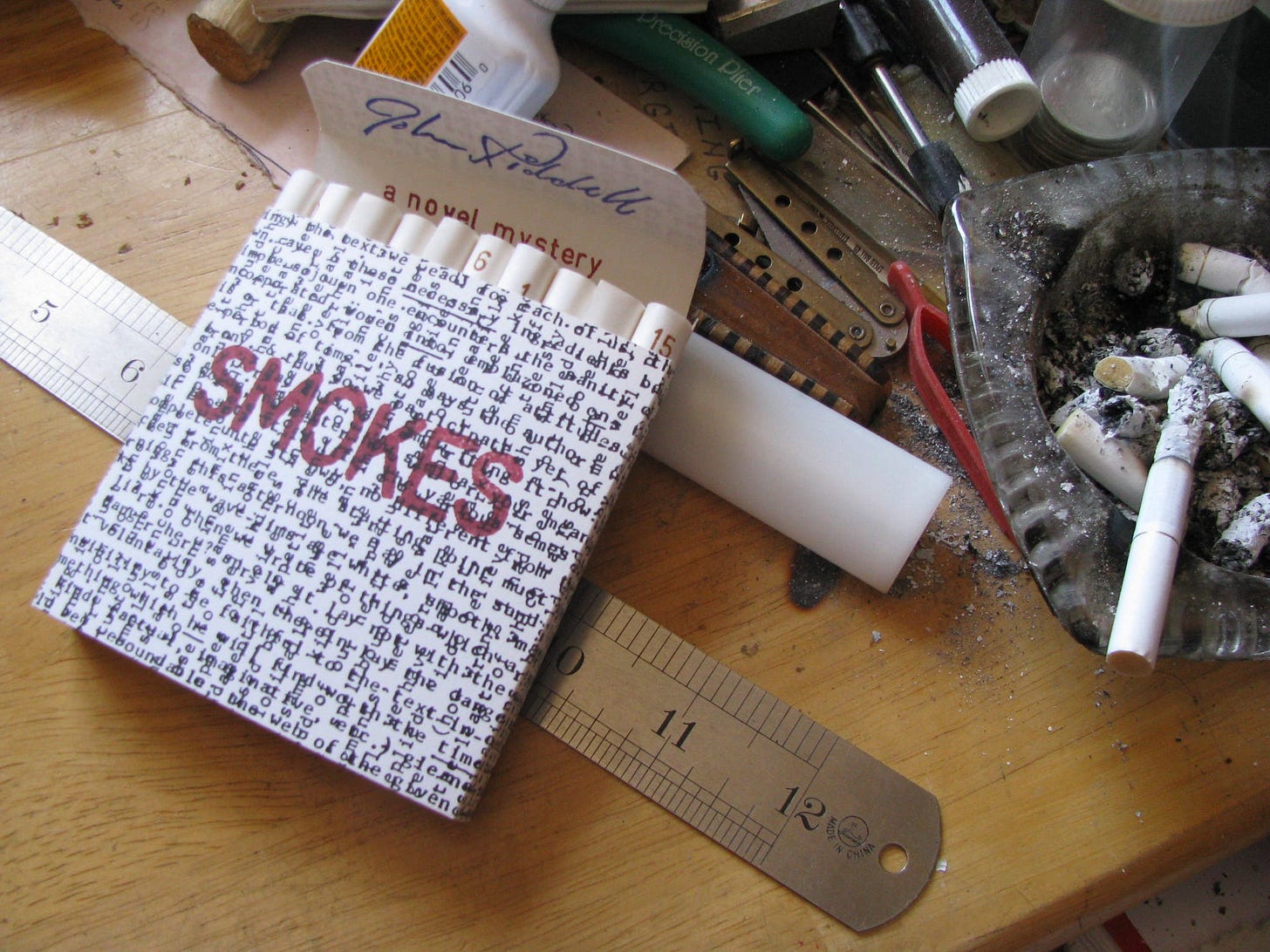
“SMOKES a novel mystery, by John Riddell. Toronto, Curvd H&z, 3 april 1996. 1oo copies numbered in blue rubberstamp inside tray, issued as Curvd H&z 434 in 2 variants: a) 65 copies with bright red titling; b) 35 copies with brick-red titling issued 24 november 1997 in Ottawa.” A short mystery novel—each chapter is printed on a single small sheet of paper and then rolled up so it resembles a cig. Photo and quoted caption by jwcurry. 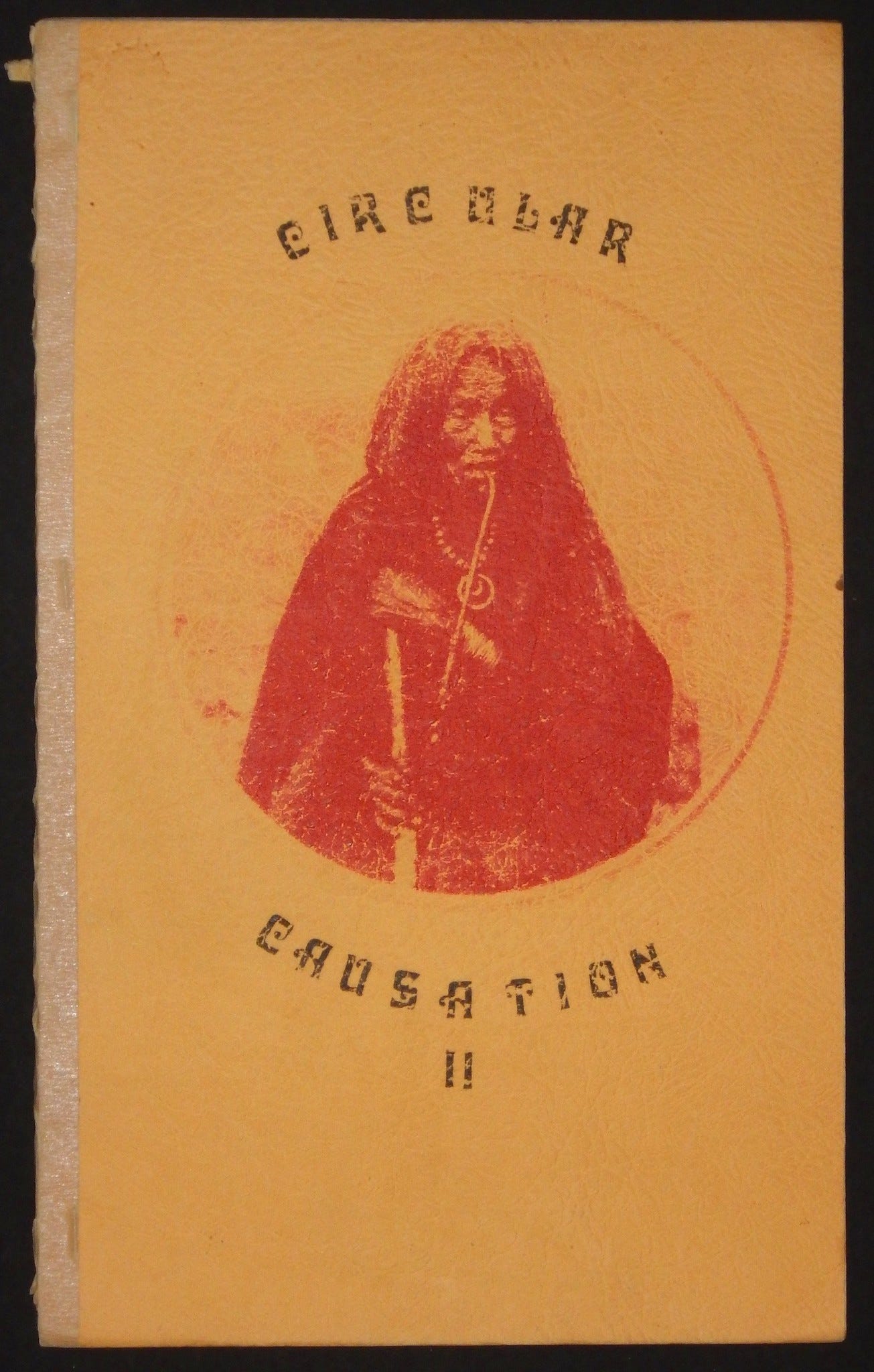
“CIRCULAR CAUSATION 2, edited by George Heyman & Scott Lawrance. Vancouver, 1969. 7o pp/54 printed, mimeo. 8-1/2 x 14, side-stapled card covers with taped spine; laid in are 2 further fascicles: a 4-3/4 x 12-3/4 mimeo broadside reproducing the cover & Brad Robinson’s THE WELL, approx.4-3/4 x 2-1/2, 16 pp/8 printed, mimeo from rubberstamp master.” Another magazine. Photo and quoted caption by jwcurry.
It can be a lovely, humane gesture to start a magazine and give others a chance to flourish. It’s a brave thing to submit your most personal work to the judgement of an editor. But for those with experience, ambition, and taste, remember: there’s more to publishing than the next launch party and there are some loads you really should refuse.
Cue the Lord of the Rings music, nerds: it’s time for the appendices!
Appendix A: The spreadsheet, which was an insanely bad idea
The spreadsheet, which was an insanely bad idea, took me like 12 hours over the course of two days and eventually comprised more than 700 people.
[Edit, 03/09: The spreadsheet was subsequently vandalized because I guess my grandpa ass must’ve shared out a link with edit permissions at some point. On the plus side, I think their edits make for a better reading experience. The Airtable linked a bit further below is, thus far, unaffected!]
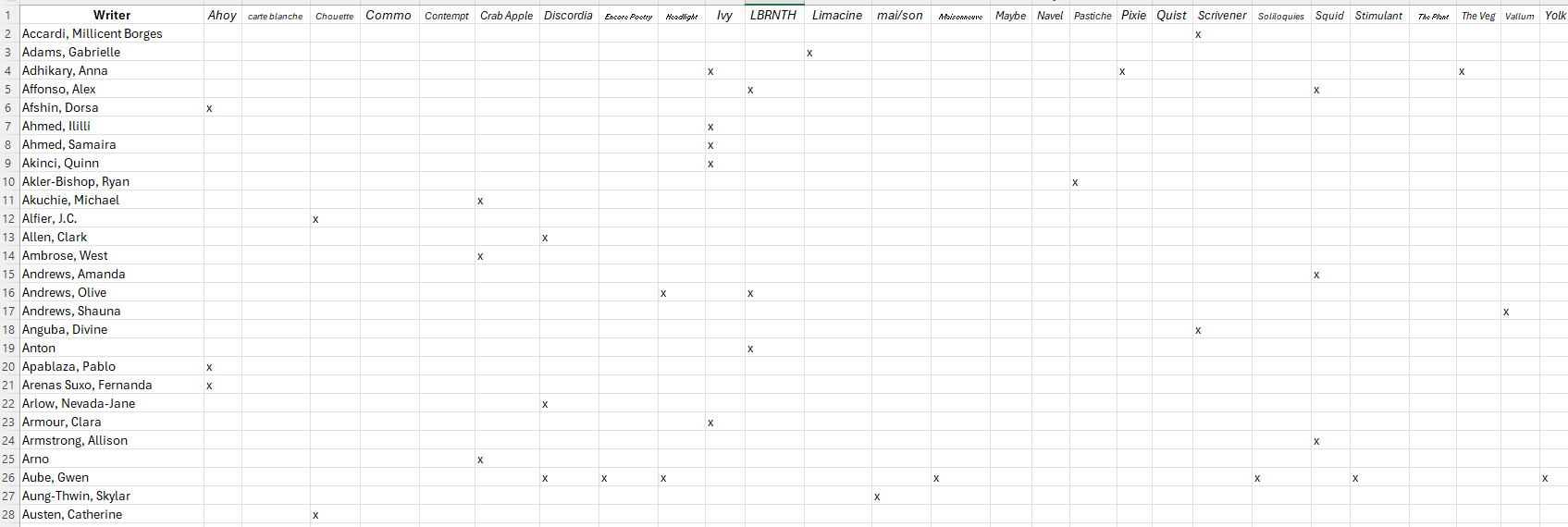
While crawling through the mags’ various busted-ass Wixsites8 and IG accounts9 in a data-entry flow state did give me a strong vibes-based assessment of the scene today, I don’t have the kind of pivot table mastery it takes to quickly ID clusters and overlaps. (Nor the chutzpah to also log demographic info like local vs. non-local status for each contrib10 etc.) News of my little project spread quickly though, and before long the angelic Rebecca Lawrence Lynch (a poet not lacking in chutzpah with a master’s in library sciences, it turns out) slid into my DMs to offer her assistance. The result, which she put together alarmingly rapidly, is this beautiful, immaculately stupid Airtable.
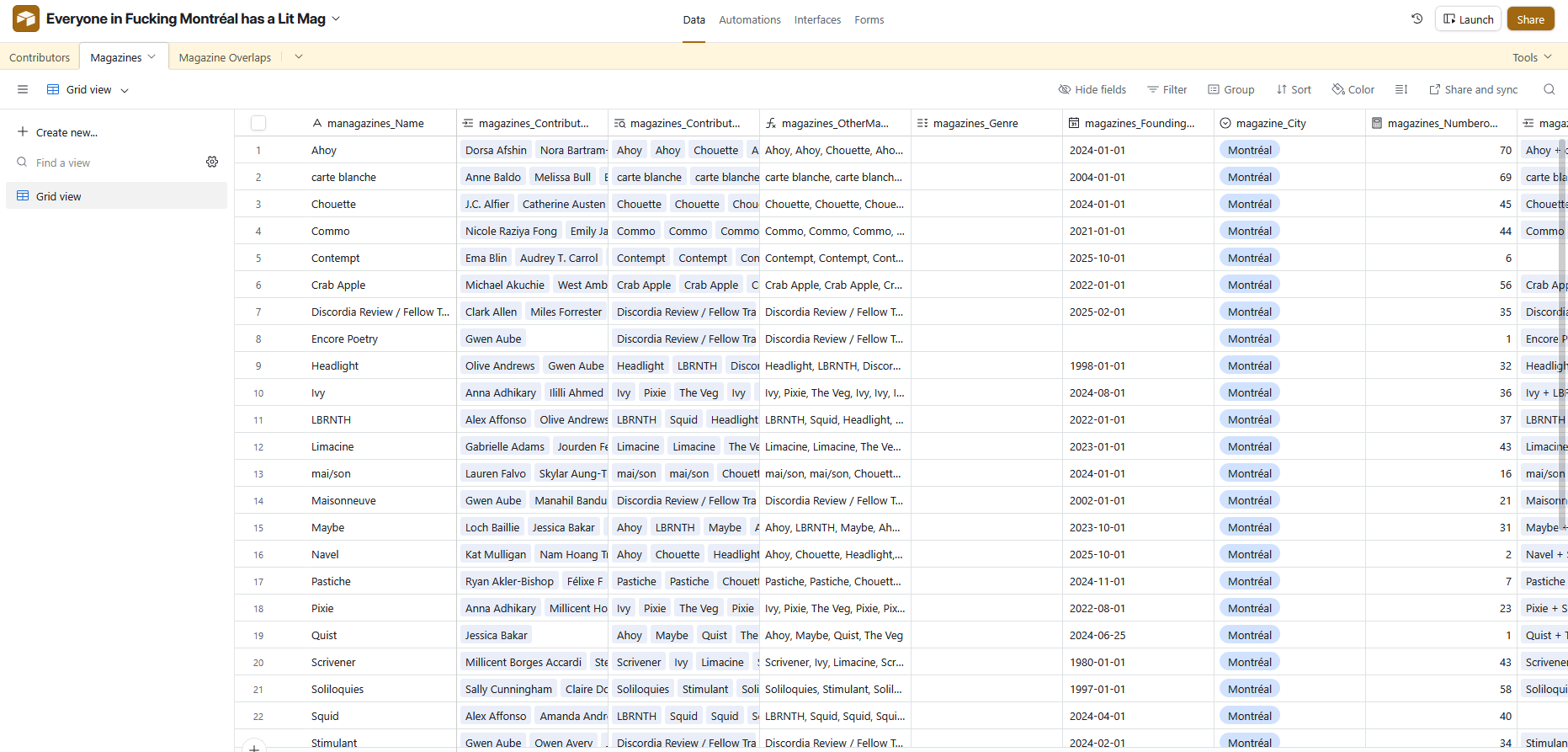
To be honest, at the outset I assumed that I would find much more obvious clustering than Rebecca and I ultimately did—which is to say, way fewer names to deal with. I had narrowed my criteria to only look at the period from January 1, 2024 to the present (or the most recent three issues for those that had been super active within that period), and I figured I could skip cataloguing at least a few publications for a variety of reasons (see the methodology section in the next appendix). I figured I’d end up with a few hundred names, tops, and an obvious core of avid local writers racking up publishing credits in semi-identical periodicals.
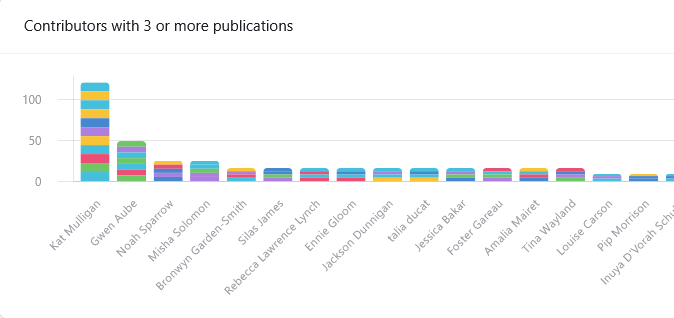
I pretty much knew that that thesis was fucked as soon as I started logging the contributors from Ahoy magazine, first in the alphabet and soon to be furthest from my heart. Besides publishing like 25 people per issue, the journal also seems to be on a quest to brute-force a spontaneous recreation of Esperanto by including not only English and French pieces, but also poetry in Portuguese. There are local people in each issue, but Ahoy’s size and linguistic diversity meant a lot of logging names I knew would not be appearing in any other magazine. (But what incredible names! Word to Vittoria Spaghetti and Cornelius von Haugwitz: y’all lit up my day.)
Meanwhile another chunky magazine I’d never read before, Crab Apple Literary, highlighted another fact of literary publishing life: local magazines often aren’t very local in terms of content. This isn’t usually a bad thing—about 30% of what we’ve fished for Fellow Travellers comes from domestic waters, and we consider being able to put Montreal guys who deserve a bigger audience alongside the Eileen Myleses and Phil Halls of the world part of our whole deal. But one look at all the flyover state locations and references to Pushcart Prize nominations11 among Crab Apple’s contributors (14% Montrealers) and I could tell it’d been Duotroped hard. Aggregators like Duotrope, ChillSubs etc. are beloved by aspiring writers (and veteran hacks) who like to take a carpetbombing approach to making submissions. While the sudden rush of emails can be thrilling to a new editor looking to stand up their journal,12 if you don’t already have firmly established identity these slushpile bugs have a tendency to crawl into all your orifices and start laying their eggs. Before you know it you’re an utterly deracinated slop journal with little relationship to any community beyond the Vanpintern.13
Broadly though, as I milled along a picture of the magazine publishing world did begin to develop. The scene skews extremely young: the two major anglophone universities, Concordia and McGill, each have two or three current lit-adjacent magazines, Dawson College’s The Plant publishes creative writing, and the Quebec Writers Federation’s Quist covers the high school/CEGEP beat. Many of the more traditionally magazine-shaped indie publications have editors who served on one of the above mags, and the data suggests the affiliations they made at their alma maters seem to be holding a bit post-graduation.14 Surrounding these are an odds and sods flotilla of true zines, NYC-brained online journals, blogs, and the crumbling remains of the pre-pandemic grownup writing establishment. While each mag seems to have a small clique attached to it, only a very small set of writers publish widely within it.
Appendix B: Some notes on methodology
Generally, I looked at each magazine’s last three issues (as long as they were published after January 1, 2024). If the magazine also published online features, I included these as well (though here usually only as far back as January 1, 2025).
Since our focus here is on literary contributors, for the most part I included fiction, nonfiction, poetry, and comics; I did not include interviews, reviews, critical essays, visual arts, or photography. With that said, I was moving quickly and it wasn’t always obvious who was doing what, so some slipped in.
It was immediately obvious that there were some mags I could fully or partially skip in my accounting.
Montreal Review of Books is dedicated to book reviews.
Feminist arts mag Yiara has been around for like ten years
, but hasn’t published a print edition since 2021. While its guidelines say it is open for literary submissions (including poetry), all of its online pubs to date have been critical pieces. [Edit: I’ve been informed that Yiara actually has continued to put out an issue each year. The past four years are not housed on the archive section of the magazine’s website, however, so the magazine is still omitted from the Airtable count.]Rodaisun has been in print since 2021, and has put out over 50 lovingly designed issues in that span. However, it has only ever had three contributors: Iva Čelebić, Catherine Machado, and Emma Cosgrove. I’ve never met “the Triad,” but I assume it would be like if this Beetle Moses comic was about girls who dress like Haim.
Canto Press (Canto Press?) was on the original list, but I think it’s actually a micropress. Brand new and dedicated to publishing long poems (the dumbest-named genre), they haven’t actually put anything out yet. If it does turn out to be a mag, we may have to find-and-replace this piece so that I’m screaming “thirty-five fucking magazines!” throughout.
The Pit didn’t say who is actually in its three issues to date anywhere on its website or on its socials. As a friend quipped, “if you want to see their list of contributors, you’ll have to pay $20 and buy a cocktail.”
yolk, despite being one of the more prominent local
Asian American arts and culture magazineslit journals in town, has no record on its website of who was in any issue prior to its most recent edition. So I just used that one plus its 2025 online features.The Page is basically a trendy homage to the iconic Coffee Times (super fun concept!) and is probably a stretch for inclusion anyway; they don’t list which of their contributors did what anywhere online, so I just skipped them as it’d be a pretty short list anyway.
Metatron Press officially wrapped up their online Glyphoria project last year, which meant their only qualifying “magazine” style publication for our purposes is the long-running occasional micro-poetry series Micro-Meta.
The Encore Poetry Project was, at one time, an annual print publication, I wasn’t able to find any evidence of when it last actually put something out though. At the moment its main “project” is providing a regular window display at Encore Books & Records down in NDG. While people keep telling me they still consider themselves active and are printing magazines as we speak, the only person listed as published for EPP is Gwen Aube because she told me she was in it once.
Likewise the only person counted from Quist, a mag dedicated to writing by artists aged 14 to 21, is Jessica Bakar, who is young enough to have appeared in two issues before going to publish in more grown-up mags. As far as the other fine contributors go… Look, if you’re over 25 and you know most of the names in an undergraduate lit magazine, you should probably be on some sort of a list. If you know most of the names in a youth lit mag you should probably have your face on a poster near a playground. Skipped!
Appendix C: Primitive accumulation; or, what magazines will be consolidated
Let’s wrap up by looking at the last questions I posed up top: Is there any difference between these outlets? Couldn’t we like, consolidate a few of these?
The answers, respectively, are, “Not as much as you’d hope” and “For sure.”
[Breaking: On March 6, 2026 at 2:05pm Eastern Standard Time I discovered The Imagist, yet ANOTHER magazine and have to, once again, update all my counts throughout this post. It is not, you will no doubt be shocked to learn, a journal of Imagist poetry.]
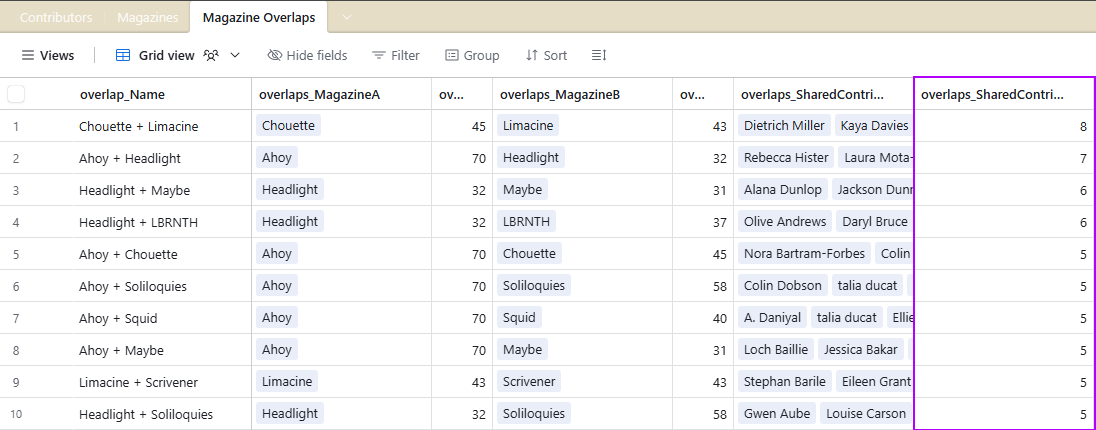
When reached for comment, Maybe co-editor Gwen Aube had this to say:
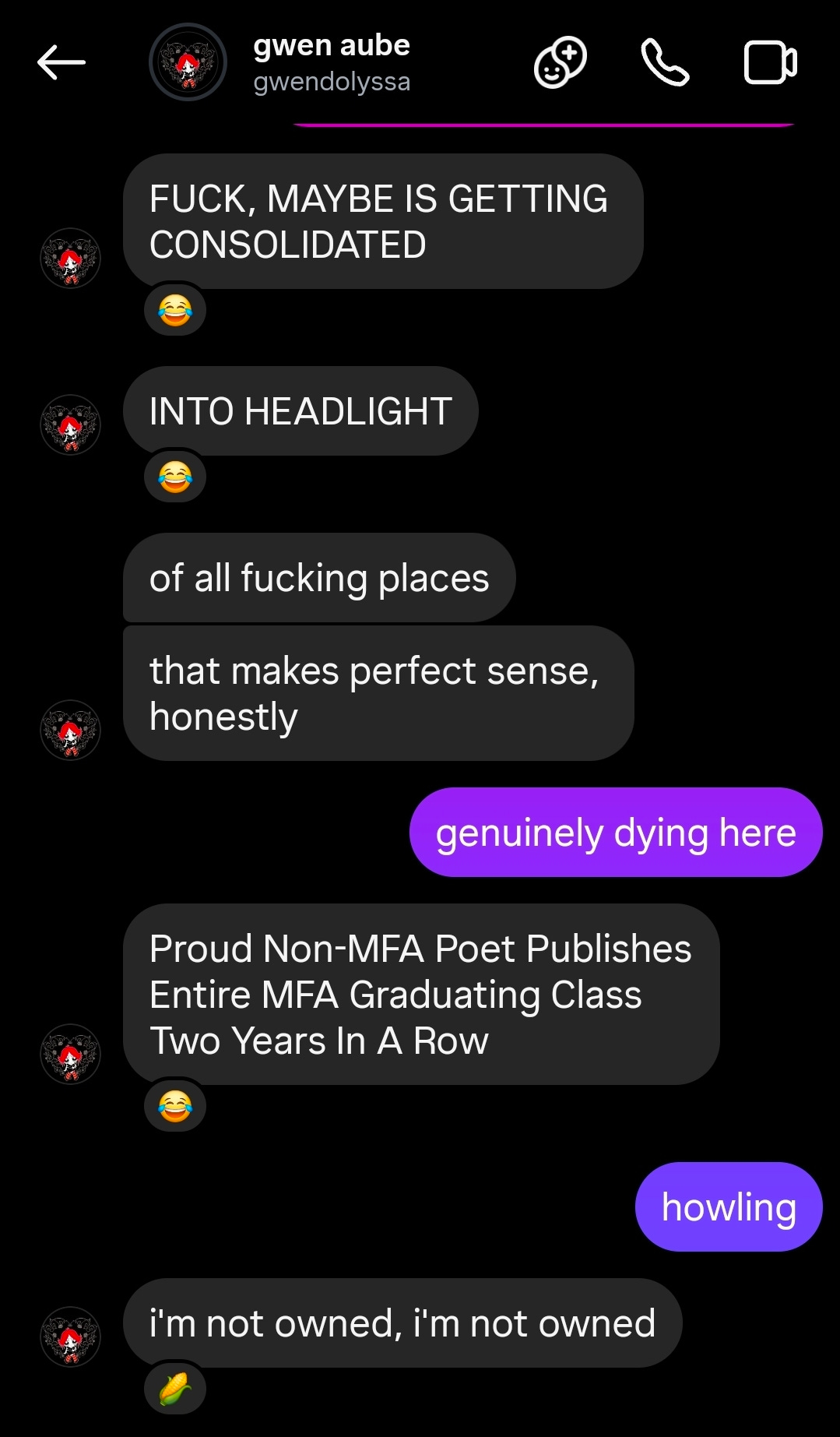
Discordia Review’s consolidation recommendations do, of course, have the force of law, but they take into account more than simple contributor overlaps. For example, Headlight Anthology and Soliloquies are both Concordia student mags, but the former is traditionally for grad students and the latter for undergrads—that seems reasonable given the size of the school. On the other hand, Pixie, the undergrad Concordia feminist lit mag, could probably be safely absorbed into Soliloquies, a mag not exactly overburdened with straight cis male editors, without much issue.
With eight shared contributors over the past 18 months or so alone, Chouette and Limacine appear to be basically the same magazine (though Limacine has crossword puzzles). I propose they fuse. I feel like the editors would get along famously! They can also absorb Crab Apple’s small local bureau while they’re at it. Ahoy crosses over with all of these guys pretty much—and nine times with our new Limapplette collective, which will bring an internationalist flair to the mag. Since I don’t really know what The Pit does, they can tag on to help plan the launches.
SQUID isn’t wildly different from any of those journals, albeit with a bit more edge and angst to it. Let’s cultivate that difference by instead merging that one into Ivy, which seems pretty similar except for the sort of dark fantasy genre edge you get when one of your editors professes in their bio to being into “inter-species romance”. Fuse ‘em! (And also call me?)
Pastiche is fine in its current format (two short stories per issue, one French, one English) but if you were to combine it and The Imagist (a poetry-only journal) into a single text file and tell me it was one magazine, I’d probably believe it. So sure, why not.
As for me and Fellow Travellers, you can consolidate us into Rodaisun for all I care at this exact moment, I am so tired and this blog is so over!
The editors wish to sincerely thank Rebecca Lawrence Lynch once again for her indispensable assistance with the preparation of this post.
APRIL 27TH UPDATE: As of this edit it is now AT LEAST forty-one.
I know, I know, there are 34 literary magazines operating out of some brownstone in Bushwick as we speak.
The advocacy group TALQ, which no shit stands for Talking Advocating Living in Quebec (itself an argument against the English language), has called Quebec anglophones “Canada’s largest official-language minority.” This may be technically true but also feels somewhat spiritually equivalent to currying sympathy for South Africa’s Afrikaans-speakers.
Even the thousands brought in by the contest covered a bare fraction of the magazine’s operating budget, however. This being Canada, the real value of the contest was that it raised our circulation such that we qualified for higher amounts of government assistance. In effect, we got enough writers whose interest in the magazine itself was secondary to their dreams of winning a big prize to sign on that some bureaucrats could then justify keeping us on the life support institutions in the unpopular arts have come to rely upon for survival.
Contempt and mai/son are true zines and have a certain coherence as such, and Maybe represents something of a median point between the Stimulant group and the rest of the list.
As for Discordia’s own Fellow Travellers, I feel no qualms about calling it the best journal in the city by some distance. (Disagree? You can always find me at my home address of 6999 rue Saint-Hubert if you want to fight.) But the thing that unites the writers we publish is not formal in nature—it’s maybe an outsider-infused ethos, a recognition that the supposed laurels of the arts world are too cheap a prize to sell yourself for, a tendency to make poetic the un-poetic. That’s pretty vague, no? But we can get away with a broader mandate because the members of our collective have been out here in the wastes long enough to be able to identify the specific wild disease in what we like and to know who has it, and those people have proven willing to trust us with their work.
With that said, we are planning to use Jonathan as a studhorse to breed a generation of Genetically Discordite Writers, so start prepping your audition tapes, folks.
Though I have to remind myself that a bunch of these “kids” are actually thirtysomethings just like the Discordia crew—who has time to write with these fucking skincare routines!
Vallum, the city’s other “big” little magazine still exists, but has largely transitioned into being a chapbook press. Which is great, we actually need more of those.
A note to the editors of LBRNTH, who did not include a list of the contributors to their latest issue on their site, forcing me to zoom in on a JPEG of the cover to decipher names in yellow type on a grey background: I don’t know where Mes pants des queer is but when I find it I am going to bury you there.
Once Rebecca had built the Airtable, we did do some retroactive local-status tagging in the course of some specific analytic questions we wanted to chase down, but that part of the project is very incomplete/probably never will be finished.
The Pushcart Prize is a very legitimate org/contest, but literally any journal can send in nominations (for example, Crab Apple Literary), which means there are tens of thousands of writers who can claim to have been nominated for it—which means it’s often a red flag to see “nominated for the Pushcart Prize” in someone’s author bio. I guess this is as good a place as any to announce that Discordia Review’s 2025 Pushcart nominations were dalton derkson, Phil Hall, Meghan Harrison, kurichka, Jenna Jarvis, and Joshua Chris Bouchard. Come home with prizes guys, or don’t come home at all!
And provided yet another name, Savannah Gripshover, which will never leave my mind.
Or Vanity Press International. — Ed.
According to Rebecca, “There aren’t really any strong clusters, but there are two weakish ones, essentially a Concordia and a McGill group. The Concordia group contains Ahoy, LBRNTH, Maybe and Headlight. The McGill group has The Veg, Chouette, Scrivener, and Limacine.”
"the journal also seems to be on a quest to brute-force a spontaneous recreation of Esperanto by including not only English and French pieces, but also poetry in Portuguese."
*FUNNIEST SENTENCE AWARD MARCH 2026*
Couldn't agree more with your general diagnosis here, especially around manifestos. Everyone's too nice about shitty work and, candidly, you anglos are incapable of engaging with tradition.
I would add, though, and this is a hard pill to swallow for everyone in "literature": what the fuck is any of this, including your prescriptions, doing towards having non-writers read litmags? There is, you know, a general public of literate people who would love to have a literature that speaks to them and are currently reading YA books instead. Any anti-MFA crusade that excludes a reevaluation of genre fiction, for instance, is going to fail. Read William Marx, l'adieu a la literature: this is a problem with deep roots.