

Not a living, but maybe a life
On editing and publishing


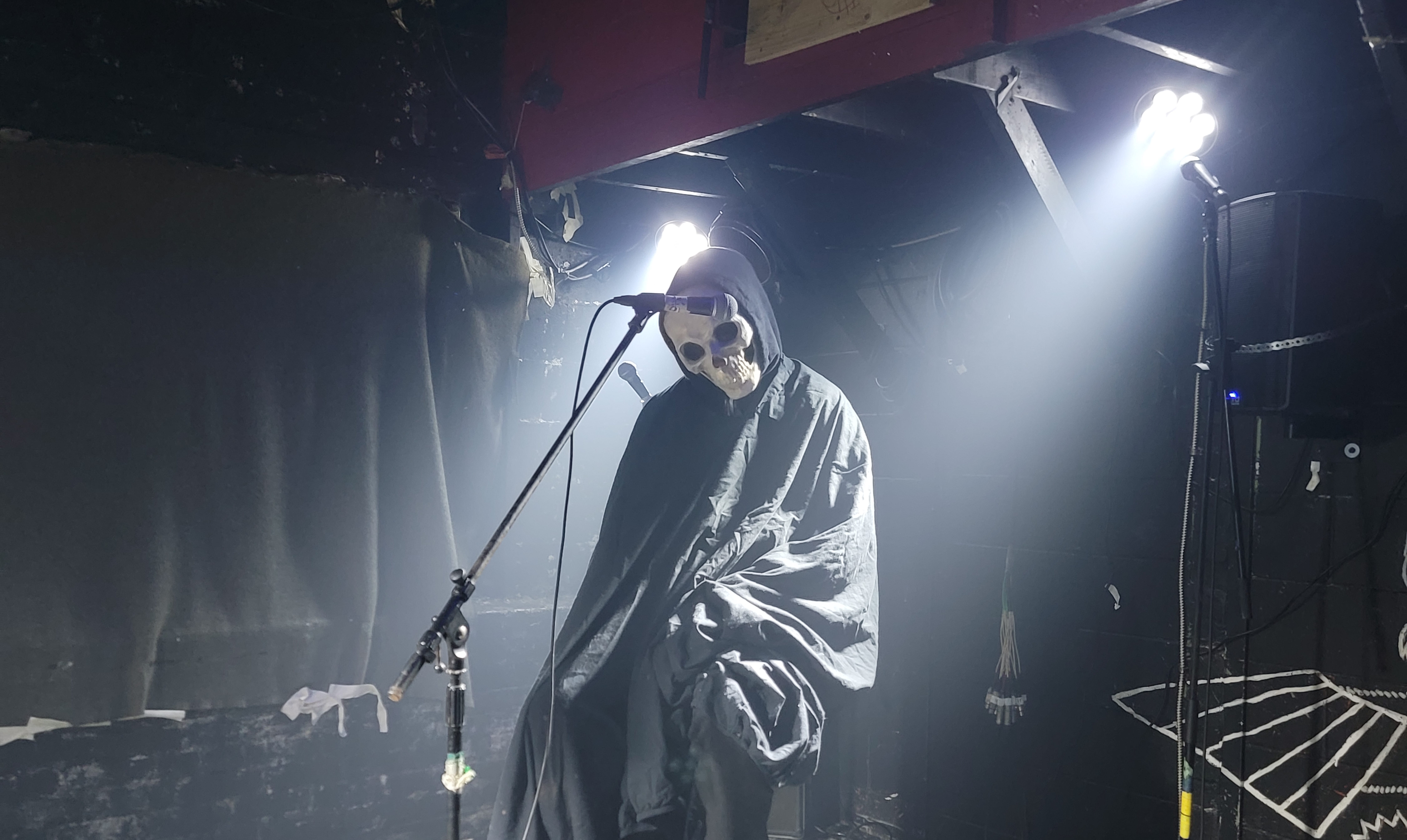
I’ve done a loose series of “how to” articles over the past 18 months on the rudiments of handling live literary spaces—how to run a reading, how to read publicly in a way that puts your stuff forward in its best light. This being Discordia, they’ve been sort of performatively grouchy in terms of their tone, and I’d planned on doing another in the same style on editing a journal. But I dunno, at the moment I feel a bit fragile due to personal life stress, and disheartened by a lot of the new books I’ve been reading lately. I do pick up stuff I know I won’t like for the purpose of giving it a productive drubbing, but I also feel it in my gut when something I have hopes for disappoints me—a hollowness into which the rest of my ambitions for the day inevitably slide, leaving me lying in the dark like a sickly Victorian woman whose only prescription has been leeches and more leeches, wishing I had even a modest gift for the guitar. Today, at least, I can’t stomach the notion of spitting bile over it all—I fear I’d only cough up my heart’s blood instead. So I suppose what I want to do is write here about editing and publishing in a way that reminds myself why I’m so drawn to working on other people’s stuff, to connecting art that makes me feel something with an audience that I believe will appreciate that work. Unlike the other articles, there isn’t a lot of proscriptive advice here. It may yet be of use to others exploring what working in publishing might mean for them, or of understanding why someone would want to do such a thing at all, but more than usual, I’m speaking to myself. And for that reason, I’ll have to start by reminding myself how I got here.
First part: On being “an editor” as an identity
Like most people who get into publishing, my first ambition was to be known as a writer. However, like nearly every example of this type of person, being known as a writer superseded writing as a practice. I needed something to be other than a burnout who worked at a grocery store by day and invented elaborate drinking games with his friends by night, and “writer” seemed a plausible enough option. Going to poetry readings (even bad ones), without exaggeration, changed my life. I met lifelong friends; blossomed intellectually; discovered ways of being in the world that I hadn’t previously dared to hope existed; really committed to a smoking habit; fell in love (or something like it) a few times; learned to nurture; experienced shattering disappointments; failed key responsibilities; made gross errors in judgement that I will regret the rest of my days; became, I hope, a kinder, more intriguingly wrinkled, and less destructively self-loathing person. Living as a “writer” was in short a ticket to a comprehensive, albeit belated, sentimental education I’d been too shy to embark upon. It is a process I describe in past-tense but experience in the present.
It has not, however, resulted in a great quantity of poetry.
I rate myself as an adequate talent; the sort of guy who could theoretically produce a handful of affable poetry collections that would not embarrass me and would be cherished by my friends,1 but would not be much read outside those circles or beyond a few months of their publication. Maybe I will eventually produce something anyway—as Derek Beaulieu has noted, what I’ve described would constitute a modest success by the standards of modern poetry publishing. The greater issue is that, while I like my poems well enough to write them on the infrequent occasions an idea occurs to me, I don’t actually produce enough of them for being “a writer of poems” to make sense as my primary thing in life. This is because, in my experience, what makes a writer (in the sense that writer constitutes an identity) is not the desire to be a writer, or even a talent for writing, but rather the helpless compulsion to write.2 (The same logic can obviously be extended to other callings, like painting or arson.) The most consistent writers I know are people whose claws leave deep gouges in the floorboards whenever they are dragged away from their desks3 by banal obligations like paying the rent or attending their own funeral. I by contrast will usually happily leave my writing chair and bike across town to be present at the gala opening of a beer can.
What I have discovered, and this is very much the sort of “old head wisdom” that is both blitheringly obvious and surprisingly difficult to internalize until you discover it for yourself, is that your real calling tends to be something you don’t need to whip yourself into doing consistently. Instead, it’s something that feels instinctively satisfying to perform on its own terms. For me, the work I do here at Discordia mostly meets this criteria, even when it is basically drudgery (e.g. formatting the fucking Jay’s List every month). I love the pursuit of and flirtation with potential Fellow Travellers; the feeling of spotting the simple structural change that makes a guest contributor’s essay truly sing; the look of four-to-six finalized articles in the scheduler and a good crop in progress in the drafts folder; the box of fresh zines from the printer’s; hell, whenever I use a burner account to post links to our stuff on various annoying subreddits I even experience the same sense of manful self-sacrifice I feel helping a hoarder friend move house or volunteering to empty camp toilets. We’re still a very disorganized shop, and I am guilty of assuming my collaborators can read my mind and mood to a degree I’m told is unreasonable, but this role fits me such that the hard work of it requires little coaxing to undertake.
None of this precludes my continuing to write creatively (I’m a frequent contributor to this very blog, for example), but I have found a degree of freedom from the imposter syndrome that once haunted me by defining myself in a role more suited to my nature—though the simple yearning to be read and heard in my own right will never go away. Whenever the subject of being something other than a writer comes up, I often find myself recounting an incident from Roberto Bolaño’s 2666, in which a fierce young man named Espinoza who has pinned his entire identity on being a writer has an extended dark night of the soul after beginning to suspect that 1) he actually has little in common with the other members of the Madrid writing community and 2) that his own creative writing kind of sucks:
And it was the beginning of his loneliness and a steady stream (or deluge) of resolutions, often contradictory or impossible to keep. These weren’t comfortable nights, much less pleasant ones, but Espinoza discovered two things that helped him mightily in the early days: he would never be a fiction writer, and, in his own way, he was brave.
He also discovered that he was bitter and full of resentment, that he oozed resentment, and that he might easily kill someone, anyone, if it would provide a respite from the loneliness and rain and cold of Madrid, but this was a discovery that he preferred to conceal. Instead he concentrated on his realization that he would never be a writer and on making everything he possibly could out of his newly unearthed bravery.
As a result of these realizations, he is able to re-focus his formidable will and ambition on academia and quickly becomes an eminent critic (albeit in a very narrow field).
What I have found behind the doors unlocked by the key that was my own attempt to be a writer are what I think of as my real creative gifts: a capacity to bring people together; to identify talent; to understand what an artist is aiming for and to help them find a path towards its realization; to support them when their faith in their own abilities falters in the face of our era’s unfathomably bad taste. These are all fundamentally socially oriented qualities, and this speaks to the alignment between the nature of the role of an editor (which cannot exist in a vacuum, much though many editors may despise the talent they work with) and my own nature. A former friend once diagnosed me with cruel charity as a supremely skilled social mimic who would never be anything if I didn’t shake the tendency and learn to be myself. The critique was acutely observed but ultimately off the mark: I am always myself, but am at my most fully realized when working within and toward things greater than myself.
Second part: On Discordia
The editorial board of Discordia is an amorphous and fluctuating collective whose membership is opaque even to me. But in terms of its outlook on what we’re actually doing in publishing, it could probably be divided into three rough camps whose attitudes strike me as distinct if not exactly contradictory.4
Eris is the dominant voice both in terms of public output and behind the scenes as the project’s founder. He and those editors who most closely share his philosophy are both profoundly idealistic about art and profoundly fatalistic about its prospects in the twenty-first century. To quote him in a moment of despair that is revealing of both his doubt and his uncompromising ambition, “Everything is damned already, no one will be mustered, there is no one to assemble, no one to give themselves to the cause, to commit to a project or ideal and to believe blindly in it, to have faith in it, to give up reason and rationality and simply act.” In essence, nothing short of art as a force of occult transcendence will do: “To make your own reality through force of will that may with sufficient [belief] burst forth and overtake other people’s realities, to make truth into Truth.”
At other times he is somewhat more measured, but given such standards it can be hard to look at his own successes as a critic and what we have managed as a print press and think much has been accomplished given the state of the wider literary world, or even the local scene here in Montreal. Small wonder his preferred mode is being on the attack as a lone harrier striking public blows against the institutions in hopes that revealing their hypocrisies will loosen their hold on whatever power remains in a decaying industry. (And also because it often feels good to hit things.) This aspect of the project has become our signature—chances are if you’re reading this, your entry point was one of Eris’s takedowns.
A second perspective within the collective focuses on Discordia’s pathway to truly transforming Canadian literature via its potential to eventually become a trade publisher on the scale of, at least, a Palimpsest, a Book*hug, a Goose Lane.5 The small press establishment such as it is is rickety—everyone in it is overworked and underfunded, and that there has been in many respects a consolidation among the small presses in terms of house style has opened up a wide lane for creating a genuine alternative. Is there not room in the field for something shocking? Something antagonistic? Fiercely loyal though we are to our DIY model, there are models for scaling up. After all, it took editors and publishers with vision and distribution to give air to most of our heroes: Bob Cobbing, Kathy Acker, bpNichol, Grace Paley, Mordecai Richler, Samuel Delaney, etc.6 Should we not commit as much as we can to giving the talents we identify as Our Guys, the Jack Brides, the Meghan Harrisons, as broad a platform as possible?
It probably makes for good editorial balance that I find myself in a third position roughly equidistant from the other two, less out of any disagreement with either and more because I have a carefully cultivated tendency not to dream too much. The world around me has always felt too brittle to go far beyond what I can directly account for. I can’t say whether we have it in us to be a trade press one day, financially or in terms of personal stability; and there is always the risk an astringent critic (or group of critics) runs of becoming so defined by their astringency that most of their other qualities and potentialities are occluded in the final analysis.7 And so my own approach is to think small, one zine, a few posts at a time, but to plan meticulously on that scale. Whatever Discordia will become, I bend myself to making it the most it can be in the moment, knowing that this is the surest way to ensure that what it is is worthy of the aspirations we each have for it—that our readership expects of us.
This also lends itself to a mindset of appreciating the good stuff as it happens. Painstakingly retyping the transcript of a recording of an off-the-cuff conversation between my friends that made me feel fairly overwhelmed at my own luck to have such remarkable comrades; and seeing that sense affirmed by the responses of our readers. That Phil Hall, as close to the embodiment of what’s worth honouring in the Canadian avant-garde tradition as there is, letting us publish a full sequence of his new poems; getting to watch from the side of the stage as he sang to a rapt audience mostly discovering him for the first time; receiving even now his waves from Otty Lake in my inbox from time to time. Clearing out some of the thickets in another of Eris’s 7,000-words-in-three-hours assaults so his flame would burn bright and clean; and then printing some of the best of his poetry. Making Joshua Chris Bouchard write horoscopes, and then seeing him perform them live in Toronto next to a fortune teller’s table he’d hauled halfway across the city just because he knew the bit of extra set-dressing would complete my peculiar little vision. Publishing so many names from what had been my own personal rolodex of the Good Ones in barely over a year and a half; finding a few new Good Ones even in the dregs of the slushpile. Being told by Opal Louis Nations that my email asking for some poems and drawings, which happened to land on his 84th birthday, was the best news he’d had in some time. Still hearing the spirit of an old friend cackling in the rafters.
Discordia Review has occasionally been accused of cruelty. I don’t think that’s been the case, and I wouldn’t particularly want to be a part of a journal that bullies people for their personal foibles for the sake of a cheap thrill. But we do have a nasty streak, and so in that light it might seem incongruous to say that I what have aspired to most in my work with the press is to provide hope—hope and iron. Hope for those readers who wish to form a more discerning and opinionated audience for writing that offers the public no platitudes; iron for their conviction that what seems to them to be bland bullshit is bland bullshit and that there is no moral reward for eating it. Hope for new writers pressured to bend the knee to the expectations of grants and institutions and write from inside a box that was built to kennel them; iron to forge their own weapons to make their own way. Hope to those great talents who have been working in relative obscurity for years and who are doomed to be themselves whatever it costs their career prospects; iron to give the products of their imaginations a more tangible substance. Hope to those long-timers who have spent their decades contributing to blazing, necessary traditions that younger generations are unknowingly being denied contact with; iron to ensure the work of their lives endures. Whatever starts here multiplies with each person who joins our cause, and in however many make something of their own that shares at least the principal that there is something in art that is deeper than a hobby, more worth risk than the promise of an allowance.
It’s 6:36 AM and I’ve been writing since just before midnight, and I know if I’m doing this sort of chestbeating routine it’s time to crawl into bed before I do any further damage. So let me tie it off here: As I once said to a young person who asked me how one gets a career in literature, “You probably can’t make a living in writing. But you can make a life.” And I’m living one.
Eris: It pains me to have to admit this, but Sire is actually probably the best poet in Montreal. —Ed.
This relates to one of the most useful observations in Emily Zhou’s endlessly re-readable “theory of the hack”: “The uncanniness of the hack comes in part from the mirror image they reflect back on every working artist. The hack is what happens when certain essential traits of the working, persevering artist or writer are grotesquely maximized—we must all have some of the hack inside of us, kept carefully in homeopathic amounts.”
In other words, a hopeless hack has more right to define themselves as a writer than does a talented dilettante; but I’d certainly rather read the dilettante’s output.
Or, more often than not, the beds where they write gruesomely hunched over their laptops in the shape of a witch’s crooked index finger.
Even this framing probably overstates the degree of internal “discord” at the office. We all tend to agree much more frequently than we disagree, despite the fractious nature of the personalities involved, and our bonds are reinforced by a daily routine of complaining about everything happening outside our walls.
Yes, international reader, these are what Canadian small presses are called.
Though of course in many cases, notably Darius James, their publishers ultimately failed them, and others like Billy Childish, Rocky Dobey and jwcurry are most notable for making their own worlds.
Recall Eliot on Ben Jonson: “He has suffered from his great reputation as a critic and theorist, from the effects of his intelligence. We have been taught to think of him as the man, the dictator (confusedly in our minds with his later namesake [i.e. Samuel Johnson. —Ed.), as the literary politician impressing his views upon a generation; we are offended by the constant reminder of his scholarship. We forget the comedy in the humours, and the serious artist in the scholar. Jonson has suffered in public opinion, as anyone must suffer who is forced to talk about his art.”
"Going to poetry readings (even bad ones), without exaggeration, changed my life." There's so much else good in this essay too but I find this to be an essential truth.
Reading Zhou's piece and the passages here, the implication is that great writers are obsessive geniuses. So if you're not obsessive and you're not a genius, too bad, you will never write anything of merit. No doubt plenty of my favourite writers fit the category of genius/obsessive. However there are certainly writers who I wouldn't categorise as such yet have produced significant works (think Salinger or Ishiguro, hell even Sebald). Great writing comes from some talent, but also discipline and graft and relentless self-criticism. I think the lack of good writing nowadays comes from the fact we no longer write as often and with as much rigour. We aren't serious people. Instead of actually writing the easy option is the MFA, or failing that the bar, the literary event, masturbation, phones, Reddit, Instagram, Hinge / Feeld etc etc. You need to be ridiculously obsessive to escape all of that, hence why we see obsession as an incredibly rare trait.
One of my favourite essays is Crop Rotation by Kierkegaard (an obsessive genius). It is an actually funny read. According to him, "The more a person limits himself, the more resourceful he becomes." So cut distractions, and obsession will naturally arise. He goes on, but that is the gist. We need more good writers, less MFAs. And these writers can't all be obsessive geniuses. Yet unfortunately I think the non-obsessive types are frankly unable to develop currently. Hence why so much writing is crap. Bring back the hard working writer of medium talent and we will see better writing. Thanks.